For thirty years, the mark of a great engineer wasn’t just a title on a LinkedIn profile—it was the calloused intuition built from ten thousand hours of staring into a terminal. Coding was a manual craft, as tactile in its own way as woodworking or watchmaking. You didn’t just produce a result; you lived inside the logic.
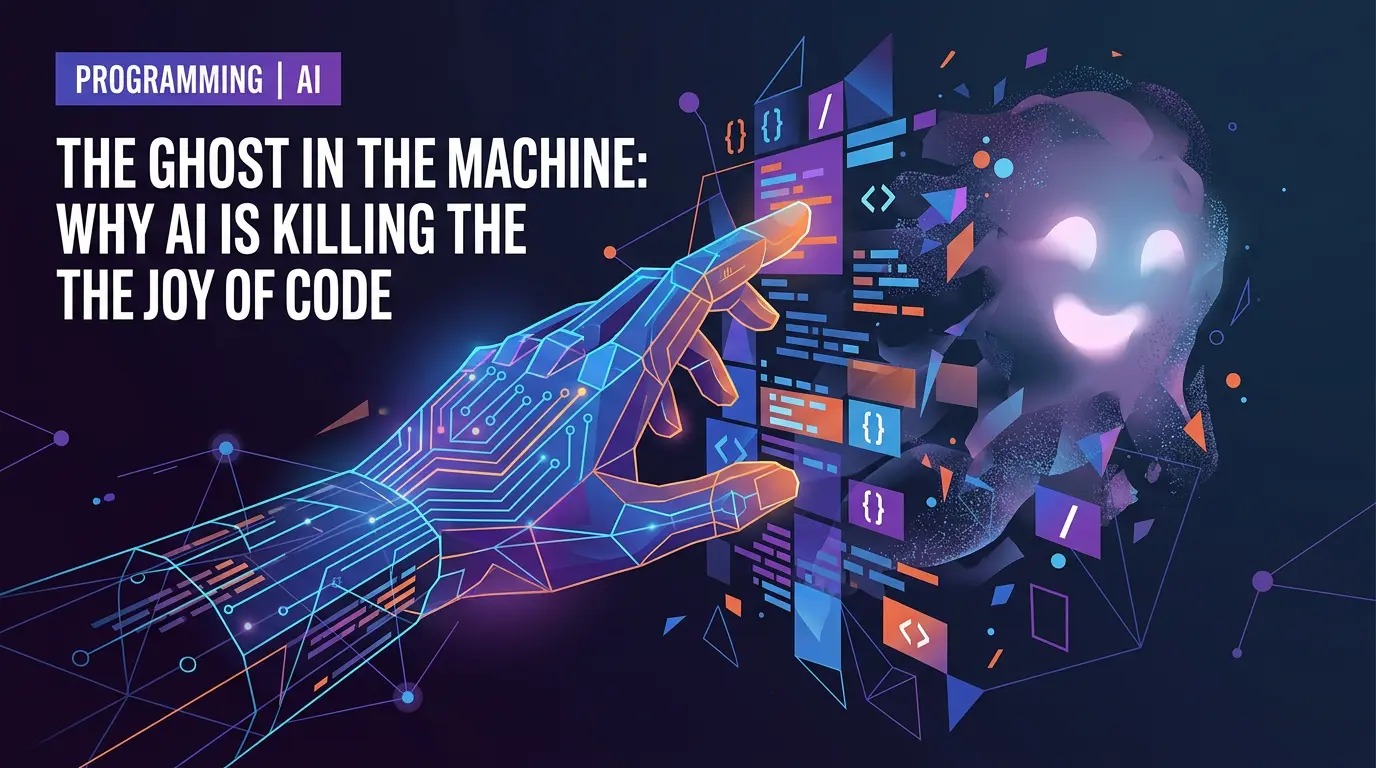
But the arrival of Anthropic’s Claude Code has triggered a massive psychological schism in the community, particularly among the veterans who built the very foundations of the web.
This isn't just another predictable debate about productivity or which framework is winning the week. It’s an existential crisis. At the heart of it lies a question that’s getting harder to answer: Is the value of a developer found in the problems they solve, or in the actual act of solving them?
The Great HackerNews Divide
The discourse reached a boiling point recently following a viral interaction on HackerNews. It started with a post from a user named "shannoncc" titled "I'm 60 years old. Claude Code has re-ignited a passion." For this developer, the AI didn't replace their brain; it acted as a force multiplier, stripping away the friction that usually gunked up the creative process.
The rebuttal from the other side of the aisle was immediate and, frankly, heartbreaking.
Another developer, also approaching sixty, penned a response that read like an obituary: for them, the exact same tool had effectively "killed" their passion. They wrote about the "pre-AI days" when they spent their days, evenings, and even vacations coding for the sheer joy of it. Now? That spark is gone.
This isn't a case of "old dogs" refusing to learn new tricks. These are people who have spent their entire lives learning new tricks. Instead, it’s a fundamental disagreement over what it even means to be a programmer.
The Destination vs. The Journey
To understand this split, you have to look at where these people actually get their dopamine.
One group—the "Destination" camp—sees code as a means to an end. They want the app to work. They want to ship the product. For them, Claude Code is a godsend because it automates the "boilerplate drudgery"—the repetitive syntax and mundane setup that stands between them and a finished product. To them, AI is a productivity renaissance.
Then there is the "Journey" camp.
For these developers, the act of typing the code, debugging a stubborn loop, and manually constructing a function is the point. It’s the difference between a chef who finds zen in the rhythmic chopping of vegetables and a chef who just wants the soup to be on the table.
When the journey is automated, the hobbyist’s spark often dies. The anonymous veteran noted that they no longer feel the urge to code for fun. If the machine does the heavy lifting, the developer is demoted from a creator to a manager of agents. You aren't writing; you're editing. You aren't building; you're supervising.
The Managerial Trap
I’ve watched the tech industry oscillate between different levels of abstraction for years, but this feels like a point of no return. We are moving away from caring about how things work and focusing entirely on what we want.
There is a hidden cost to all this efficiency.
In our rush to optimize developer output, we are accidentally optimizing away the intrinsic motivation that leads people to become experts in the first place. If you take away the struggle, you might also be taking away the reward.
We see this in other crafts. A photographer might find digital autofocus efficient, but they still miss the tactile precision of a manual lens. In software, however, the shift is more total. When Claude Code can generate entire functional blocks in seconds, the human in the loop often feels more like a bottleneck than a pilot. According to community reports, this is leading to a profound sense of alienation—a feeling that the work no longer really belongs to you.
The Retention Crisis
The industry should be paying attention.
If veteran developers—the ones with forty years of deep systems knowledge—start losing their passion because the craft has been hollowed out, we’re looking at a massive retention problem. These are the people who understand why things break at 2 AM. If they stop coding for "fun" on the weekends, they stop exploring the edges of the technology.
Corporate goals will always prioritize the destination. Management wants the feature shipped yesterday, and they don't particularly care if the developer enjoyed writing the middleware. But if the job loses its soul, the best talent will eventually move on to something that still offers a sense of manual mastery.
Evolution or Extinction?
As we look ahead, you have to wonder if the "hacker" ethos is simply evolving into something we don't recognize yet. Maybe the next generation won't miss the journey because they’ll never have to take it. They might find their joy in the pure orchestration of complex systems, untethered from the minutiae of syntax.
But for the veterans, the loss is real. We are witnessing the end of an era where programming was a primary source of identity.
The efficiency of Claude Code is undeniable. But as we solve problems faster and faster, we have to ask: are we building a future where we’re better at solving things, or one where we just don't care about the problems anymore?