The Long-Awaited Arrival
Five years is an eternity in the world of consumer tech. In that span of time, entire startups are born and liquidated, battery chemistry pivots, and audio standards are completely rewritten. Yet, it took Apple half a decade to follow up on its most expensive pair of headphones. When the original AirPods Max arrived, they were a loud, metallic statement of intent. Apple was done playing second fiddle to legacy audio brands. They wanted the crown.
Now the successor is finally here, but the mood is remarkably muted. For anyone who spent the last few years dreaming of a radical redesign, the announcement felt less like a celebration and more like a clerical update. From a market perspective, this launch is a fascinating experiment in brand power. Apple is essentially testing exactly how much that silver logo is worth when the technology inside remains frozen in time.
The Innovation Gap: Port Swaps and Paint Jobs
The technical breakdown of this update is almost comedically brief. We are looking at a transition to USB-C charging and a few new shades of aluminum. That is the entire list of hardware changes.
In an industry where half a decade of development usually yields a total architecture overhaul, this is a massive anomaly. Most companies use that much time to shave off weight, improve drivers, or find a way to make the battery last through a trans-Atlantic flight and back.
Instead, there is a glaring disconnect between what the market wanted and what Apple actually shipped. Everyone expected the H2 chip. That single piece of silicon would have unlocked features like Adaptive Audio and significantly better noise cancellation. By skipping that upgrade, Apple has created a stagnant product cycle. While competitors like Sony and Bose are iterating every two years, Apple is standing perfectly still. This was a calculated move to milk the existing manufacturing tools for every penny they are worth.
The Critics’ Verdict: Value vs. Stagnation
The initial reviews have been biting. The team over at Wired did not pull any punches, labeling the update as "lazy." They asked the one question currently bouncing around every tech forum: "Is that it?"
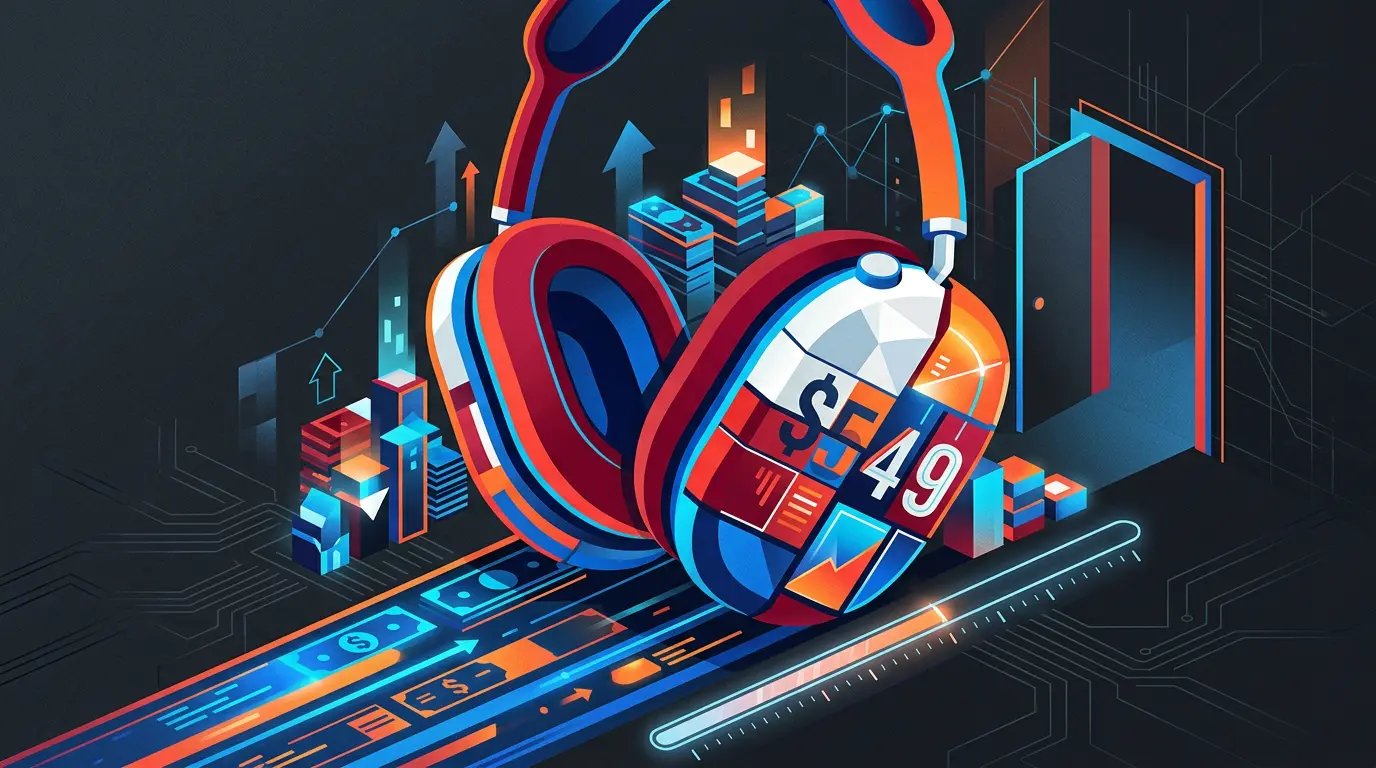
This frustration comes down to the price tag. When a customer hands over $549 for headphones, they are paying for the bleeding edge of audio engineering. They expect to be ahead of the curve.
However, the value proposition here has shifted away from technical specs. It is now entirely about the ecosystem. Apple knows that for a huge portion of their user base, the convenience of instant device switching and the status of that mesh headband matter more than a new processor. The "lazy" label is subjective, of course, but it highlights a genuine rift. Power users who waited five years for a revolution just received a maintenance patch instead.
Apple’s Strategy: Iteration Over Revolution
If you look at this like a financial analyst, the move makes perfect sense. Apple is treating the AirPods Max like a luxury staple rather than a piece of computing hardware.
Think of it like a high-end Swiss watch or a designer handbag. In those worlds, you do not change the silhouette every year because the design is the primary source of value. By keeping the chassis identical, Apple drastically cuts its costs. They do not have to retool factories or spend millions on new acoustic testing if they are just swapping the port and the pigment.
There is a real risk of brand fatigue here, though. If Apple continues to prioritize profit margins over meaningful updates, they might finally alienate the early adopters who built the brand in the first place. We have seen this happen before. A dominant player stops innovating and starts harvesting their market share. It works for a while, but it leaves the door wide open for a hungrier competitor to steal the spotlight with something actually new.
Closing Angle
The premium headphone market is a lot more crowded than it was in 2019. Modern consumers are tech-literate, they read the spec sheets, and they are increasingly sensitive to how fast their gadgets become obsolete. By doubling down on this incremental approach, Apple is making a high-stakes bet on its own cultural gravity. They are betting that the design is so iconic it doesn't actually need to improve. We are about to find out if the AirPods Max is a timeless classic or just a very expensive relic of the past. If the sales numbers dip, it will be a clear sign that even for Apple, five years is simply too long to stand still.