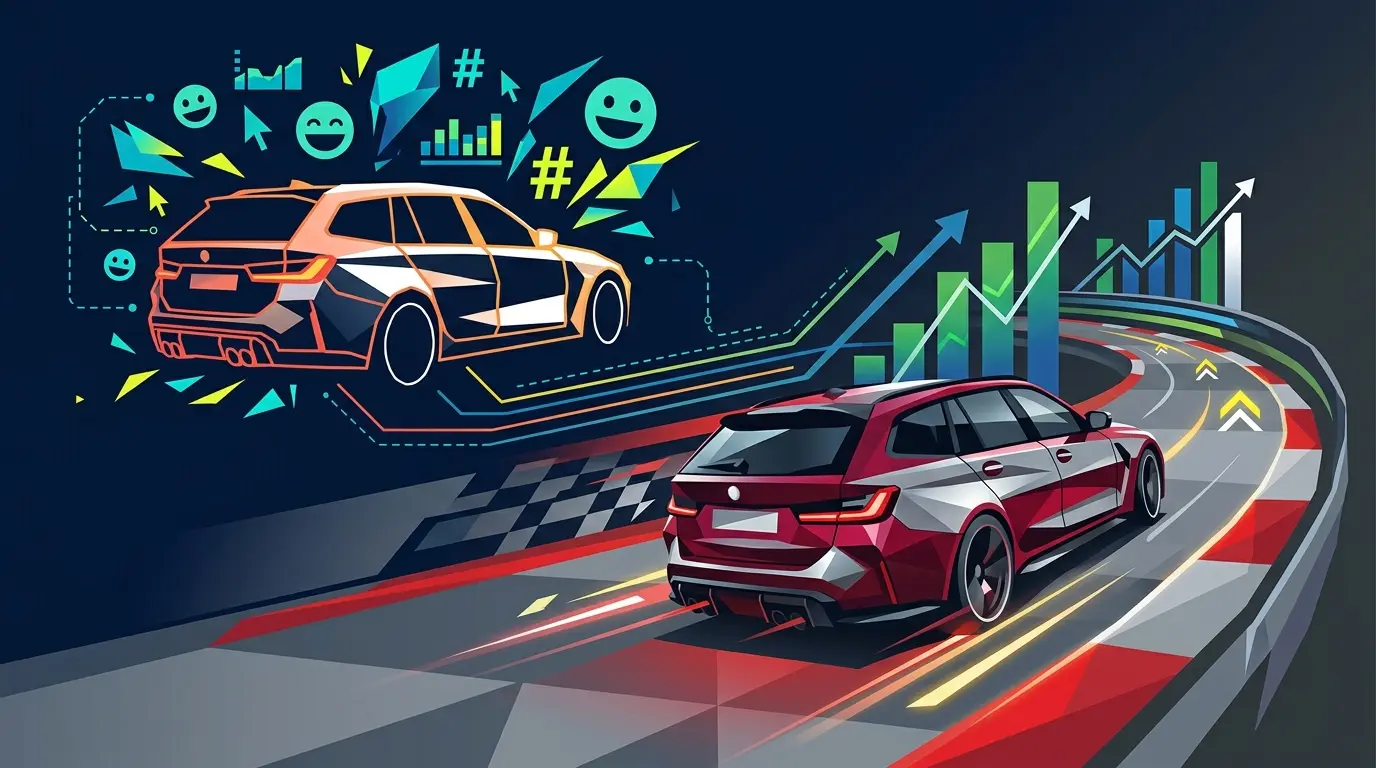
Most corporate April Fools’ jokes have the shelf life of an open carton of milk. They appear on your feed, garner a few thousand pity-likes, and then vanish into the digital landfill of forgotten marketing stunts. BMW is currently demonstrating what happens when a legacy manufacturer decides to stop treating social media engagement as a vanity metric and starts treating it as a legitimate product roadmap.
Last year, the Bavarian outfit revealed a digital concept for an M3 Touring race car. It was meant to be a joke, a playful nod to the high-performance wagon enthusiasts have been begging for since the dawn of time. However, the market responded with a level of fervor that internal data models likely could not have predicted. In a rare pivot for a company that usually moves with the bureaucratic speed of a small nation, BMW has moved beyond the conceptual phase. They have physically constructed the BMW M3 Touring 24H, and they are taking it to the Green Hell.
From Punchline to Paddock: The Genesis of the Project
When BMW first dropped the renders of the M3 Touring racer, the internet did not just laugh, it reached for its collective wallet.
The transition from a digital gag to a physical, purpose-built race machine is a fascinating case study in modern R&D. Typically, a project of this scale requires years of market analysis, focus groups, and risk assessment. Instead, BMW monitored the digital sentiment and realized that the demand for a track-ready estate was not just a niche meme, but a viable brand-building opportunity.
The Bavarian outfit was playing the long game here. By validating the enthusiasm of their most vocal fans, they are effectively crowdsourcing their brand’s competitive identity. This isn't just about building one car, it is about rewarding the ecosystem that keeps the M division relevant in an increasingly sterile automotive market.
The Nürburgring Challenge: Why the M3 Touring?
The choice of the 2026 24h Nürburgring as the car’s debut is calculated. The Nordschleife is the spiritual home of the M division, but it is also one of the most punishing environments on the planet for a heavy chassis. Transforming a luxury-oriented wagon, a platform inherently burdened by its own utility and weight, into a competitive endurance racer is a massive engineering hurdle.
From a business perspective, the risk is significant. If the car underperforms, the very fans who demanded its creation could turn. However, the potential reward for the brand’s equity is enormous. There is a specific kind of credibility that comes from taking a "family car" and throwing it into the meat grinder of a 24-hour endurance race against purpose-built GT3 machines. It signals that BMW still has the engineering grit to tackle passion projects that do not necessarily fit into a neat spreadsheet of volume sales.
The 2026 Roadmap: What We Know (and What We Don’t)
While the existence of the car is confirmed, BMW is keeping the technical specs under a tight seal. We know the destination, specifically the 2026 race, but the powertrain and chassis modifications remain unverified.
As an analyst, I find this information gap strategic. By withholding the performance metrics, BMW is maintaining a steady stream of anticipation that will last for the next two years. Will it feature a heavily modified version of the S58 twin-turbo inline-six? Will there be a significant hybrid element to test future M technology? The lack of data is the point. It keeps the conversation alive in forums and newsrooms without BMW having to spend an extra dime on traditional advertising. They have essentially turned their R&D cycle into a two-year-long viral event.
The Cultural Impact: Setting a New Precedent
This project marks a significant shift in how automakers interact with their audience. For decades, the relationship was top-down, meaning the manufacturer built a car and the consumer decided whether to buy it. Now, we are seeing a bottom-up approach where digital demand can actually influence the production of high-stakes motorsport hardware.
There is a danger here, of course. If a company starts chasing every viral trend, they risk losing their long-term strategic focus. But for a one-off project like the M3 Touring 24H, the upside is clear. It humanizes a massive corporation and makes the enthusiasts feel like they finally have a seat at the table.
Is this a one-off marketing masterstroke, or are we looking at the future of vehicle development? If BMW can turn an April Fools’ joke into a legitimate race car, you have to wonder what other impossible fan requests are secretly being built in the basement. We will have to wait until 2026 to see if the Touring can actually hold its own, but from a brand-strategy perspective, BMW has already won the first lap.