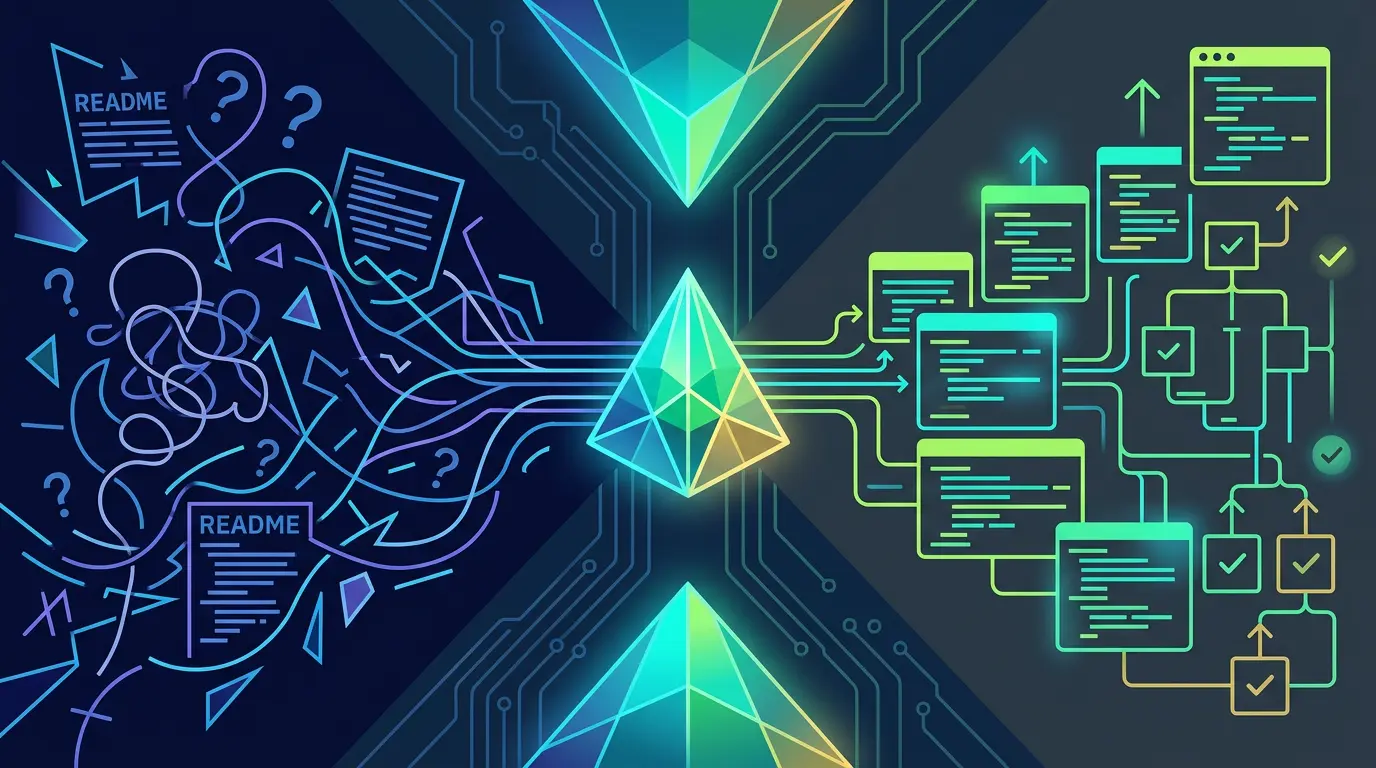
You clone the repo, run the install scripts, and then stare at a source folder that looks like it was organized by a chaotic neutral wizard. Every developer has been there. It is a visceral brand of anxiety known as onboarding dread. You are looking at fifty thousand lines of code written by people who no longer work at the company, and there is not a single helpful comment in sight. This is the intellectual wilderness where productivity goes to die.
Historically, we have solved this through code archaeology. We spend days tracing execution paths and setting breakpoints just to figure out how a single data object moves from the API to the database. It is a manual, labor intensive slog that burns the most expensive resource a tech company has: senior engineering time. Claude Code is attempting to rewrite that script. It acts as a digital map maker for these sprawling, complex systems.
The Discovery Bottleneck
Reading code is significantly harder than writing it. When you write code, you already have the mental model in your head. When you read someone else's work, you have to reverse engineer that model from the syntax. This creates a massive discovery bottleneck.
Senior engineers like Margaret (a character used by Aaron Rose on DEV.to to illustrate this struggle) often spend more time explaining architecture to juniors than they do actually building new features. This cognitive tax is the primary reason why adding more developers to a late project often makes it later. The cost of orientation is simply too high. We have been waiting for a tool that can parse these unfamiliar structures and give us a foothold. Claude Code is positioned to fill that exact gap, acting as a catalyst for the initial exploration phase of development.
Finding Your Footing Without Losing Your Mind
Claude Code is not just about writing snippets. According to the recent analysis on DEV.to, its real power lies in helping engineers find their footing when they are dropped into the middle of a massive codebase.
Think of it as a high resolution scan of a Victorian library, much like the one Margaret and her junior colleague Timothy work in within Rose's narrative. Instead of Timothy having to pull every dusty book off the shelf to find one reference, the AI provides a searchable, understandable index of the entire collection.
I have spent years watching junior devs spin their wheels because they are afraid to ask where a specific utility function lives. If an AI tool can handle that initial discovery phase, we are looking at a fundamental shift in developer experience. We are moving from manual exploration to AI assisted orientation. A developer can now ask for the location of the authentication logic and receive a structural overview instead of just a file name.
The Human in the Loop Imperative
The catch, as always, is that we cannot simply hand the keys to the kingdom over to an algorithm. Human oversight is mandatory.
Claude Code is an assistant, not a replacement for professional engineering judgment. The AI might tell you how the code is structured, but it cannot always tell you why it was built that way or if that structure is actually a pile of technical debt waiting to collapse.
In Rose's story, Margaret still needs to apply her senior level intuition to validate what the tool suggests. This is the new reality of our craft. The partnership between AI speed and human architectural intuition is where the real value lies. We use the tool to build the map, but we still have to decide which direction the product should move.
Professional judgment remains the North Star.
Reshaping the Engineering Workflow
This technology has the potential to drastically lower the barrier to entry for developers like Timothy. By reducing the time it takes to understand a system, we increase the velocity of the entire team. Senior engineers can reclaim the hours they would normally spend on manual code walkthroughs or architectural deep dives for new hires.
I suspect the master developer of the next decade will not be the person who can memorize the most syntax. Instead, they will be the person who can best curate and audit complex systems using AI as their primary lens. We are seeing the end of code archaeology as a manual chore. If we can offload the discovery phase to agents like Claude Code, we might finally be able to spend our time solving actual problems instead of just trying to find where the problems are hidden.
Will we eventually reach a point where no human actually knows the entire codebase? That is the question keeping architects up at night. For now, I am just happy to have a tool that can help me find the entry point in a legacy monolith without losing my sanity.