The End of the Syntax Specialist
For decades, the mark of a senior engineer was their ability to act as a human encyclopedia of syntax. If you knew the memory management quirks of C++, the bizarre scoping of JavaScript, or the specific concurrency model of Go, you were a god among mortals. We wore our specialization like a badge of honor, but we paid a steep price for it.
Every time a project required switching from a Python backend to a Rust microservice, we lost weeks to context switching and re-learning standard libraries. It was a tax on innovation.
Claude Code is currently attempting to repeal that tax. The tool is reframing the very nature of developer experience by suggesting that the ability to memorize syntax is becoming a commodity. We are moving toward a world where the language is just a detail, and the intent is the product.
The Architecture of Mentorship: Margaret and Timothy
A recent narrative involving two engineers, Margaret and Timothy, perfectly illustrates this shift. Margaret is a senior engineer who understands the deep logic of systems, while Timothy is her junior colleague. They operate out of a Victorian library in London, a setting that emphasizes a specific professional virtue: knowing what you do not know.
When Timothy faces a codebase in a language he hasn't mastered, Claude Code acts as the intellectual bridge. It allows him to operate within unfamiliar constraints while Margaret provides the high-level oversight.
This is not about a machine replacing an engineer. It is about the tool facilitating a transfer of knowledge that used to take months of painful paired programming. In this setup, the senior engineer becomes an architect and a validator rather than a human dictionary for syntax. The tool handles the "how" while the humans focus on the "why" and the "should we."
Managing the Competence Gap
The most interesting part of this evolution is how it handles the competence gap. In a traditional environment, if you don't know the language, you don't touch the production code. The risks are simply too high. You might introduce a memory leak or a race condition because you didn't understand the specific threading model of the stack.
Claude Code attempts to mitigate this by acting as a collaborative partner. It can translate architectural intent into functional code in a language the developer doesn't personally command.
However, this creates a new kind of responsibility. The engineer must now be an expert in verification rather than just execution.
I have spent years debugging "clever" code written by developers who thought they knew a language better than they actually did. The danger with AI-assisted coding is that it can produce code that looks flawless but fails in subtle, architectural ways. This is why the human-in-the-loop model remains non-negotiable. Margaret's role in the story is more critical than ever. She isn't there to check if Timothy missed a semicolon. She is there to ensure the AI hasn't hallucinated a logic flow that will collapse under a heavy load.
The Technical Black Box
We must be honest about what we don't know. While the narrative surrounding Claude Code is compelling, the technical specifications remain thin.
We do not have public benchmarks for its performance across diverse languages or detailed data on its underlying architecture. We are essentially taking the word of the tool's proponents that it can handle high-stakes engineering environments without introducing massive technical debt.
The source material admits there are limits to this partnership. It notes that engineers must remain aware of where their knowledge ends and the tool's reliability begins. For a senior developer, this is the most important skill in the modern stack. It is the ability to sniff out a "too-good-to-be-true" code block that might pass a unit test but fail an integration test. We are still waiting for hard data on the cognitive boundaries of these models when faced with truly obscure or proprietary internal languages.
The New Generalist
Are we witnessing the end of the specialized developer? Not exactly. We are seeing a massive hike in the bar for what it means to be a generalist.
In the past, a generalist was someone who knew a little bit of everything. In the age of Claude Code, a generalist is an architect who can command any stack as long as they understand the underlying logic of software engineering.
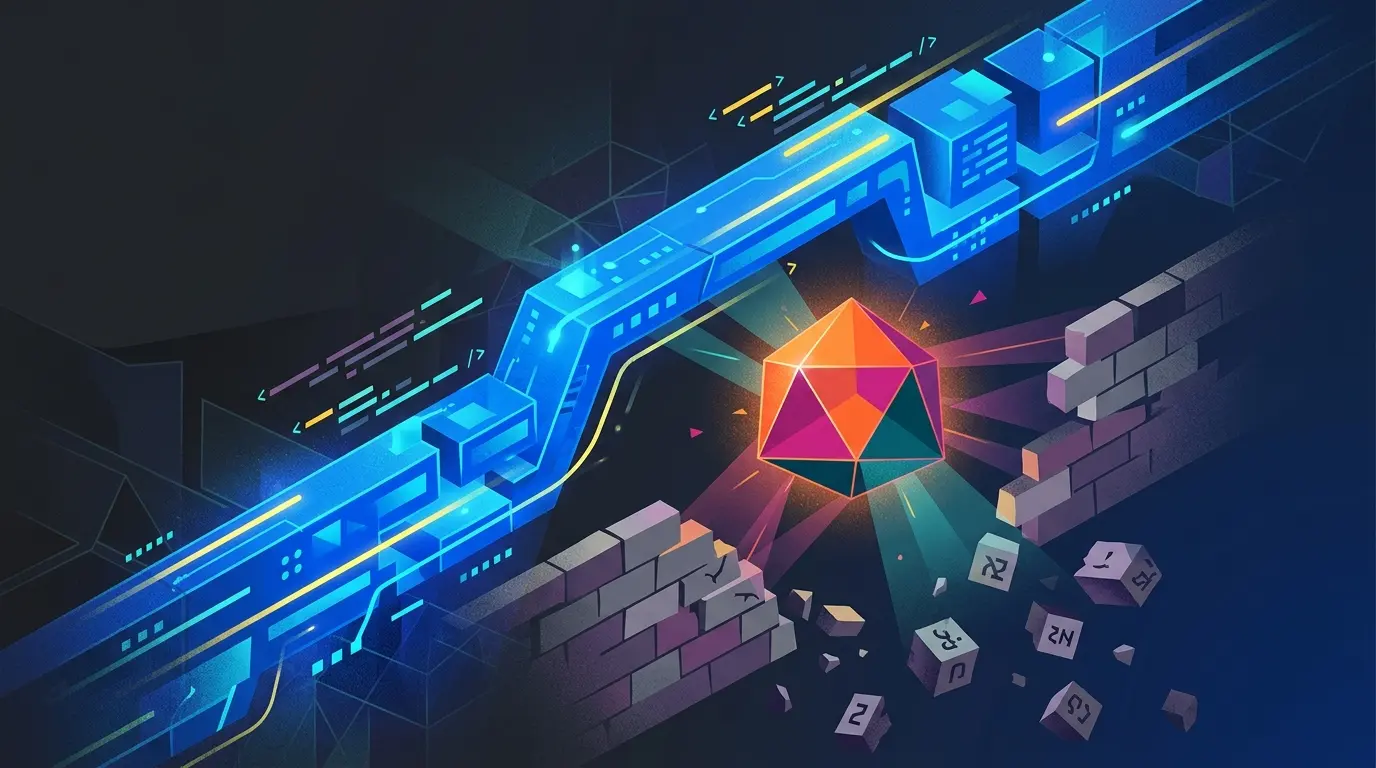
If the syntax wall has finally crumbled, the only thing left is the logic. That is both a liberating and a terrifying prospect for the industry. It means you can no longer hide behind your knowledge of a niche language. You have to be able to build systems that actually work, regardless of the characters you type into the editor.
As we look forward, we have to ask a difficult question. If the machine can bridge the gap between any two languages, what becomes the new gatekeeper for quality? My guess is that it will be the same thing it has always been: the ability to think three steps ahead of the code.