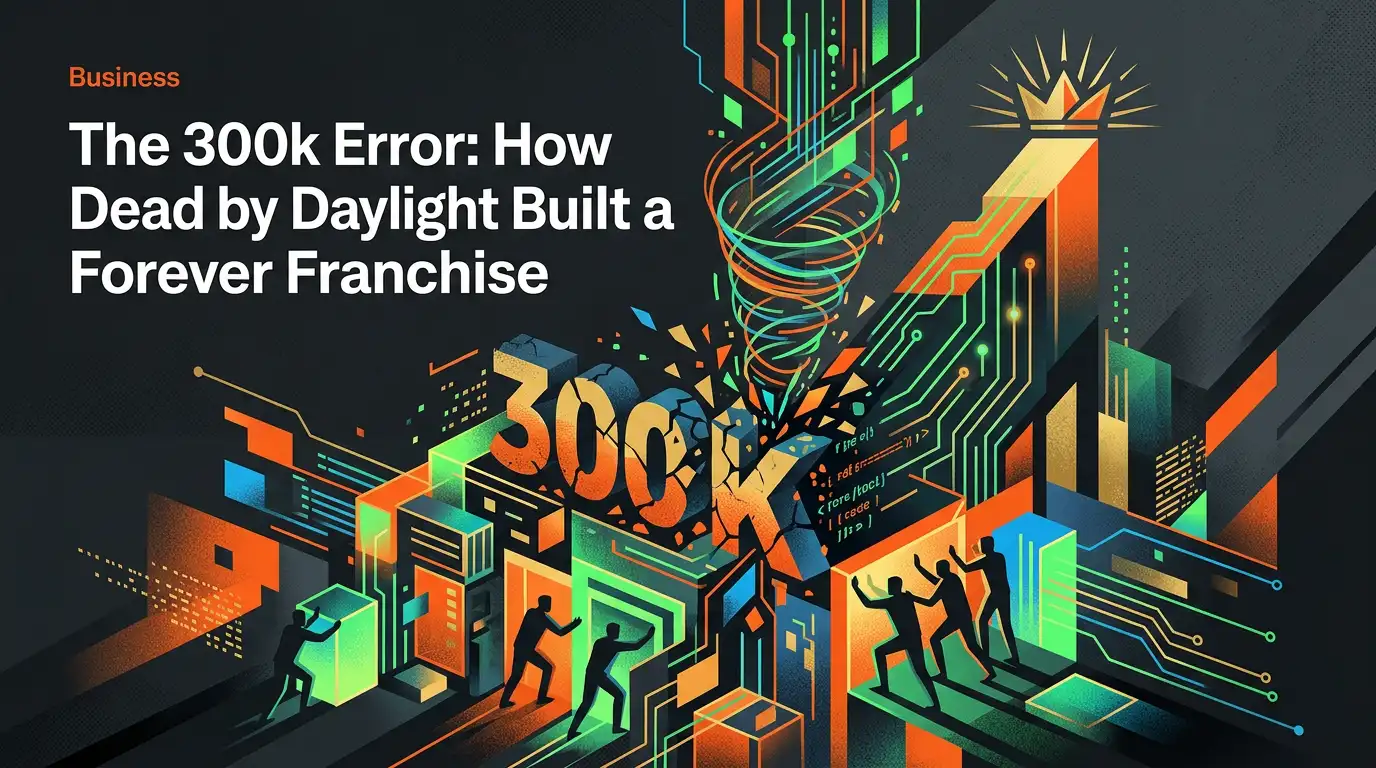
When the internal mock reviews for Dead by Daylight first landed on the desks at Behaviour Interactive, the outlook was remarkably modest. The data suggested a lifetime ceiling of 300,000 units. In the high stakes world of software publishing, that is little more than a rounding error. It was an estimate that framed the game as a niche experiment, a brief foray into asymmetrical horror that would likely flicker out after a season or two.
Fast forward to today and those early projections look like a relic from a different era.
The title did not just beat the forecast. It shattered the very logic that governed how the studio viewed its own portfolio. By committing to a live service model before the term became an industry cliché, Behaviour Interactive transformed a small scale project into a dominant market pillar. The studio has now officially stated its intention to support the title for as long as possible. Internal goals now point toward extending the game’s lifecycle into a second decade, a move that signals a fundamental change in how we value digital assets.
The Pivot to Permanent Platforms
From a market perspective, the trajectory of Dead by Daylight offers a masterclass in long term asset management. Most developers follow a predictable, often exhausting boom and bust cycle. They release a product, harvest the initial sales, and immediately pivot resources to a sequel to reset the hype loop. Behaviour Interactive took a different path. Instead of chasing the next shiny object, they decided to treat their existing game as a permanent platform.
This shift required more than just technical updates. It required a strategic overhaul of their business model. Mathieu Cote, the partnerships chief, played a central role in this evolution by effectively turning the game into a horror museum.
By securing licenses from iconic horror franchises, the studio created a compounding effect. Each new partnership did not just bring in new players, it increased the value of the existing ecosystem for the veteran user base. This created a high barrier to entry for competitors who tried to replicate the formula. You can build a better engine, but you cannot easily buy the decades of cultural cachet that Cote has integrated into the game’s roster.
Operational Stability and the Co-Dev Blueprint
I have observed many studios struggle to maintain a single hit while pursuing new ventures, but Behaviour managed to use this success to fortify their entire corporate structure. The stability provided by Dead by Daylight has significantly influenced their broader co-development operations. When you have a reliable, high performing revenue engine, you can afford to be more selective with external contracts. It provides a level of financial insulation that is rare in an industry currently defined by volatility and sudden layoffs.
Dave Richards, the senior creative director, now faces the unique challenge of balancing this longevity with technical sustainability. Maintaining a decade old codebase is not just a programming task, it is an exercise in architectural preservation. Every new feature must be weighed against the technical debt of the past ten years.
Yet, the studio seems undeterred. The goal is no longer just to survive the next quarter. It is to ensure the game remains viable for twenty years.
The Risk of the Single Pillar
There is, of course, a calculated risk in betting so heavily on a single, aging title. We are seeing a trend where "forever games" dominate player time, making it increasingly difficult for new intellectual property to find oxygen in the room. If a studio focuses all its creative energy on maintaining a legacy platform, does it lose the muscle memory required to innovate from scratch?
However, the financial math often favors the known quantity. For Behaviour, the cost of player acquisition for a sequel would be astronomical compared to the cost of retaining an existing fan through a mid chapter update. The data suggests that as long as the community remains engaged, the traditional sequel is an inefficient use of capital.
Looking Toward the Second Decade
As we look toward the future of the Fog, a provocative question remains for the rest of the industry. Has Dead by Daylight proven that the sequel is an obsolete concept for successful multiplayer titles?
If a game can be iterated upon indefinitely, the need for a "Part 2" disappears.
Behaviour Interactive is betting that their community would rather see their favorite platform grow for twenty years than start over from zero. It is a bold defiance of the traditional product lifecycle. Whether other studios can replicate this without the unique lightning in a bottle that is the horror genre remains to be seen. One thing is certain. The 300,000 unit forecast is now a piece of history, serving as a reminder that in this business, the biggest wins often come from the projects we underestimate the most.