The tension inside game development studios usually stays behind closed doors, muffled by non-disclosure agreements and the polite hum of high-end cooling fans. But the quiet part is being shouted now.
A high-profile investor recently stepped into the light—albeit anonymously—to express a profound sense of "shock and sadness" over how the gaming industry is treating generative AI. According to this investor, the creative workforce isn’t just skeptical; they are actively "demonizing" the technology.
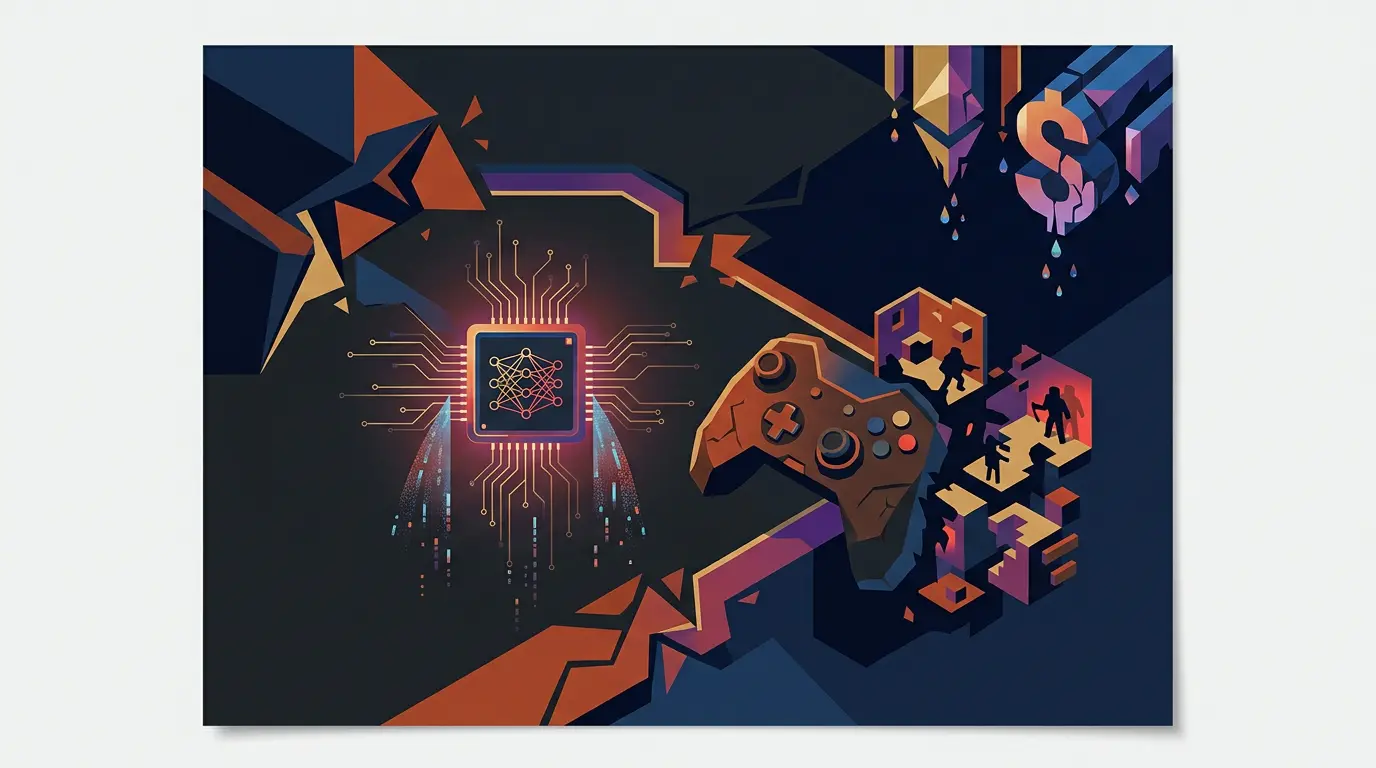
It is a classic collision of worldviews. On one side, you have the capital: the people who see a line on a spreadsheet and want it to go up. To them, generative AI is the ultimate efficiency play. On the other side are the people actually making the things we play—the artists, writers, and coders who see that same technology as a threat to their livelihoods and the creative soul of the medium.
The Investor’s Lament
When this investor used the word "demonization," they weren't just being dramatic. They were signaling a deep sense of confusion.
From a purely financial perspective, the case for generative AI is almost too good to ignore. It promises to slash development times, automate the "grunt work" of asset creation, and allow smaller teams to punch way above their weight class. For someone holding the purse strings, watching an industry reject a tool that makes things cheaper and faster feels like watching a marathon runner refuse to wear sneakers.
This "shock" suggests that the financial wing of the industry expected a warm embrace. They saw a tool for scalability; they saw growth. What they didn’t expect was a collective wall of resistance from the people who actually build the worlds. To the investor, the pushback feels irrational—a knee-jerk hostility toward the inevitable march of progress.
To the workers, however, this isn't about being Luddites. It’s about survival.
Why Gaming is Different
Gaming has always been at the bleeding edge of tech, so why is this the hill everyone is choosing to die on?
Unlike other sectors, game development is a hyper-concentrated blend of every creative discipline: music, visual art, narrative, and engineering. When you introduce a tool that mimics all four by scraping the work of existing creators, you aren't just introducing a new software suite. You're touching a live wire.
There is a deep-seated fear that AI-integrated pipelines will lead to a "hollowing out" of the workforce. If a machine can generate 500 variations of a wooden chair or write a thousand lines of incidental NPC dialogue, what happens to the junior artists and writers who used those tasks to cut their teeth?
Then there’s the "soullessness" factor. Players are increasingly sensitive to the feeling of AI-generated content. In an industry where "hand-crafted" is a major selling point for $70 titles, the perception of cutting corners can be brand poison.
The Anonymity Factor
We have to address the elephant in the room: we don’t actually know who this investor is.
The report characterizes them as a "major investor," yet they remain nameless, and the specific companies they’re frustrated with remain hidden. This anonymity matters. It allows for a narrative of "industry-wide demonization" to take hold without the burden of specific evidence.
Labeling a workforce’s concern as "demonization" is a clever bit of rhetorical framing. It paints the creators as the aggressors and the technology—or the investors backing it—as the victim. By keeping the details vague, it obscures the very real, very nuanced debates happening over labor rights and the legalities of training data.
A Potential Divorce
This rift isn't just a PR problem; it’s a potential economic bottleneck.
If the people who write the checks feel unwelcome or misunderstood, the money might start looking for the exit. We could see a cooling of investment in traditional, talent-heavy studios in favor of "AI-native" startups—teams built from the ground up to bypass the messy human resistance of established developers.
For studio leadership, this is a nightmare. Executives are currently caught in a pincer movement. They have to keep their shareholders happy with promises of AI-driven efficiency while simultaneously preventing a mass exodus or a unionization surge among their creative staff.
The gaming industry has survived many shifts, from the move to 3D to the pivot to live services. But those were changes in how we play. This is a change in how we create. Whether the industry’s resistance is a noble stand for artistic integrity or a futile attempt to hold back the tide remains to be seen.
But one thing is clear: the honeymoon phase between tech investors and game creators is officially over. The question now is whether they can find a way to live together, or if the "sadness" of the money will eventually lead to a permanent divorce.