Imagine a world where your morning "Sign Up" flow doesn’t just ask for an email, but demands a government ID—and if you’re under sixteen, the door stays bolted shut.
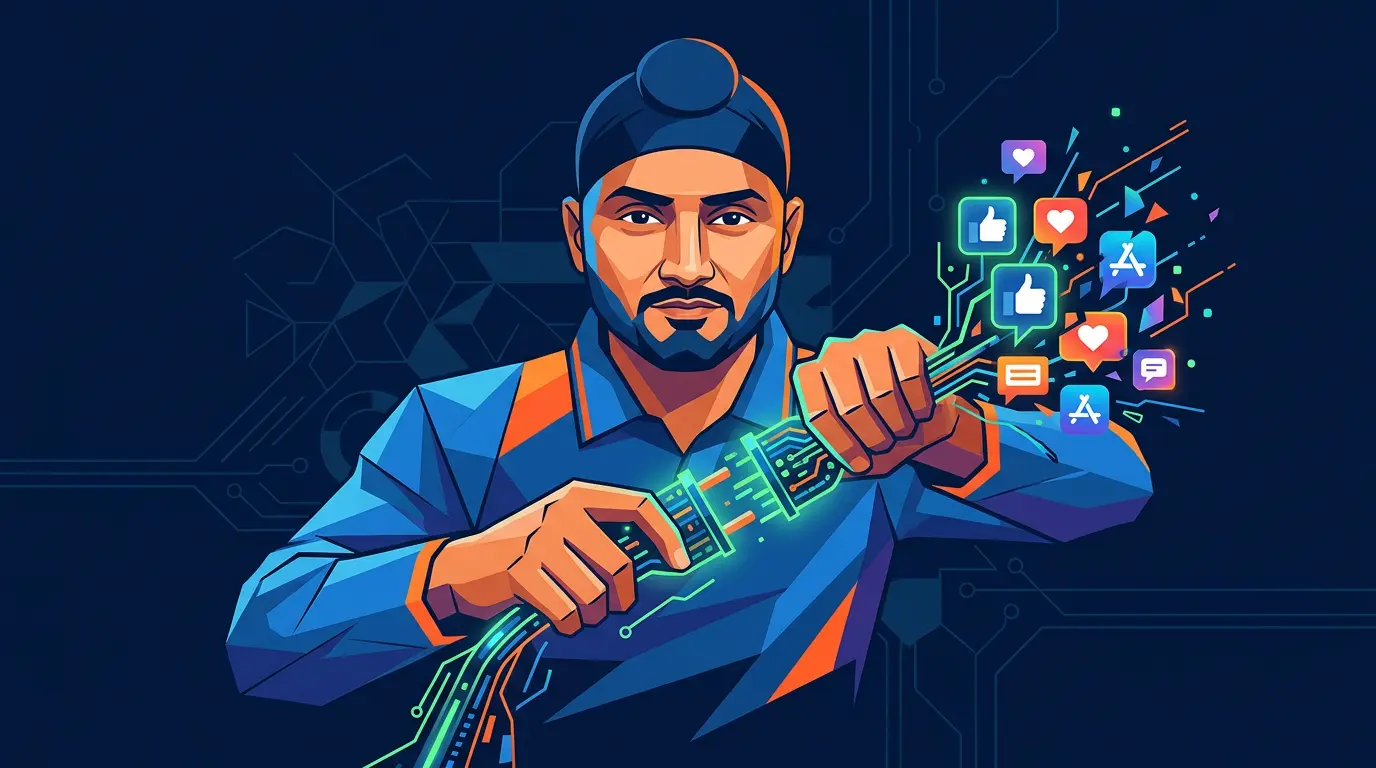
This isn't a plot point from a dystopian tech thriller. It’s the legislative vision being championed by Harbhajan Singh. The cricket icon turned Rajya Sabha MP recently stepped up to the crease in the Indian Parliament with a proposal that has the tech industry sweating: a mandatory, legally enforced ban on social media for anyone under the age of 16.
The Proposal: A Hard Line in the Digital Sand
Singh isn't interested in the "soft" approach. We’ve all seen the half-hearted parental control toggles and "Are you 13?" checkboxes that any savvy third-grader can bypass. Singh is calling for a hard legal boundary—a digital firewall designed to keep the next generation out of the algorithmic trenches.
To be clear: this isn’t a law yet. It’s a legislative push, a formal suggestion made during the high-stakes environment of a budget session. But in India, when a cultural titan like Singh speaks in the upper house, the conversation stops being a niche parental concern and becomes a matter of national policy. He’s essentially asking the government to treat social media access with the same gravity as a driver’s license.
The Rationale: Mental Health and the “Values” Gap
Why the drastic measure? Singh’s argument touches on a nerve that’s been raw for years: the psychological toll of the infinite scroll. He specifically pointed to rising anxiety levels and the erosion of "societal values."
It’s a fascinating, if complicated, angle. While global tech critics focus on body dysmorphia and dopamine loops, the Indian context adds a layer of cultural protectionism. There is a palpable fear among policymakers that the hyper-individualistic, often Western-centric nature of social media is acting as a solvent, dissolving local cultural foundations 15 seconds at a time.
Singh is betting that a total blackout for teens is the only way to protect those values before they’re filtered through a viral dance challenge.
The Implementation Problem: Can You Actually Lock the Gate?
As anyone who has covered tech for more than a week knows, there is a massive chasm between "passing a law" and "writing the code."
Enforcing an age ban is a logistical nightmare. To truly verify age, platforms would need to collect even more sensitive data from minors—the exact opposite of what privacy advocates want. If you have to hand over an Aadhaar card or a passport just to open a "finsta," you’ve just given a massive corporation a goldmine of private metadata.
And then, there’s the "cat-and-mouse" reality.
Teens are the undisputed masters of the digital workaround. Between VPNs, burner accounts, and the ancient art of lying about your birth year, a total ban risks simply pushing the behavior into the dark corners of the web where oversight is non-existent.
The “Celebrity-Legislator” Effect
There is a specific gravity to Harbhajan Singh leading this charge. In India, cricketers occupy a tier of celebrity that Western athletes can only dream of. When Singh speaks, he isn’t just reaching policy wonks; he’s reaching millions of households.
By taking this stand, he’s effectively shifting the goalposts. For a decade, the narrative has been that parents need to "do better" at monitoring their kids' screen time. Singh is flipping that script. He’s arguing that the burden of safety shouldn’t fall on a busy parent, but on the state and the platforms themselves.
The era of "self-regulation" is looking increasingly like a relic of the past.
What Comes Next?
Is 16 about to become the new digital age of consent?
Singh’s proposal has put Silicon Valley—and its Indian counterparts—on notice. We are staring down a heated debate between those who see this as a vital "Digital Seatbelt" and those who view it as a clumsy overreach that will stifle a generation’s ability to learn and connect in a connected world.
The real question isn't whether the ban happens, but what it forces us to confront. Perhaps the answer isn't a total blackout, but a fundamental redesign of the internet itself—one where the "Like" button doesn't function as a measure of a child's self-worth.
One thing is certain: the quiet days of the internet are over, and the gatekeepers are finally starting to check IDs.