Imagine showing up to a high-stakes drag race in a perfectly tuned Civic, only to realize the competition brought high-output electric motors—and then deciding to just park the car and walk home. That’s the vibe coming out of Honda HQ this week.
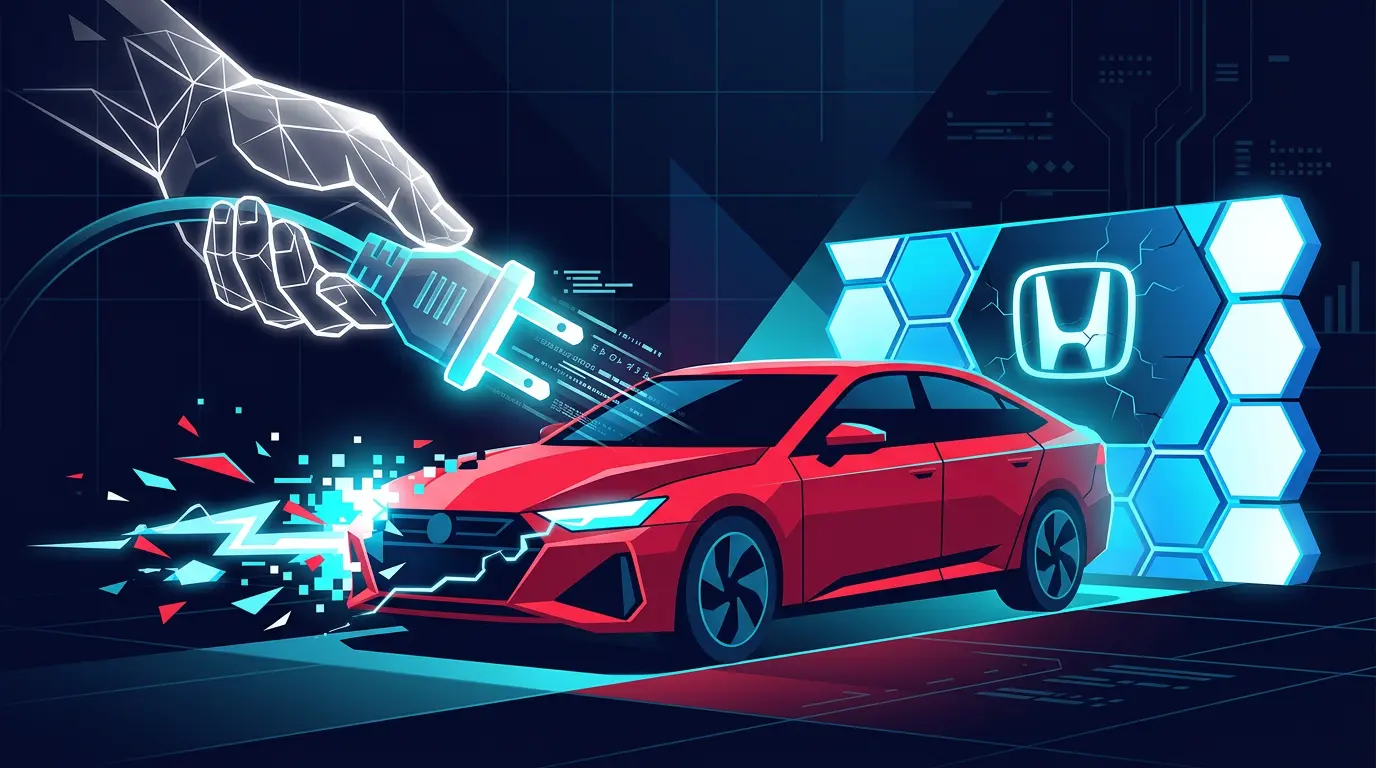
In a move that’s sent a shockwave through the industry, Honda has officially pulled the plug on three electric vehicle (EV) models slated for the North American market. For a company that built its empire on the slogan "The Power of Dreams," this feels less like a vision for the future and more like a sudden, mid-day nap.
This isn't a minor trim adjustment. It’s a full-scale tactical retreat in one of the most critical markets on the planet.
The Strategic Pivot: A Controlled Burn?
First, the autopsy. Honda confirmed it is terminating three specific EV models that were supposed to lead its charge into the U.S. and Canada. While the automaker hasn't been particularly chatty about the why behind the decision, the immediate impact is undeniable: Honda’s product roadmap just got a lot shorter and much less electric.
There is a crucial distinction to make here. We know these three models are dead in the water. What we don't know is whether this is a permanent surrender or a messy "ctrl-alt-delete" on their current EV platform.
Whatever the reason, the fallout won't stay local. Recent reports suggest this decision will reverberate far beyond North America, meaning what happens in a Michigan showroom today will eventually be felt from Tokyo to Berlin.
An Existential Crossroads
The scary part isn't just the lost sales; it’s the lost relevance. By withdrawing these models, Honda isn't just losing a few line items on a spreadsheet—it’s losing the battle for mindshare. While Tesla continues to own the conversation and legacy rivals scramble to get battery-powered fleets on the road, Honda appears to be hitting the brakes.
One report went so far as to suggest that by killing these EVs, Honda is effectively killing any chance of competing in the future. That’s a heavy indictment. It paints a picture of a company that isn’t just lagging, but effectively ceding territory.
If you aren't at the table during the great electrification of the 2020s, you’re probably going to be on the menu by the 2030s.
From where I sit, this looks like a classic case of a legacy giant struggling to find its footing. Honda has always been an engineering company at its core, famous for internal combustion mastery. But transitioning to software-defined, battery-heavy vehicles is a different sport entirely. It’s like asking a master watchmaker to suddenly start manufacturing high-end smartphones. The skills are adjacent, but the logic is completely different.
Global Implications of a Regional Retreat
It would be a mistake to view this as a "U.S. problem." North America is the proving ground. If Honda can't make its EV strategy work here, the brand's global standing takes a massive hit.
A move like this sends a loud signal to investors, dealers, and consumers: We aren't ready. In a world where climate targets are becoming law rather than suggestions, "not being ready" is a dangerous place to be.
Of course, there is a more optimistic reading. Maybe Honda realized these three specific models just weren't good enough. Maybe they saw the specs of upcoming competitors and realized they were bringing a knife to a railgun fight. In that scenario, killing these models is a mercy mission—a way to clear the deck so they can focus on a second-generation platform that can actually hold its own.
The Long Road Ahead
But even a tactical reset has a price tag.
Momentum is a finite resource. Every year Honda spends "restructuring" its platform is another year Tesla, Hyundai, and Ford spend gathering data and building loyalty with EV buyers.
As someone who has covered the rise and fall of dozens of tech giants, I’ve seen this movie before. The companies that survive radical shifts are rarely the ones that wait for the perfect moment to jump in; they are the ones that jump in, fail fast, and iterate. By pulling back now, Honda might be avoiding a failure today, but they could be guaranteeing a catastrophe tomorrow.
Is this a prudent consolidation of resources or the beginning of a long-term decline? The answer depends entirely on what Honda does next. If they don't have a massive, undeniable win waiting in the wings, we might look back at this retreat as the moment a legendary brand started to fade into the rearview mirror.
In the race toward the future, you can't win if you aren't on the track.