The Longest Two Weeks in Tech
We all know that specific, low-grade panic that sets in when 5G drops out for the duration of an elevator ride. You instinctively thumb your screen, refreshing a feed that won't load, waiting for the digital world to snap back into focus. Now, imagine that silence stretching out for fourteen days.
No WhatsApp. No banking. No way to tell your family you’re okay beyond the range of a physical shout.
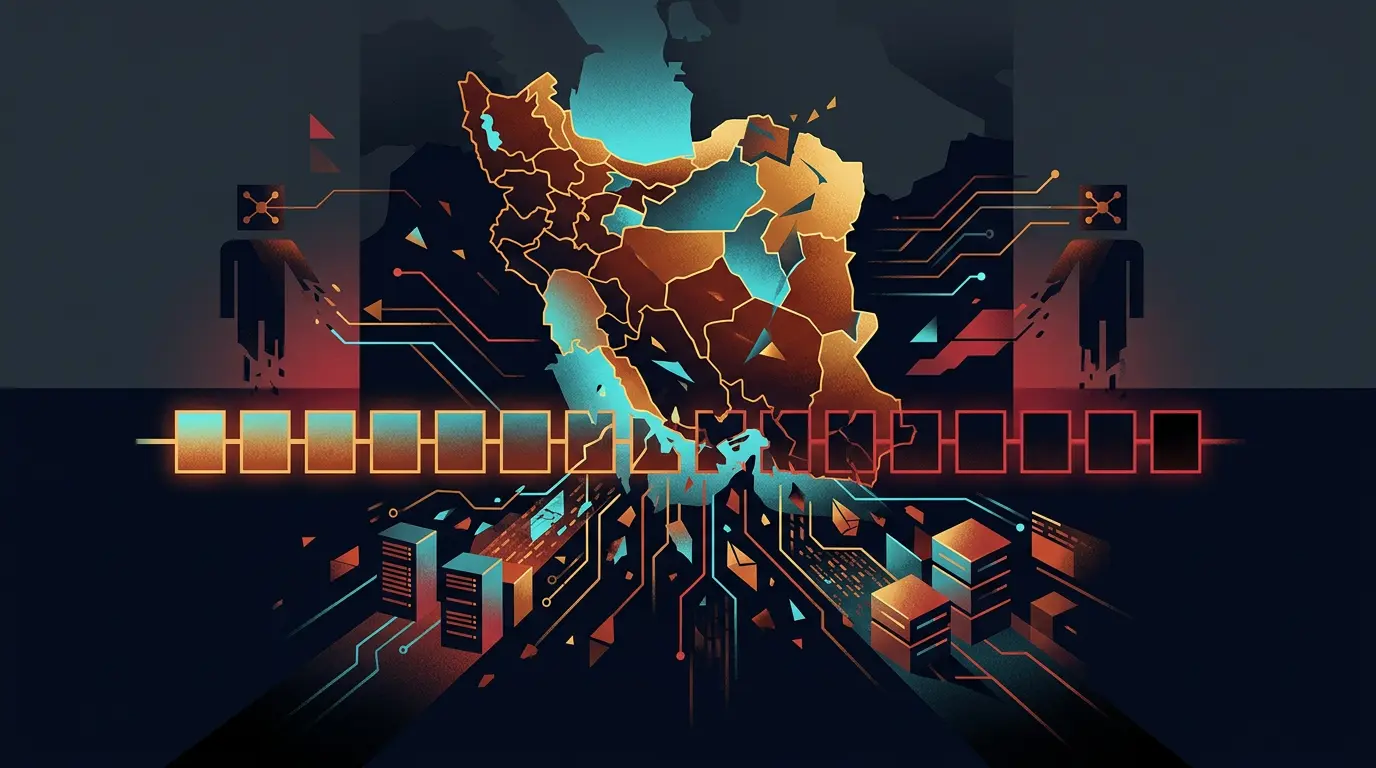
This is the current reality in Iran. According to the connectivity monitors at Netblocks, the country has been plunged into a sustained, state-level blackout that has officially crossed the two-week mark. This isn't a technical hiccup or a server farm fire. It is a deliberate disconnection that has turned one of the most digitally active populations in the Middle East into a ghost map.
The Mechanics of the Kill Switch
When people talk about an internet “kill switch,” they usually picture a giant red button in a villain’s lair. The technical reality is much more clinical—and much more effective. It’s a systematic strangulation of the country’s BGP (Border Gateway Protocol) and DNS routing.
By seizing control of the physical infrastructure—the fiber optic cables and gateways that bridge domestic traffic to the global web—the state can effectively tell the rest of the world that Iran no longer exists online.
Netblocks has been tracking the disruption with surgical precision, confirming that the blackout is both total and persistent. For the average person on the ground, this is far more than a social media detox. It’s a freeze of the entire domestic ecosystem. Try running a business when your payment processor is a brick. Try finding a pharmacy when the maps won't load. The blackout acts as a digital fog of war, making the simple act of existing in a modern city nearly impossible.
The Information Vacuum
I’ve watched these blackouts play out in various regions over the last decade, but the duration here is what should rattle us. A few hours is a disruption; fourteen days is a siege.
When you sever a population’s connection to the global stream, you aren't just stopping dissent—you are destroying the ability to verify truth. In this vacuum, rumors become the only currency. Without the ability to check international news or even a local report from the next town over, the psychological toll becomes a weapon. The state creates a closed-loop environment where the only information that moves is the data they allow to trickle through a sterilized, state-controlled Intranet.
Resilience and the Cat-and-Mouse Game
However, humans are remarkably stubborn when it comes to talking to each other. Whenever a government builds a wall, the citizens start looking for ladders.
We are currently seeing a high-stakes game of technical cat-and-mouse as Iranians turn to alternative communication methods. This isn't about standard VPNs anymore; when the backbone is severed, even the best encryption needs a path to travel on.
Reports are surfacing of citizens turning to decentralized technologies and offline-capable apps that sync via Bluetooth or local Wi-Fi mesh networks. It’s a return to an analog-adjacent way of sharing data—passing digital information hand-to-hand via USB sticks, much like a modern-day Samizdat.
Meanwhile, the international developer community is scrambling to find cracks in the curtain. Whether it’s through satellite link-ups or new proxy protocols designed to look like harmless background traffic, the goal is the same: find a hole in the silence. It’s a desperate throwback to the early days of the web, where connectivity was a hard-won prize rather than a background utility.
A Blueprint for Fragmentation
The most unsettling part of this 14-day blackout isn't just the immediate suffering—it’s the precedent. We are watching the "Splinternet" move from a theoretical white paper to a functional reality.
If a nation can successfully vanish from the global web for two weeks without its internal infrastructure collapsing entirely, other restrictive regimes will take notes.
The global internet was built on the premise of being an open, interconnected web that bypassed borders. But as state-level control over physical infrastructure tightens, that dream looks increasingly fragile. The Iranian blackout is a stress test for the very idea of a global network.
If the “kill switch” becomes a standard tool of statecraft, we have to ask ourselves if the era of the truly World Wide Web is reaching its expiration date. As the silence in Iran enters its third week, the answer feels uncomfortably close to 'yes.' The technical hurdles to bypassing these shutdowns are growing higher, and the cost of staying connected is becoming a matter of personal survival rather than digital convenience.