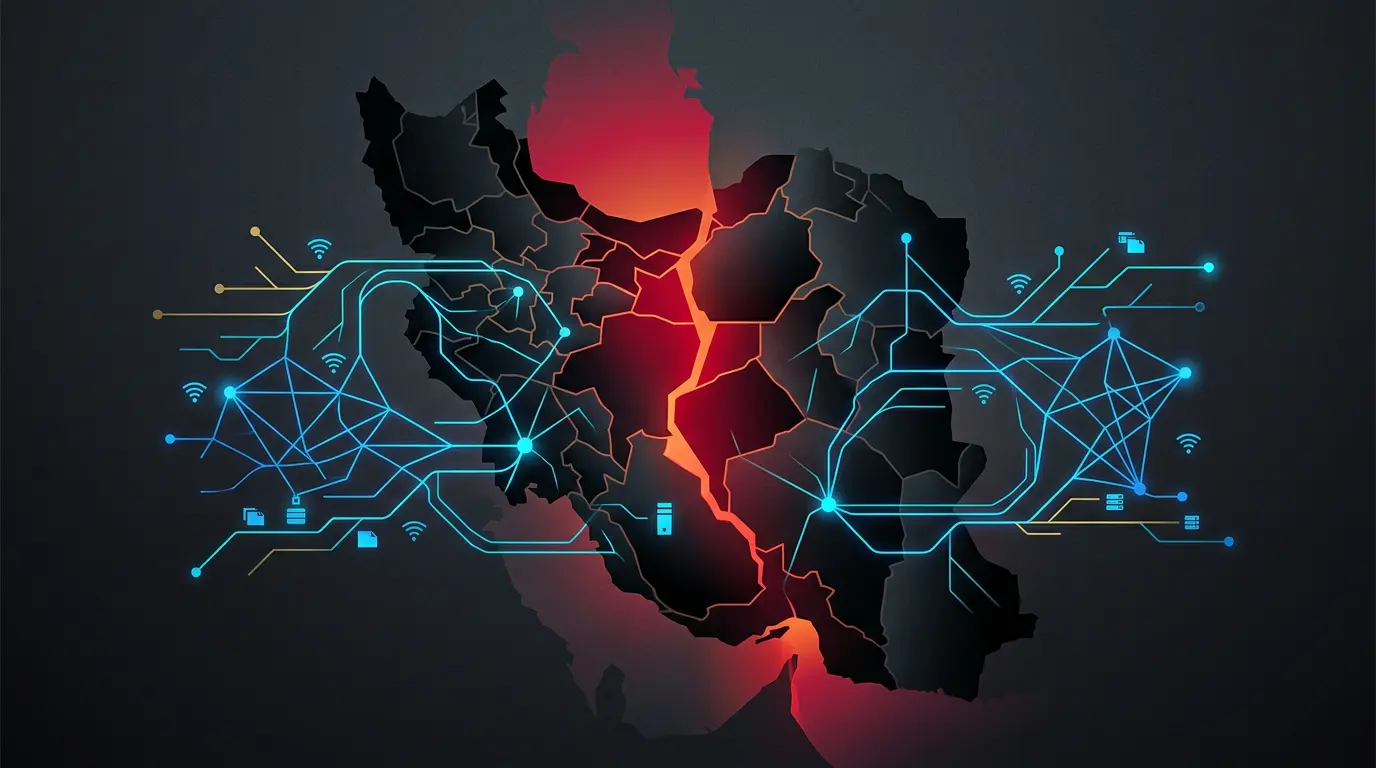
Two weeks is a long time to go without a pulse. For most of us, a thirty-minute Slack outage is a minor crisis and a spotty Wi-Fi connection at a coffee shop is a reason to complain. But in Iran, the silence has lasted fourteen days and counting.
This isn't some voluntary digital detox or a thought experiment in "unplugging." It is a state-mandated siege. According to the connectivity monitors at Netblocks, the nation has been effectively severed from the global grid, turning a once-connected society into a digital island. It is perhaps the most aggressive test of technical resilience we’ve seen in the modern era.
How to Kill a Network
Killing the internet for an entire country isn't as simple as flipping a giant light switch in a basement somewhere. It’s more like a systematic strangulation. By targeting the core infrastructure, authorities have created a total vacuum where information used to flow. This isn’t just about making sure nobody can post to TikTok; it’s about cauterizing the nervous system of a modern society.
Netblocks has been tracking the country’s vitals—or the lack thereof—and the data is grim. For the average person in Tehran or Tabriz, the "World Wide Web" has shrunk to the size of their front door. The technical restrictions are designed to be absolute, rendering the usual monitored channels useless for anyone trying to send a signal to the outside world.
The Digital Underground
But here is the thing about tech-savvy populations: you can’t simply delete the internet from their brains. As the official pipes went dry, a digital underground began to hum.
What we’re seeing now is a high-stakes game of cat-and-mouse. As the blackout dragged into its second week, behavior shifted. People began abandoning centralized platforms in favor of experimental, decentralized tools. While the state is busy trying to patch every hole in the digital dam, the population is busy digging new cracks.
It’s a classic case of evolution under pressure. When the front door is barred and bolted, people start building windows. Iranians are currently using a cocktail of unspecified circumvention tools and technical workarounds to restore whatever scraps of connectivity they can find. It is remarkable, if not entirely surprising, that the drive to connect remains more robust than the tools used to prevent it.
The Cost of the Silence
The true impact of this fourteen-day blackout isn't found in a spreadsheet of uptime percentages. It’s found in the economy, which is currently stuttering. Small businesses that live and die by digital payments or social media marketing are paralyzed.
Then there is the human toll. Families separated by borders are currently living in a state of permanent anxiety, unable to verify if their loved ones are even safe.
There’s a profound psychological weight to being digitally severed. It’s like being trapped in a soundproof room; you can hear the world moving around outside, but you can’t make a sound to let them know you’re still there. In this environment, sending a single message becomes an act of defiance. Every citizen has been forced to become a junior network engineer just to check in on their neighbors.
The Decentralization Survival Tactic
What’s happening in Iran right now will eventually be a case study for every digital rights activist and technologist on the planet. This isn't just a local issue; it’s a preview of the future of state-led control. We are watching a new precedent be set in real-time.
In Silicon Valley, we treat "decentralization" like a buzzword for venture capital pitches or niche finance apps. In Iran, decentralization is a survival tactic. Tools that don’t rely on a single, state-controlled chokepoint are no longer a luxury—they are the only way to preserve free speech.
State-controlled shutdowns are a blunt instrument in a world that increasingly requires a scalpel. You can throttle the bandwidth and you can block the IP addresses, but you cannot easily extinguish the human instinct to reach out. Can a government truly "turn off" a society that has learned how to build its own bridges? The longer this blackout lasts, the more the Iranian people are proving that the answer is a definitive no. The silence is loud, but the underground is busier than ever.