Your phone is a brick. Not because the hardware failed, but because the air around it has gone dead. No WhatsApp pings from your cousin in Berlin, no news alerts, no checking your bank balance to see if you can afford lunch. For 80 million people in Iran, this isn’t a thought experiment in digital detox—it has been the lived reality for two weeks straight.
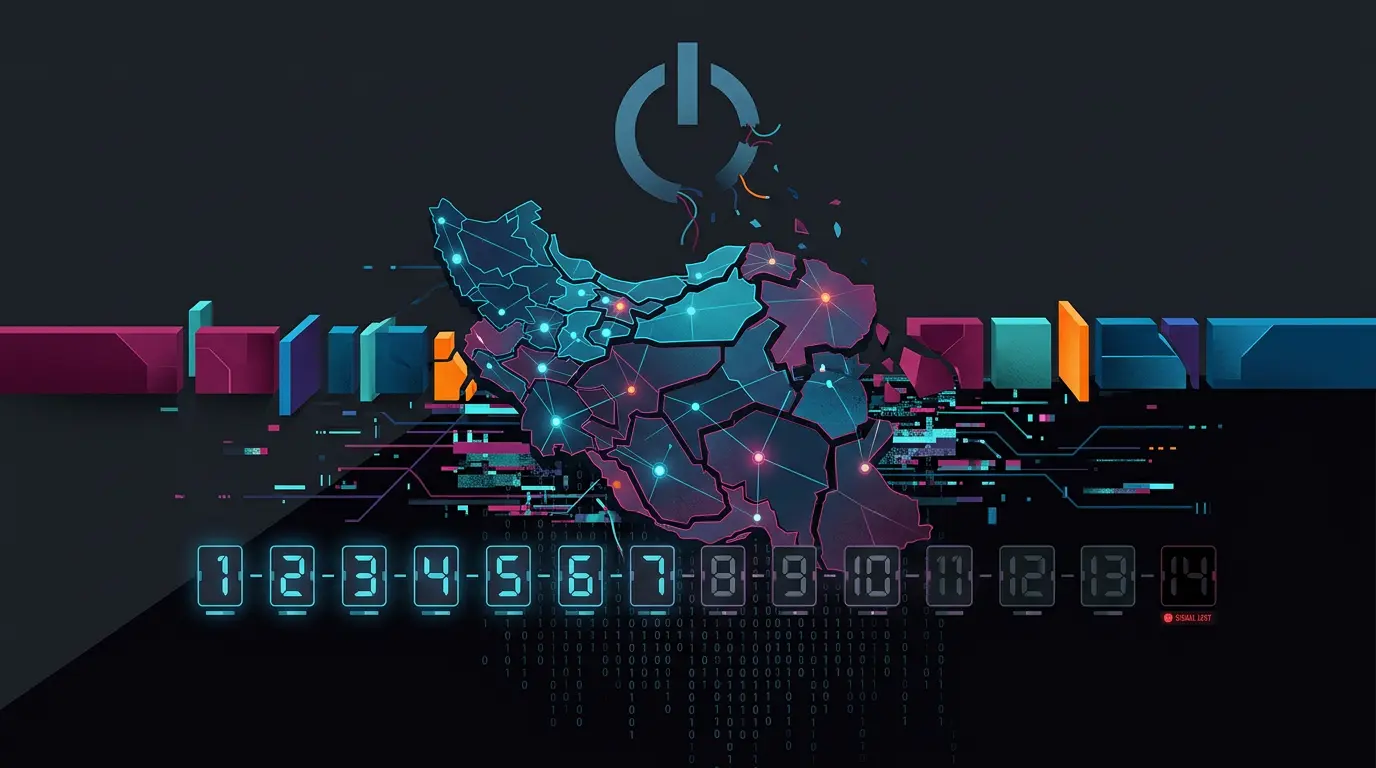
We like to talk about the internet as a utility, something akin to water or power. But when a state pulls the plug, you realize it’s actually more like oxygen. For 14 consecutive days, the Iranian government has maintained a near-total blackout, effectively turning a modern, tech-obsessed nation into a silent island. According to the connectivity monitors at Netblocks, this isn't a flicker in the system; it’s a calculated, manual siege.
The Anatomy of a Blackout
Data is usually dry, but the charts coming out of Netblocks right now are chilling. As of Friday, the blackout hit the two-week mark. This isn't just a matter of the government blocking Twitter or making YouTube laggy. We are witnessing the systematic dismantling of a nation’s connectivity.
The playbook is predictable but brutal. It usually starts with throttling—making the internet so agonizingly slow that it becomes useless—before someone finally hits the "kill switch" on the core infrastructure. By keeping the lights off for 14 days, the authorities aren't just trying to suppress a specific video or a protest hashtag. They are trying to rewrite the way an entire population communicates. It’s the digital equivalent of a total communications embargo.
The Human Cost of the Quiet
From the comfort of a connected city, it’s easy to look at this through a geopolitical lens. But the ground-level reality is a tragedy of small, interrupted lives.
Think about the local shop owner who built their entire customer base on Instagram or Telegram. Their livelihood vanished the moment the signal did. Think about the student whose research is locked in a cloud they can no longer reach, or the daughter who can't verify if her parents are safe three towns over.
Fourteen days of silence is an eternity. It creates a profound psychological weight—the feeling of being ghosted by the rest of humanity. When your identity and social ties are woven into fiber-optic cables, cutting those cables doesn't just stop the flow of data; it induces a state of forced amnesia.
Resistance in the Cracks
Here is the thing about the internet: you can’t easily delete it from a population that has already tasted it.
The most compelling part of this story is the "workaround economy." Iranians have spent years becoming masters of digital survival. Netblocks has noted that as the blackout drags on, people are forced to find the cracks in the wall.
It’s a high-stakes game of cat-and-mouse. As the state tightens its grip on traditional ISPs, citizens turn to offline mesh networks, localized servers, and creative digital bypasses. They are quite literally climbing over digital rubble to make sure their voices aren't extinguished. But these aren't perfect solutions. They’re slow, they’re risky, and they carry heavy penalties. When you have to use a backdoor just to say "I’m okay," the state has already won a partial victory by turning basic human contact into a crime.
A Warning for the Global Web
This feels like a dark milestone for the open web. Iran is providing a successful blueprint for "internet sovereignty"—a polite term for a digital cage. It sets a dangerous precedent for any regime that finds the global flow of information too inconvenient to manage.
If a country can disappear from the map for two weeks with minimal technical blowback, the dream of a borderless, global internet starts to look incredibly fragile. The challenge for tech giants and NGOs is now existential: how do you provide a lifeline when the state owns the very cables that carry the life?
The Long Game
Can a 21st-century economy actually survive in permanent isolation? Almost certainly not. You can't run a modern nation on 19th-century tools.
By imposing this 14-day blackout, the Iranian government might be silencing the current conversation, but they are inadvertently training a generation to be the most tech-resilient people on Earth. Every day the internet stays down, another citizen learns how to hop a firewall. Every hour of silence is a lesson in digital resistance.
The question isn't just when the government will turn the lights back on. It’s what kind of battle-hardened digital citizens will be waiting on the other side when they do.