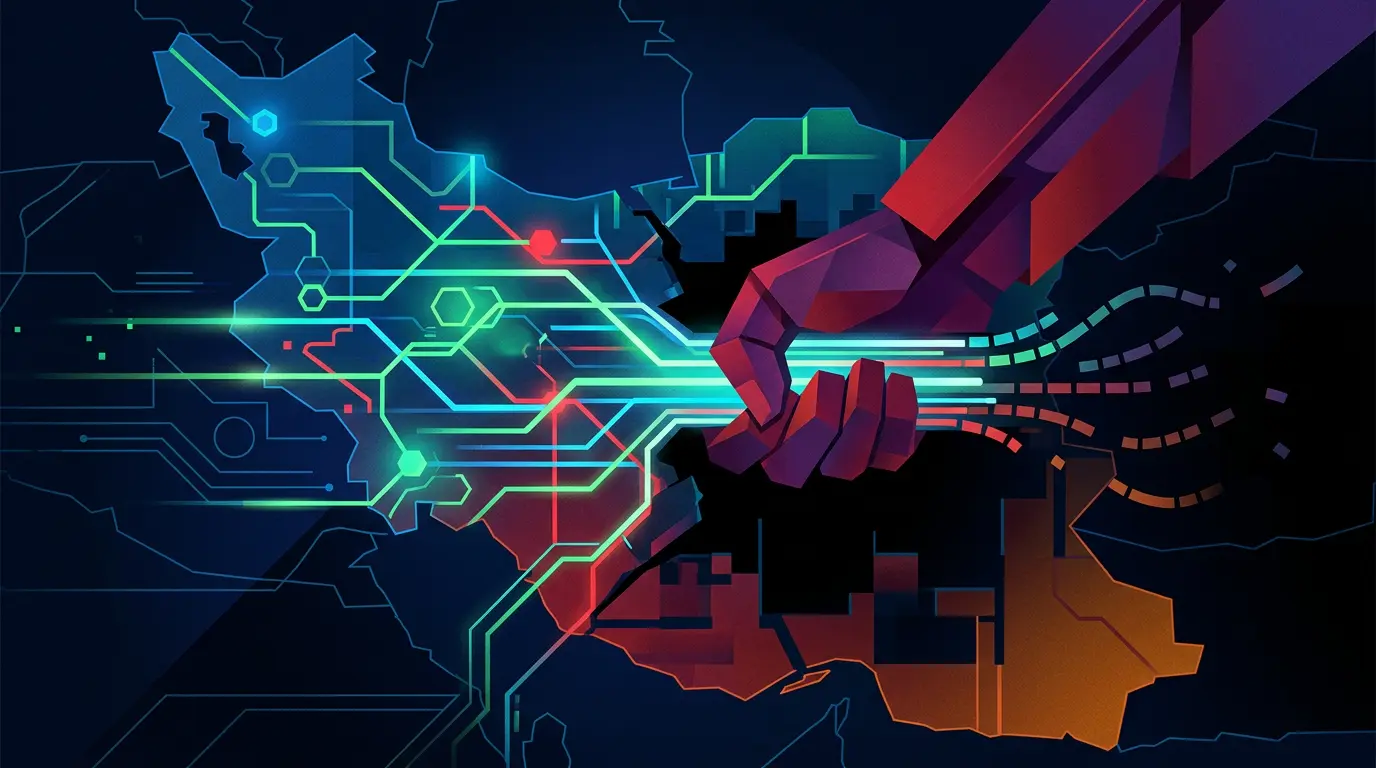
You reach for your phone before your eyes are even fully open. It’s muscle memory. But today, the feed doesn’t refresh. The WhatsApp "connecting..." spinner just loops indefinitely. Your banking app is a brick. For most of us, this is a minor heart attack followed by a router reset. For millions in Iran, it has been the reality for more than 14 days straight.
This isn’t a localized outage or a spotty connection. It is a full-scale digital siege. According to the connectivity monitors at Netblocks, this state-imposed blackout has now crossed the two-week mark, effectively severing an entire nation from the global grid. This isn't a casual policy move; it’s the systematic, infrastructure-level strangulation of human communication.
The Anatomy of a Blackout
When a government decides to go dark, they don’t bother asking citizens to behave. They go straight for the jugular. By seizing control of the primary gateways where the national network meets the global internet, the state can effectively pull the plug on 85 million people at once.
Netblocks confirmed the timeline this Friday, noting that the disruption has been both persistent and severe. This is the "kill switch" in action. By throttling speeds to a dial-up crawl or severing specific protocols entirely, the state creates a digital vacuum.
Inside this void, the only thing that travels at high speed is the official narrative. Everything else—from a student’s dissertation research to a small merchant’s daily sales—simply ceases to exist.
The Human Cost of Disconnection
Living in a digital vacuum carries a heavy price. We aren’t just talking about missing out on memes or TikTok trends.
We are talking about total economic paralysis. In a world where business lives in the cloud, a 14-day blackout is the equivalent of welding every shop door shut and locking every office in the country simultaneously. The financial toll is staggering, but the psychological toll is much harder to put on a spreadsheet.
There is a specific, jagged kind of anxiety that comes with being cut off from the people you love. When you can’t send a "we’re okay" message during a crisis, the silence becomes deafening. Families are being separated by a digital iron curtain, unable to coordinate their lives or check on elderly relatives. It’s a psychological pressure tactic disguised as a technical one.
The Architecture of Resistance
But here is the thing about connectivity: once people have tasted it, they don't give it up without a fight. The blackout has sparked a high-stakes game of cat-and-mouse between state censors and civilian ingenuity.
Iranians are currently proving to be some of the most tech-savvy citizens on the planet. To pierce the shroud, they’ve turned into a nation of unwilling beta testers for decentralized tech. We’re seeing a desperate, brilliant reliance on VPNs and proxy servers to find any possible backdoor to the outside world. Some are even looking to the stars, hoping satellite-based solutions can bypass the ground-level gatekeepers entirely.
This isn't just about software; it’s about community.
In a crisis, technical literacy becomes a survival skill. You have neighbors teaching neighbors how to configure bridge servers and local techies sharing ways to keep basic lifelines open. It is a grassroots effort to stay tethered to reality, proving that while you can cut the wires, it’s much harder to kill the human impulse to speak.
The Resilience of Connectivity
As someone who has covered the intersection of code and policy for years, I find this situation deeply unsettling. It’s a cold reminder that the internet we treat as a fundamental utility is actually incredibly fragile. We like to think of the web as this ethereal, untouchable force, but it relies on physical hardware that remains under the thumb of local authorities.
This 14-day blackout isn't just another headline; it’s a case study for the future of digital rights. It forces us to ask some ugly questions about the tools we build. If a state can silence a nation with the flip of a switch, have we built our global infrastructure on a foundation of sand?
The resilience shown by the Iranian people is remarkable, but they shouldn't have to be heroes just to send an email. As the silence continues, the global tech community faces a reckoning. If the pulse of a nation can be muted for two weeks, the "global" internet isn't nearly as unified as we’d like to believe.
The question that remains for the architects of our future is simple: How do we build a web that can’t be switched off?