The $2.5 Billion Steal
In 2014, when Microsoft cut a check for $2.5 billion to acquire Mojang, the skeptics on Wall Street laughed. They called it a vanity play, a desperate grab for a blocky sandbox game that had already peaked. A decade later, that "overpayment" looks like the heist of the century.
Microsoft did not just buy a video game. They bought a sovereign digital nation.
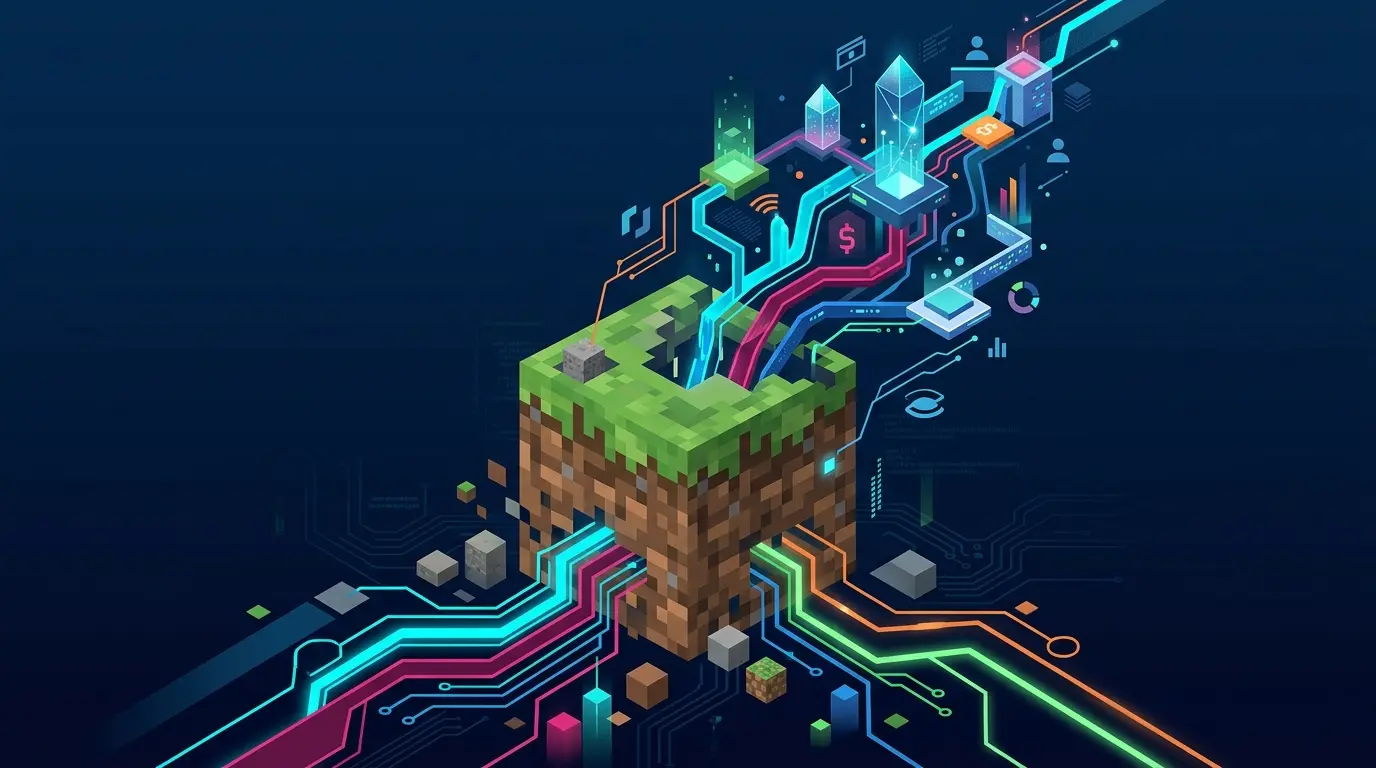
The Minecraft Marketplace has quietly evolved from a simple shop for digital trinkets into a sophisticated platform that mirrors the architecture of a modern SaaS business. By weaving together a centralized currency, a third party creator economy, and recurring subscription tiers, Microsoft has successfully transitioned Minecraft from a standalone product into a permanent service. This is not about selling digital toys anymore. It is about capturing the lifetime value of an entire generation.
The Currency of Frictionless Commerce
The magic trick at the center of this world is Minecoins. From a financial perspective, the introduction of a proprietary digital currency is a brilliant move to kill transaction friction. When a user buys Minecoins, they are effectively converting hard currency into a closed loop asset.
As far as the user's bank account is concerned, that money is already spent. This psychologically lowers the barrier for microtransactions within the app, making a five dollar skin feel like a freebie.
This system does more than just simplify checkouts for kids. It provides Microsoft with a predictable float and hedges against the headaches of global currency fluctuations. Whether you are buying the "Craftable Bases" add-on or a new character skin, the transaction happens within a controlled environment where Microsoft sets the rules of exchange. It is a textbook move, building an economic moat by vertically integrating the entire payment layer.
Outsourcing Innovation to the Creator Economy
Why pay an internal R&D team to guess what players want when you can just build a mall and charge rent?
This is the real brilliance of the Marketplace. Rather than Mojang bearing the full cost of developing every new map or mod, they have built a distribution hub for the community. Third party developers, such as 5 Frame Studios, act as the platform’s external labor force. These creators build the skins, mods, and complex worlds that keep the player base engaged, while Microsoft takes a platform fee on every single sale.
This is a symbiotic relationship that scales infinitely better than traditional internal development. The community provides the variety, and Mojang provides the tools and the audience. By decentralizing content creation, Microsoft ensures the game stays fresh without the typical overhead of a massive in-house art team. In this model, the players are not just consumers. They are the secondary market that drives the primary platform’s value.
The Subscription Pivot: Marketplace Pass
We are currently witnessing a strategic shift from transactional sales toward the holy grail of tech: recurring revenue. The introduction of the Marketplace Pass is the final piece of this puzzle. By offering a subscription that grants access to a rotating library of content, Microsoft is following the broader "Netflix-ification" of the gaming world.
For a monthly fee, players get a value add that feels more substantial than buying a single map. For Microsoft, this creates stickiness. A subscription is much harder to walk away from than a one-time purchase. It ensures that Minecraft remains a permanent line item on a family’s monthly budget. This transition stabilizes cash flow and makes the IP’s earnings far more predictable for analysts.
Infrastructure as a Service: The Realms Backbone
Beyond the cosmetics and the maps, there is the technical layer. Minecraft Realms allows users to host their own private servers for a recurring fee. This is essentially Infrastructure as a Service (IaaS) for the middle school set. By managing the server hosting, Microsoft ensures a safe multiplayer experience while also capturing the revenue that used to go to third party hosting providers.
Realms transforms Minecraft from a solitary experience into a social utility. Once a group of friends establishes a world on a Realm, the social cost of leaving becomes incredibly high. This creates a network effect where the service becomes more valuable as more people use it, further entrenching the game’s position in the market.
The Analyst’s View
As I look at the trajectory of this ecosystem, I see a platform that has successfully matured past the volatility of the traditional gaming cycle. Most games have a shelf life, but Minecraft has built a self-sustaining loop. The Marketplace is not just a store. It is the blueprint for how legacy software brands can survive in a world that demands constant engagement.
However, there is a lingering question about the soul of the platform. Minecraft was built on the spirit of open-ended, decentralized creativity. As the Marketplace becomes the center of gravity, does the focus on monetization eventually crowd out the organic community that made the game a hit?
For now, the numbers suggest that the creators and the corporate owners are in a profitable honeymoon phase. But the tension between a free sandbox and a walled garden is a risk that investors should watch closely. The creator community might be happy today, but if the platform fees or the control over content tighten too much, the next generation of developers might just go looking for a more open horizon.