Remember the original Facebook Like button? It was the CRUD operation of human emotion. Simple, effective, and ultimately, a legacy system.
For years, our digital interactions were binary. You either liked something or you scrolled past it. It was a 1 or a 0. But in the world of software development, we rarely deal in simple booleans. We deal in edge cases, nuanced architectures, and multi-threaded logic. It makes sense that our feedback loops are finally catching up to our codebases.
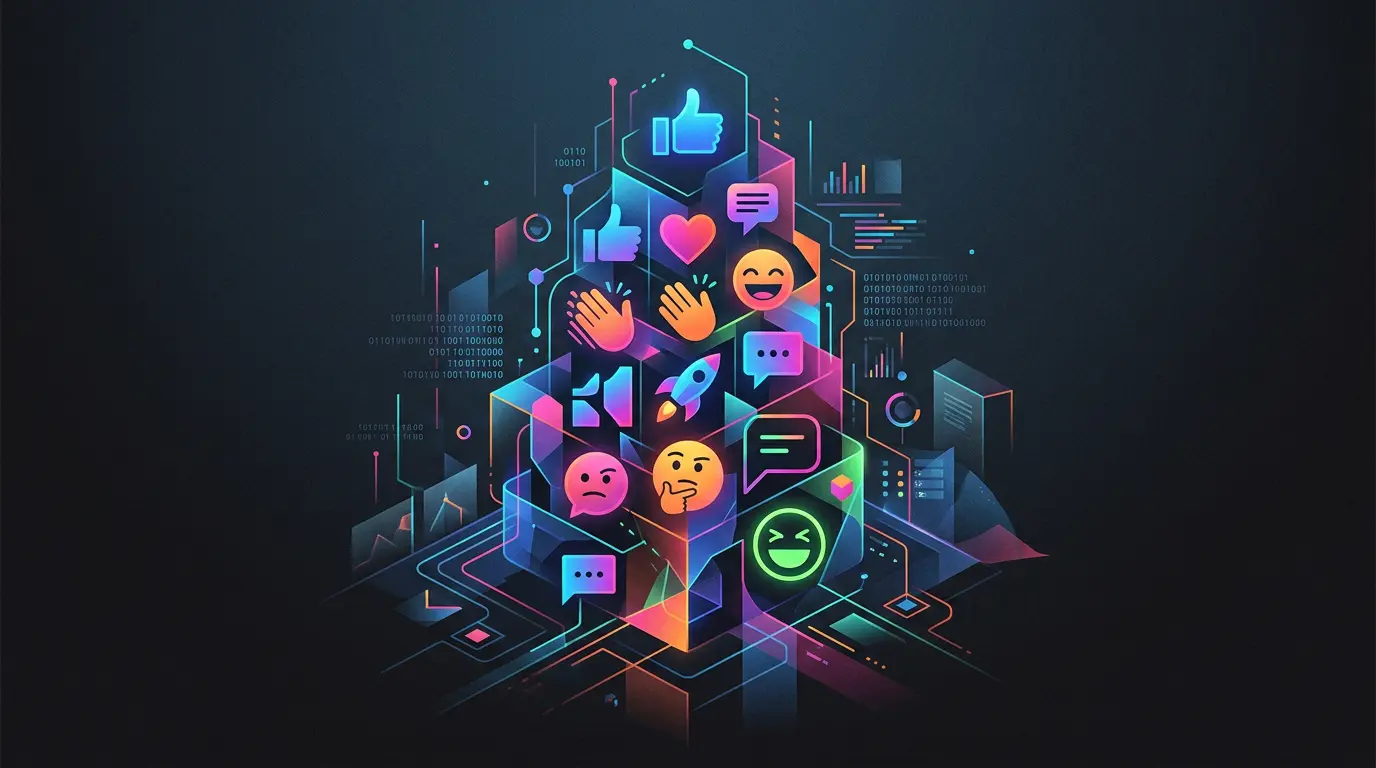
On developer-centric platforms like DEV.to, a new pattern has emerged that challenges the traditional one-click engagement model. Instead of choosing a single reaction, users can now stack them. You can give a post a Like, a Unicorn, a Fire, a Celebrate, and a Mind-blown reaction all at once. This creates a cumulative interaction profile from a single account. It is the social media equivalent of an array of reactions rather than a single string variable.
Mai Bhushan, a voice in the developer community, recently raised an interesting architectural question about this trend. Bhushan asked if a single user should be able to react multiple times on the same post. It is a question that cuts to the heart of modern Developer Experience (DX). While most mainstream social platforms force you to pick a side (are you Happy or are you Sad?), developer communities are experimenting with a more granular, high-fidelity emotional signal.
The Architecture of Nuance
From a senior developer perspective, this shift is about more than just cute icons. It is about the metadata of appreciation.
When I read a technical deep-dive on Rust memory safety, a simple Like feels insufficient. The post might be technically impressive (Mind-blown), highly relevant to my current sprint (Fire), and creatively written (Unicorn). Allowing me to tag all three provides a multi-faceted feedback loop that a single heart icon simply cannot capture.
This granularity reflects how we actually work. Think of it like a code review. You do not just leave a thumbs up on a 500-line Pull Request. You leave specific comments on the logic, the styling, and the performance. Multi-reactions are essentially a UI-driven shorthand for that same level of specific feedback. It moves the needle from generic engagement toward meaningful sentiment analysis.
The Signal-to-Noise Ratio
There is a catch, however. Every time we increase the complexity of an input, we risk polluting the output.
The primary concern here is what some are calling reaction spamming. If a platform allows a single user to click every available button, does the data lose its integrity? When an algorithm sees a post with 50 reactions from only 10 users, how does it rank that content against a post with 40 unique likes?
There is a technical tension here. On one hand, you want to empower the user to express complex feelings. On the other hand, you have to protect the platform from the dilution of its own metrics. If every post is Fire and a Unicorn and Mind-blown, then nothing is. It is the digital version of the old saying that when everyone is a senior dev, nobody is. We run the risk of turning a thoughtful feedback system into a performative clicking exercise where users hit every button just because they are there.
I have observed this in various Slack channels and Discord servers too. The reaction stack often becomes a decorative element rather than a metric. We are essentially gamifying the act of reading, which might boost short-term engagement numbers while simultaneously making those numbers harder for data scientists to interpret.
The Future of the Emotional API
If we follow this trend to its logical conclusion, we are looking at a future where sentiment is a spectrum rather than a toggle.
Mainstream platforms have resisted this for a long time because their business models rely on the simplicity of the viral hit. A Like is easy to sell to advertisers. A complex combo of multiple reactions is a bit more complicated to put on a spreadsheet.
But for developer communities, the trade-off might be worth it. We value precision. We value the ability to distinguish between something that is merely good and something that is technically significant. The multi-reaction model treats the user like an adult who is capable of complex thought, rather than a consumer who only knows how to press one button.
The real test will be whether this model can survive the transition to the broader web or if it remains a niche feature for high-context communities. As we build more sophisticated AI models to track user sentiment, having this granular data might actually be a goldmine. Imagine a recommendation engine that knows you do not just like Python content, but you specifically find architectural posts Mind-blown while finding tutorial posts Helpful.
We are moving toward a digital language that mirrors the complexity of human interaction. It is messy, it is potentially prone to abuse, and it is definitely more complicated to code. But it is also a lot more interesting than a binary world of ones and zeros. As we add more buttons to the dashboard, the question remains: are we actually communicating more, or are we just making more noise?