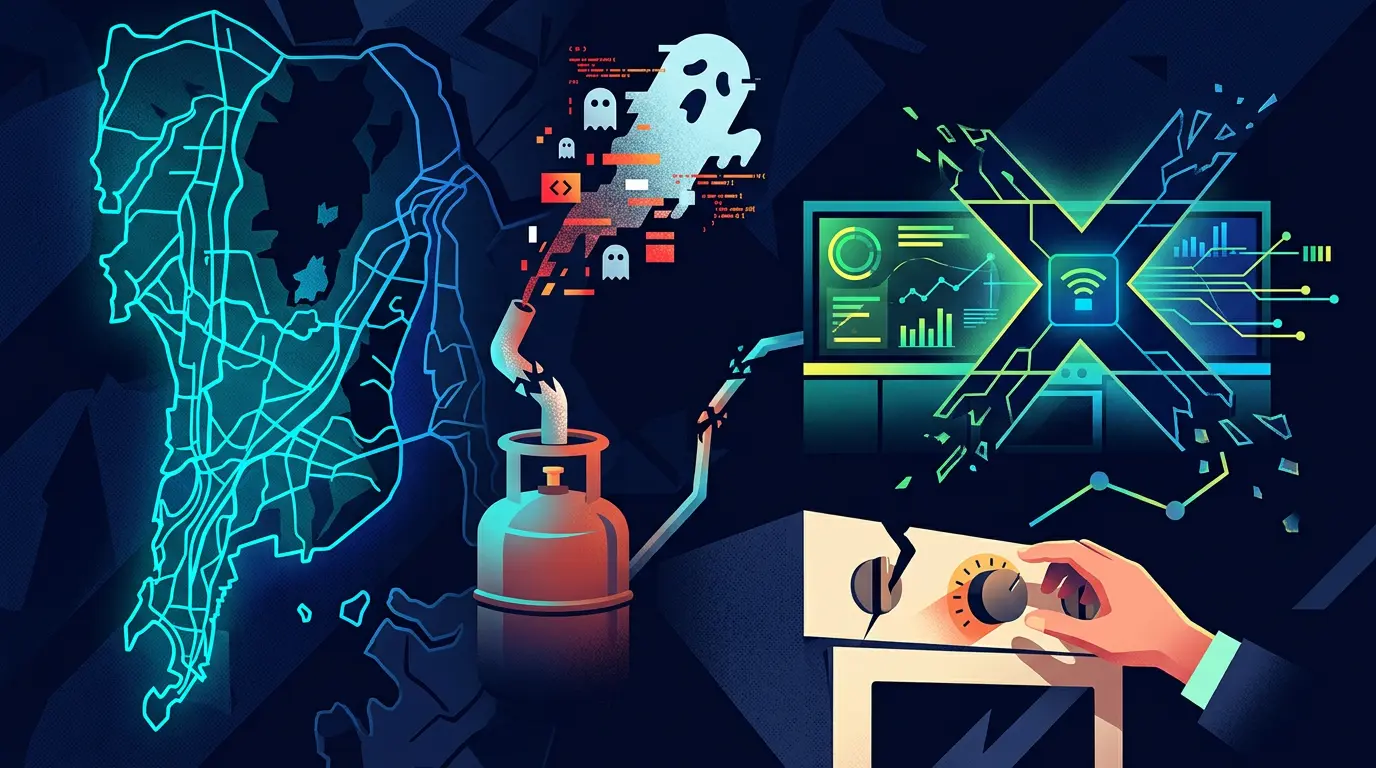
The Day the Flames Went Out in Mumbai
Walk into the kitchen of Great Punjab in Dadar during the lunch rush, and you usually expect a specific kind of industrial symphony. It is a world of blue-flame roars, high-pressure hisses, and the percussive clang of heavy-duty woks. It’s high-stakes theater.
But lately, the music has stopped.
A localized crunch in the supply of Liquefied Petroleum Gas (LPG) is currently tearing through Mumbai’s restaurant industry. This isn't just a minor logistical snafu; it’s an operational cardiac arrest. For a high-volume kitchen, gas isn't just a utility—it’s the lifeblood. Without it, a modern commercial kitchen doesn’t just slow down. It breaks.
Tech Retrogression: The AA Battery Problem
We usually talk about technological progress as a linear march forward, but what’s happening in Mumbai right now is a forced retreat. According to reports from The Indian Express, iconic institutions like Hotel Sadanand in Crawford Market and Great Punjab have been pushed into a desperate, digital-age irony: they are using old-school electric cooking coils just to keep the doors open.
It is the culinary equivalent of trying to run a Formula 1 car on a pack of AA batteries.
The shift to electric coils introduces a massive amount of operational friction. Gas is binary—and beautiful. You turn a knob, the heat is there. You kill the flame, the energy vanishes. Electric coils, however, are agonizingly sluggish. They take time to glow, time to heat the pot, and even longer to adjust.
When your entire business model is built on turning tables and feeding hundreds of frantic office workers during a ninety-minute lunch window, waiting for a coil to reach temperature is a death sentence. Inside these kitchens, the impact is measurable: dishes are taking twice as long to hit the table. In the world of hospitality, doubling your production time while your overhead remains static is a fast track to a financial meltdown.
Fraying Tempers and Typewriters
Beyond the slow burners, there is a human cost to this systemic failure. Kitchens are high-pressure environments by default, but the LPG shortage has pushed staff over the edge. The Indian Express highlights "fraying tempers" among chefs who are used to the surgical precision of gas-fired efficiency.
There is a specific kind of psychological toll that comes when a professional is forced to work with substandard tools. Imagine telling a top-tier software developer they have to code on a typewriter, and you’ll get a sense of the frustration levels in Crawford Market right now.
As service speeds crater, customer satisfaction inevitably follows. A hungry Mumbaikar waiting forty minutes for a dish that usually takes fifteen is not a happy customer, and that tension vibrates through the entire dining room.
The Fragility of the "Single Pipe"
As an industry observer, it’s fascinating—and frankly, a bit sobering—to see how quickly a sophisticated service economy can be brought to its knees by a single supply chain bottleneck. We assume the gas will always flow, much like we assume the Wi-Fi will always connect. When that assumption fails, the veneer of modern efficiency evaporates instantly.
This crisis exposes a glaring vulnerability: a total reliance on a single, fragile utility pipeline. Most small-to-medium enterprise (SME) kitchens in the city are tethered to LPG with no viable, high-speed backup.
While high-end kitchens in global hubs like London or New York are pivoting toward advanced induction technology for sustainability, many of Mumbai’s heritage spots remain locked into traditional gas infrastructure. This shock raises a difficult question for owners: Is it time to diversify the energy portfolio?
High-performance induction could bridge the gap, but the capital expenditure for a full-scale overhaul is massive, especially when you're already struggling to keep the lights on and the coils hot. For now, these restaurants are stuck in a technological limbo—improvising, struggling, and waiting.
The Path Forward
Is this LPG disruption just a temporary hiccup, or is it a warning shot?
Mumbai’s culinary icons are resilient, but resilience has a shelf life. If these supply chain failures become the "new normal," the city’s food scene will have to evolve or risk permanent damage to its reputation for efficiency.
We may see a surge in investment for high-speed induction tech, or we may see these kitchens remain perpetually vulnerable to the next time the gas trucks stop rolling. For the chefs at Great Punjab, the "future of energy" is a distant conversation. They just want their flames back.
It’s a stark reminder that in the tech world, the most important innovation isn't always the newest one—it’s the one that actually works when the lunch rush hits.