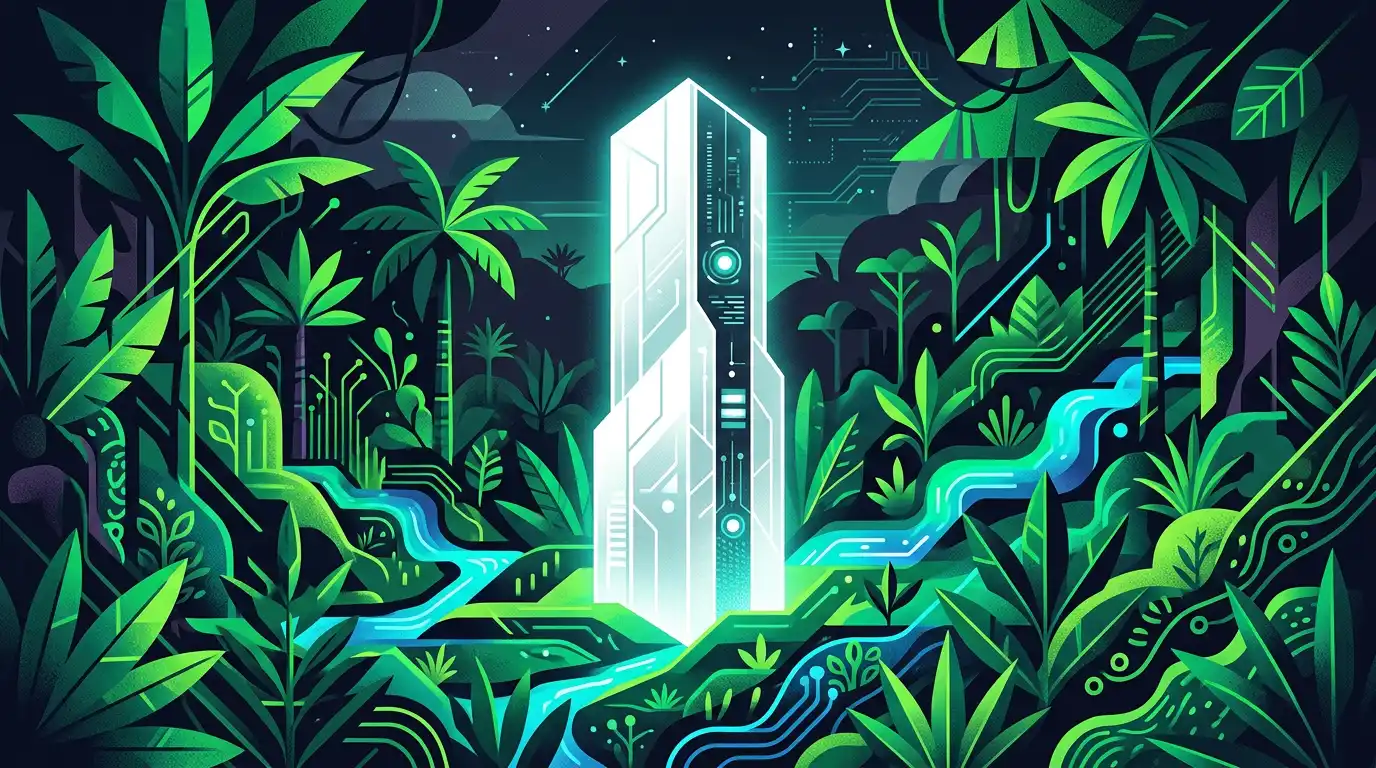
The Zona da Mata is a sensory assault. Located in the heart of Pernambuco, Brazil, it’s a place defined by heavy humidity, the cacophony of the Atlantic Forest, and vegetation so aggressive it feels like it’s constantly trying to reclaim the road.
Most architects who work here follow a predictable playbook: hide from the heat or mimic the trees. You see a lot of rustic wood, clay tiles, and earthy tones designed to make the building disappear. NEBR Arquitetura did the opposite. With Casa Branca, they’ve dropped a sharp, white, geometric "glitch" into the middle of the green riot. It doesn’t try to blend in. It refuses to apologize for being human-made.
The Geometry of the Wild
To understand why Casa Branca works, you have to appreciate the audacity of its silhouette. The site is fertile and chaotic. In this context, NEBR’s minimalist structure acts as a visual palate cleanser.
Think of it like seeing a pristine white suit in the middle of a muddy construction site. The contrast is the point. By placing something so stark against the organic mess of the forest, the architects make you notice both more intensely. It’s a "poetic contrast" that rejects the stagnating "regional" formulas that have come to define high-end residential design in Northeast Brazil.
The firm is essentially staging a protest against the idea that tropical architecture has to look like a high-end beach shack to be authentic.
A Dialectic in Concrete
The architects describe the project as a "dialectical response." In plain English? It’s a high-stakes argument between tradition and invention.
Casa Branca doesn’t ignore the climate—that would be a death sentence in Pernambuco. It still accounts for the brutal sun and the desperate need for cross-ventilation. But it translates those needs into a language that feels entirely new. While you’d expect a tropical concrete house to feel heavy or bunker-like, this project feels strangely weightless.
It also tackles the oldest problem in tropical design: the "inside-outside" binary. Usually, you’re either trapped in an air-conditioned box or you’re outside being eaten by mosquitoes. Casa Branca tries to dissolve that line. The layout is intentionally porous, allowing the humid air and the visual density of the woods to bleed into the living space without letting the environment take over.
It’s a design tightrope walk.
Beyond the "Regional" Label
For decades, there’s been an unspoken rule that "authentic" architecture in Northeast Brazil must be rustic. It had to look like it was birthed from the soil. NEBR Arquitetura is effectively killing that trope.
They are proving that you can respect a location’s heritage while using a visual vocabulary that is globally relevant. This isn't just a home; it’s a case study for a region in transition. It suggests that "Northeastern identity" isn't a fixed point in the past, but a moving target that can include sharp lines, white concrete, and a refusal to be constrained by archetypes.
There is a sophisticated linguistic mix happening here. It’s a combination of ancestral knowledge—how the wind moves through the canopy—and modern engineering—how steel can span a void.
A New Blueprint?
As the climate crisis forces us to rethink how we live in the tropics, Casa Branca offers a polarizing but compelling path forward. It doesn’t pretend to be "green" by looking like a bush. It is unapologetically a machine for living.
But by leaning into that stark opposition, it creates a living experience that feels more connected to the Atlantic Forest than a traditional house ever could. Because it’s so different from its surroundings, it forces the people inside to actually look at the forest every single day.
Is this the future of high-end design in the tropics? It’s hard to say if this level of minimalist rigor would work in a cramped city. But in the fertile isolation of Pernambuco, NEBR Arquitetura has proven that sometimes the best way to respect nature is to stand in beautiful, defiant contrast to it.
Whether the jungle eventually swallows the white concrete or the house becomes a new regional archetype remains to be seen. The relentless tropical rain will have the final word.