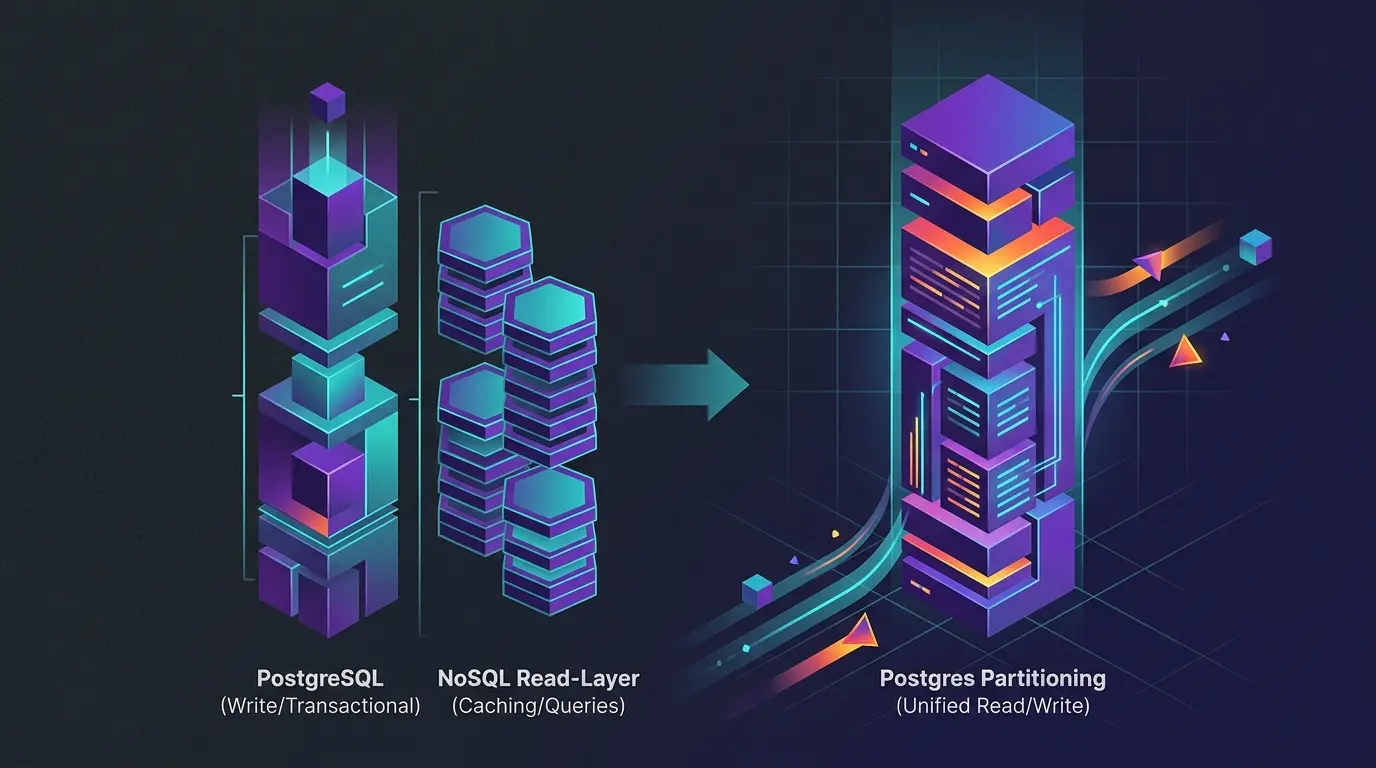
Anyone who has tried to build a custom window manager for Wayland knows the exact moment the honeymoon ends. It usually happens when you realize you aren't just writing a clever layout engine. You are actually writing a display server. In the old X11 world, the window manager was just a tenant in the house. In Wayland, the window manager has traditionally been the house, the foundation, and the plumbing all at once.
This structural bottleneck has frustrated developers for years. It turns what should be a creative UI project into a grueling exercise in low-level systems engineering. However, the release of version 0.4.0 of the river compositor might finally be the wedge that cracks this monolithic architecture wide open.
The Monolithic Stranglehold
For those who haven't spent their weekends huffing protocol specifications, the problem is straightforward. Wayland compositors have historically favored a monolithic design. This architecture mashes the compositor (which handles rendering and hardware communication) and the window manager (which decides where windows go) into a single, inseparable program.
This is a massive technical burden. If a developer wants to experiment with a new way to tile windows or manage workspaces, they are forced to implement an entire Wayland compositor from scratch. It is like needing to build a custom internal combustion engine just because you want to design a new type of steering wheel. This high barrier to entry explains why the Wayland ecosystem has felt less diverse than the X11 era. We have seen fewer of those weird, wonderful, niche window managers that used to define the Linux desktop experience.
River 0.4.0: A Structural Pivot
The 0.4.0 release of the river compositor represents a significant departure from this norm. Isaac Freund, the project's author, has implemented an architecture that is explicitly non-monolithic. By splitting the window manager into a distinct, separate program from the compositor, river is essentially reviving the modular philosophy that many felt Wayland had left behind.
In this new model, the river compositor handles the heavy lifting of the Wayland protocol and rendering. Meanwhile, the window management logic lives in a separate process. This is not just a minor refactor. It is a fundamental change in how the desktop environment communicates with itself. Traditional Wayland compositors require window managers to do the significant work of implementing a full compositor as well. River 0.4.0 effectively deletes that requirement from the developer's to-do list.
Lowering the Barrier to Entry
From a developer experience perspective, this is a massive win. When you decouple these two components, you transform the entire development lifecycle. Instead of wrestling with memory management for display buffers or low-level input handling, a developer can focus entirely on the user interaction model.
We are moving toward a world where you can simply script a window manager instead of building a compositor. This modularity means that the layout logic can be written in almost any language that can communicate with the compositor. It turns window management into a plug-and-play experience.
I suspect this will lead to a surge in specialized tools. Imagine a window manager written entirely in a high-level scripting language, focused purely on a specific workflow, without any of the architectural debt that comes with managing a display server.
The Future of a Modular Ecosystem
There is a common observation in the community that there are already plenty of window managers available. While that may be true in a general sense, most of them are still tied to their specific compositor implementations. They are not interchangeable. River’s move toward a decoupled architecture could trigger a wider shift in the industry.
There are, of course, trade-offs to consider. Moving communication between the window manager and the compositor into separate processes introduces inter-process communication (IPC) overhead. In a monolithic system, everything happens in the same memory space, which is technically faster. However, on modern hardware, the latency introduced by a well-designed IPC protocol is often negligible compared to the massive gains in stability and developer flexibility.
I have seen many promising desktop projects stall because the implementation overhead was simply too high for a solo developer or a small team to maintain. By reducing that overhead, river is making it possible for smaller, more experimental projects to survive and thrive.
Is this the end of the do-it-all compositor era? It is hard to say for certain, but the momentum is clearly shifting. If the window manager is finally liberated from the compositor, we might be on the verge of a new era of highly specialized, modular desktop environments. We could finally see the flexibility of the X11 days return, but with the security and performance benefits that Wayland was always supposed to provide. The real test is whether other major compositors will follow suit or continue to guard their monolithic gates.