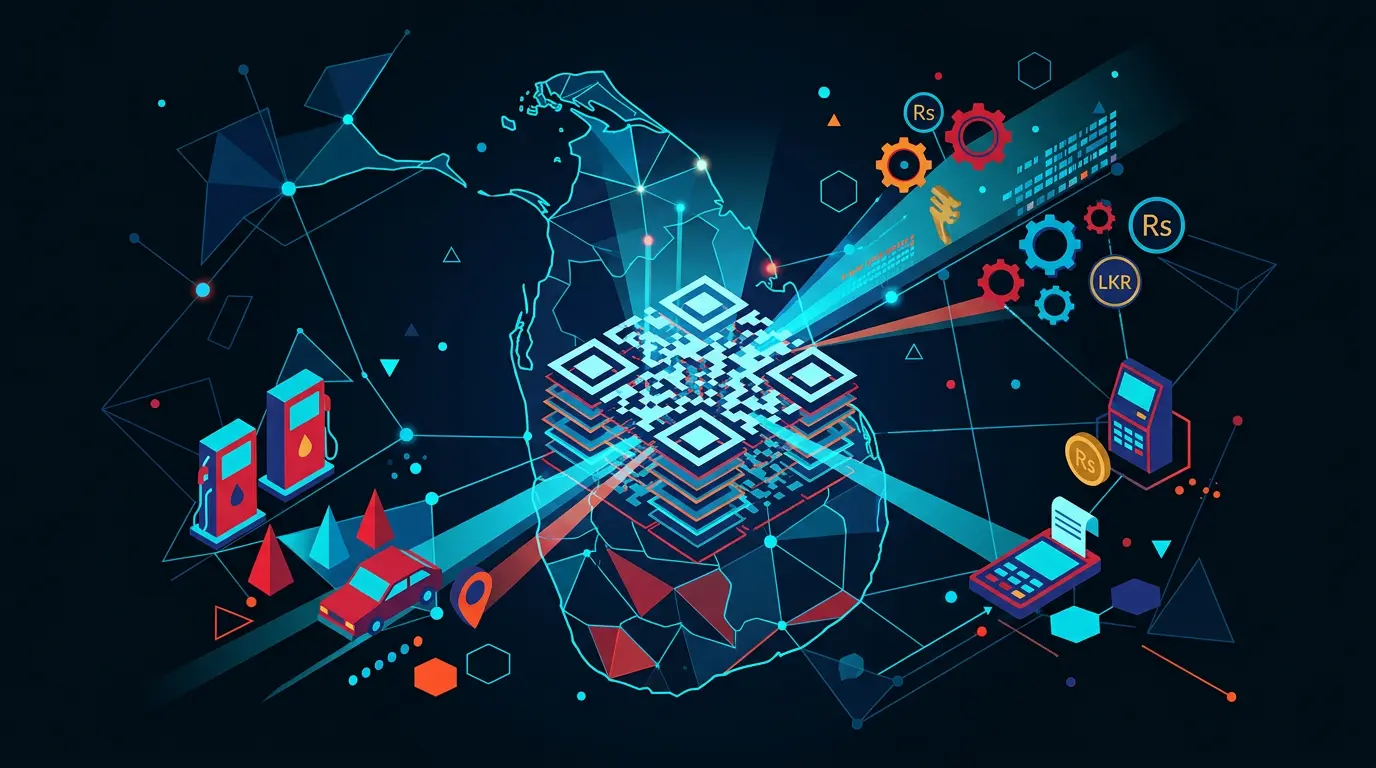
For most of us, a QR code is just a clunky way to pull up a digital menu. But for anyone who lived through Sri Lanka’s 2022 economic collapse, that black-and-white grid is a trauma response. It’s the visual shorthand for a time when survival meant waiting in days-long lines for a few liters of petrol.
That era just made a comeback.
At 6:00 a.m. on March 15, the Sri Lankan Ministry of Energy officially reactivated its mandatory QR-based fuel rationing system. It is a sudden, jarring return to crisis-era protocols, signaling that the nation’s energy security is, once again, teetering on a knife’s edge.
The Return of the Digital Tourniquet
This isn’t a suggestion or a soft rollout. The Ministry has made it clear: the system is back in full force across the entire island.
The mechanics will be familiar to locals, even if they hoped never to use them again. To get a drop of fuel, motorists must present a unique QR identifier at the pump. This effectively transforms every petrol station into a digital checkpoint. While the 6:00 a.m. deadline felt abrupt, the infrastructure for this "Safe Mode" never actually went away. It was just dormant, waiting for the system to crash again.
Geopolitics Hits the Local Pump
Why now? This time, the Ministry isn’t pointing the finger at internal mismanagement. Instead, they’re looking at the horizon.
According to official statements, the pivot is driven by two main pressures: chaos in global supply routes and an "anomalous spike" in domestic demand. Specifically, the government linked the policy to the ongoing conflict in the Middle East. It’s a sobering reminder of how geopolitical shrapnel can travel across oceans; when supply lines in the Middle East get choked, a small island nation feels the vibrations almost instantly.
The "anomalous spike" in local demand is a bit more cryptic. Whether it’s genuine consumption or just a polite way of saying "people are panic-buying," the government’s response is a preemptive strike. They’d rather throttle the taps now than face bone-dry tanks next month.
The Tech as a Buffer
From a technical perspective, this is a fascinating study in digital resilience. Most countries would struggle to implement a nationwide rationing system overnight, but Sri Lanka has already built the muscle memory. The database exists, the hardware is at the stations, and the apps are already sitting on people’s phones.
In software development, we often see "temporary" hotfixes that eventually become part of the core codebase because the underlying bug was never truly fixed. That’s exactly what the QR system has become: a permanent shock absorber for a fragile economy.
The Operational Fog
Despite the hard start time, the details are still a bit blurry. The Ministry has been noticeably quiet on how long this "precautionary" measure will last. Is this a two-week bridge or the beginning of a long-term rationing phase?
There’s also the question of the backend. After months of disuse, will the system handle the sudden surge of millions of users trying to refresh their codes simultaneously? According to current reports, these operational specifics remain unverified, leaving motorists to figure out the finer points of compliance while idling in line.
Is the "Emergency" the New Normal?
As global supply chains become increasingly twitchy, we have to ask if this is the last time we’ll see the QR system return. For Sri Lanka, digital rationing has become a survival toggle—something to be switched on whenever a conflict thousands of miles away threatens the local grid.
The bigger question is whether other nations will eventually look at this as a blueprint. If energy sovereignty becomes a luxury rather than a given, the humble QR code might stop being a tool for marketing and start being the primary way we interact with the physical world’s dwindling resources.
For now, Sri Lankan drivers are back to scanning before they pump. It’s a digital return to form that proves that in 2024, energy security is as much about data management as it is about oil tankers.