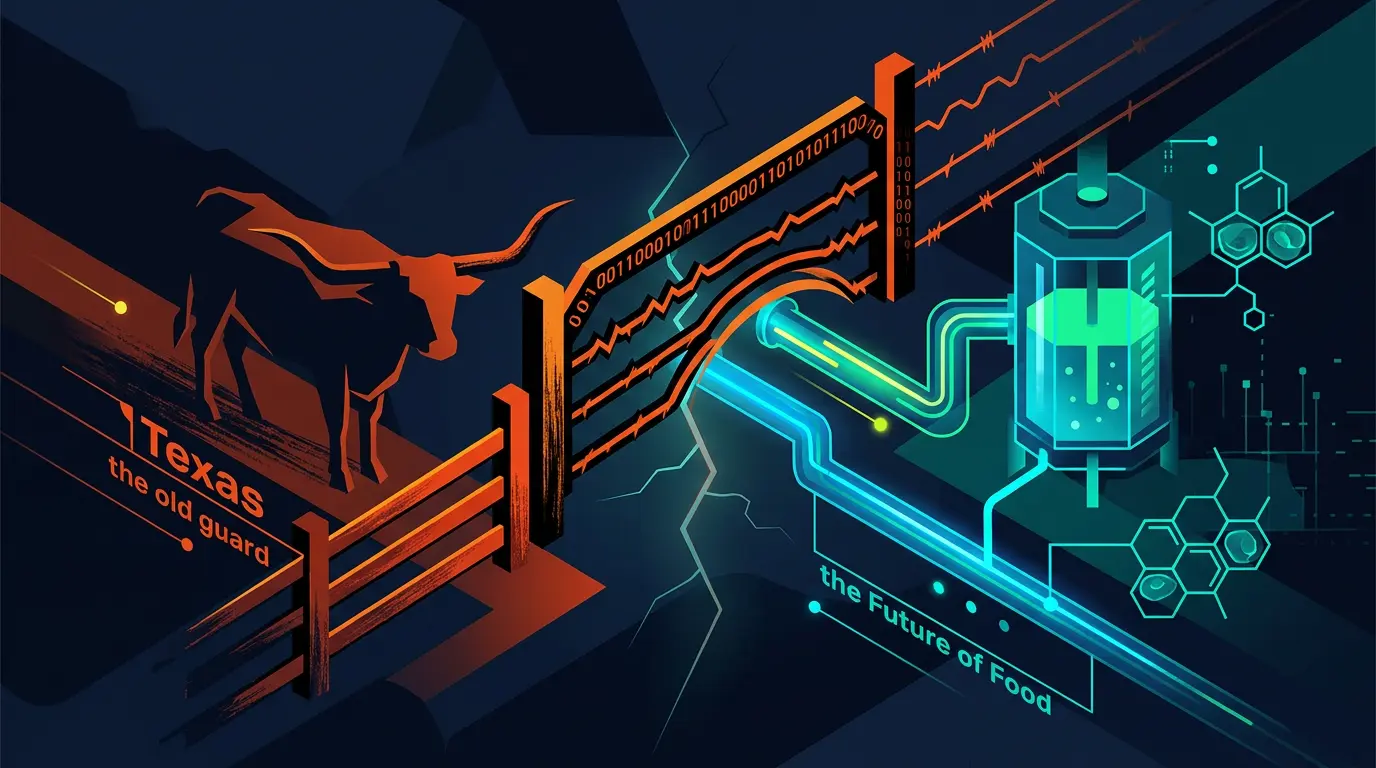
Texas has spent the last decade positioning itself as the final frontier for the "build big things" crowd. The pitch is simple: we have the land, the power grid (mostly), and a government that stays out of your way while you launch rockets in Boca Chica or assemble Cybertrucks in Austin.
But it turns out that "open for business" sign has a very specific asterisk. And it’s aimed directly at the lab.
For a minute there, Texas looked like the future capital of cellular agriculture. It made sense. If you’re going to reinvent the steak, you do it in the heart of cattle country, leveraging a world-class research infrastructure and a hungry cluster of startups. These weren't just science experiments; they were companies trying to solve the massive, looming math problem of global food security.
Then the politics caught up with the science.
From Laboratory to Lobbying Target
Not long ago, the state was a magnet for food-tech investment. Founders were moving to Texas for the same reason everyone else does: the talent pool is deep, and the taxes are low. These startups were working on "technological sovereignty"—the idea that we could grow real animal protein from cells, bypassing the environmental and logistical nightmare of industrial ranching.
But the "pro-business" rhetoric hit a wall when it encountered the traditional livestock lobby.
In a move that feels more like protectionism than a free-market paradise, state leadership has effectively started building a regulatory moat. New legislation has landed that creates a massive barrier between these companies and their customers. It’s a classic case of a legacy industry using its political muscle to suffocate a competitor before it can even get off the ground.
The Anatomy of a Tech Chill
There is a delicious, if frustrating, irony in watching a state that rails against government overreach suddenly use the heavy hand of regulation to protect a preferred incumbent.
The mechanism is almost irrelevant—whether it’s an outright production ban or labeling requirements designed to be intentionally impossible to meet, the result is identical. The sector is being strangled in its crib.
This isn't just a headache for a few guys in lab coats. It’s a massive red flag for the venture capital ecosystem.
Capital is notoriously skittish. When a state changes the rules of the game mid-match, investors don't stick around to see how the next round plays out. They move their money to jurisdictions where the regulatory weather is predictable. As someone who has spent years watching the friction between Silicon Valley and statehouses, I find this move remarkably short-sighted. Texas isn't just banning a product; it’s exporting its own talent.
Tradition Over Progress
The defense of these restrictions usually involves a lot of talk about protecting the "real" Texas rancher. It’s a romantic, rugged narrative: the cowboy versus the vat.
But it’s a false choice. You can support traditional agriculture without outlawing the next generation of food science. By choosing the lobby over the laboratory, Texas is making a very expensive trade. It is prioritizing short-term political points for a 19th-century industry over a long-term stake in a multi-billion dollar global market.
It’s the 1900s equivalent of a state banning the "horseless carriage" because the local blacksmiths were worried about their margins.
The Export of Innovation
Here is the reality: the startups aren't going to vanish. They’re just going to leave.
The jobs, the patents, and the eventual tax revenue are already packing their bags for "biotech-friendly" hubs like Singapore or Israel—places that view cultivated meat as a strategic asset rather than a political threat.
Texas is effectively handing its leadership in food technology to anyone else willing to take it. You can’t claim to be the headquarters of the future while legally anchoring yourself to the past.
The technology will mature, the products will hit the market, and the world will move on. Texas just decided it would rather watch it happen from the sidelines, wondering where all the jobs went.