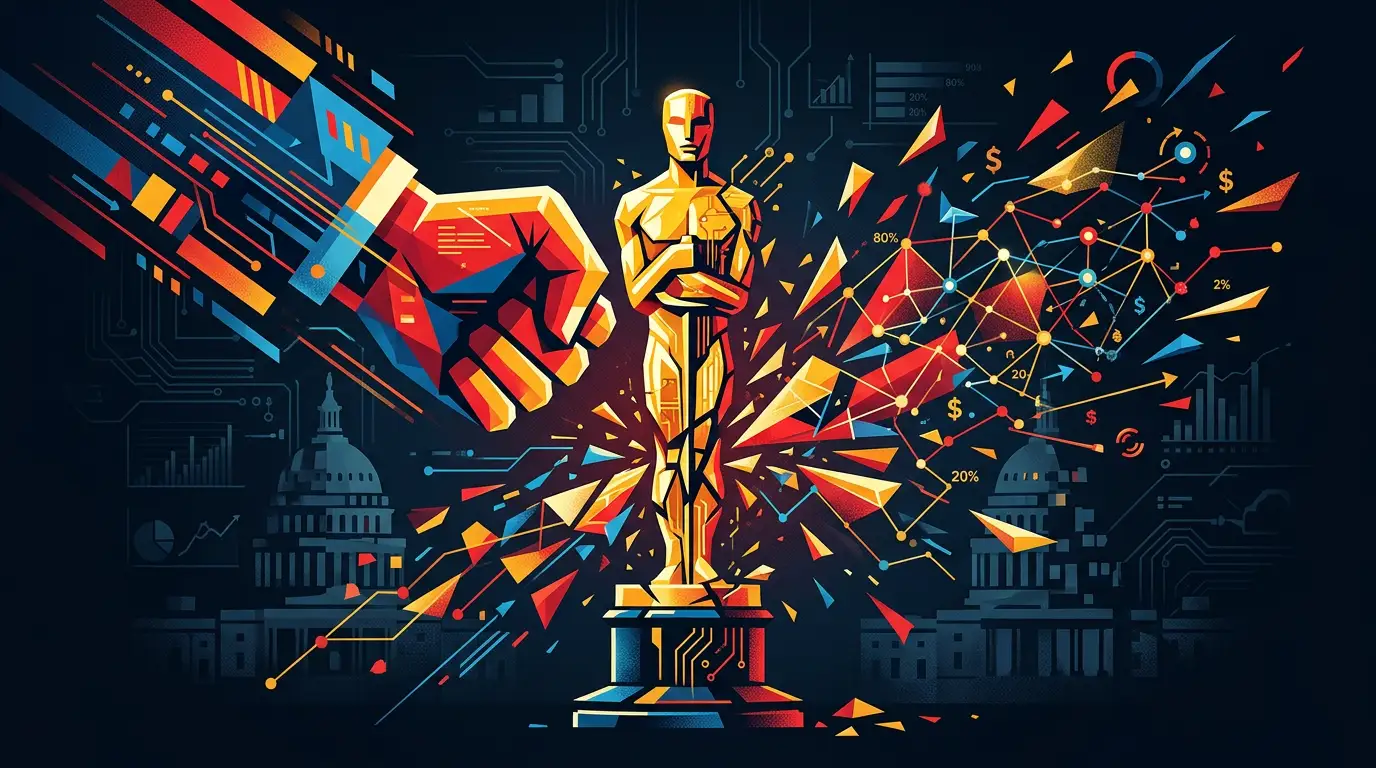
Prediction markets have always suffered from a bit of an identity crisis. Are they high-IQ tools for crowdsourcing the truth, or are they just sportsbooks for people who prefer spreadsheets to parlay cards? For years, the federal government seemed happy to let the industry figure it out on its own, mostly intervening only when election cycles got too heated. That hands-off era is officially over.
A new piece of legislation is making the rounds, and it wants to put a very tight leash on what these platforms can actually offer. While regulators used to obsess over political betting, they are now setting their sights on the cultural zeitgeist. This bill specifically seeks to ban wagering on entertainment-based outcomes. We are talking about the Oscars, the Grammys, and even the Super Bowl halftime show. It is a move that could fundamentally rewrite the rules for an industry that has spent years trying to go mainstream.
The Crackdown on Entertainment
The logic behind the bill is easy to follow, even if the details are still a bit fuzzy. By targeting entertainment, legislators are trying to draw a hard line between what they consider "legitimate" economic forecasting and what they view as pure gambling.
If you are betting on the price of corn or the outcome of a Senate race, you can argue you are hedging risk or providing a public utility. But when you start placing five-figure bets on whether a pop star will wear a specific designer during a performance, that argument falls apart.
This shift marks the end of prediction markets as a niche tech curiosity. The government is no longer treating these platforms like academic experiments. Instead, they are being viewed as significant financial entities that need a restrictive framework. For platforms that rely on the viral nature of pop culture to find new users, this is a massive shot across the bow.
Beyond the Ballot Box
Why does it matter if you can't bet on Best Picture? From a business perspective, it matters a lot.
Entertainment bets are the loss leaders of the prediction market world. They are the accessible, high-engagement entry points that pull in retail users who might find a market on interest rate hikes too intimidating. If you take away the Oscars, you effectively kill the top of the funnel.
There is also a deeper conceptual worry at play. Regulators seem concerned that prediction markets are becoming indistinguishable from traditional, restricted gambling. To a financial analyst, these markets are valuable because they provide high-fidelity data. To a regulator, a bet on a movie award looks exactly like a bet on a horse race. The fear is that if the industry expands into every corner of pop culture, the distinction between a financial market and a casino will vanish entirely.
The Regulatory Gray Zone
Despite the clear intent of the bill, the current situation is defined by a total lack of clarity. We do not have a specific bill number yet, nor do we know the names of the sponsoring legislators. We do not even know if the bill is sitting in a committee or headed for a floor vote.
This creates a brutal environment for platform operators. They are essentially being told to prepare for a storm without knowing which way the wind is blowing.
Furthermore, the current reports provide no details regarding enforcement. How does the government plan to stop a decentralized platform from hosting a market on the Grammys? What are the penalties for platforms that refuse to comply? In the world of market risk, ambiguity is often more damaging than strict regulation. It freezes investment and halts product development because nobody wants to build a feature that might become illegal overnight.
Impact on the Business Model
If this legislation passes, expect a chilling effect across the entire sector. The business model for many prediction markets relies on volume and liquidity. By cutting out entertainment, regulators are effectively capping the potential user base.
It is a bit like telling a bookstore they can only sell non-fiction. The core audience will stay, but you have just alienated every casual reader who might have walked through the door.
This also sets a heavy-handed precedent for what counts as "acceptable" speculative behavior. If the government can ban bets on the Oscars today, what stops them from banning bets on private sector milestones or scientific breakthroughs tomorrow? We are watching the birth of a new regulatory category in real time.
As legislators move to sanitize the ecosystem, the industry faces an existential question. If these platforms are stripped of their ability to host bets on culture, can they survive as mere tools for serious forecasting? The coming months will determine if prediction markets remain a vibrant part of the digital economy or if they are destined to become a sterile, academic footnote.