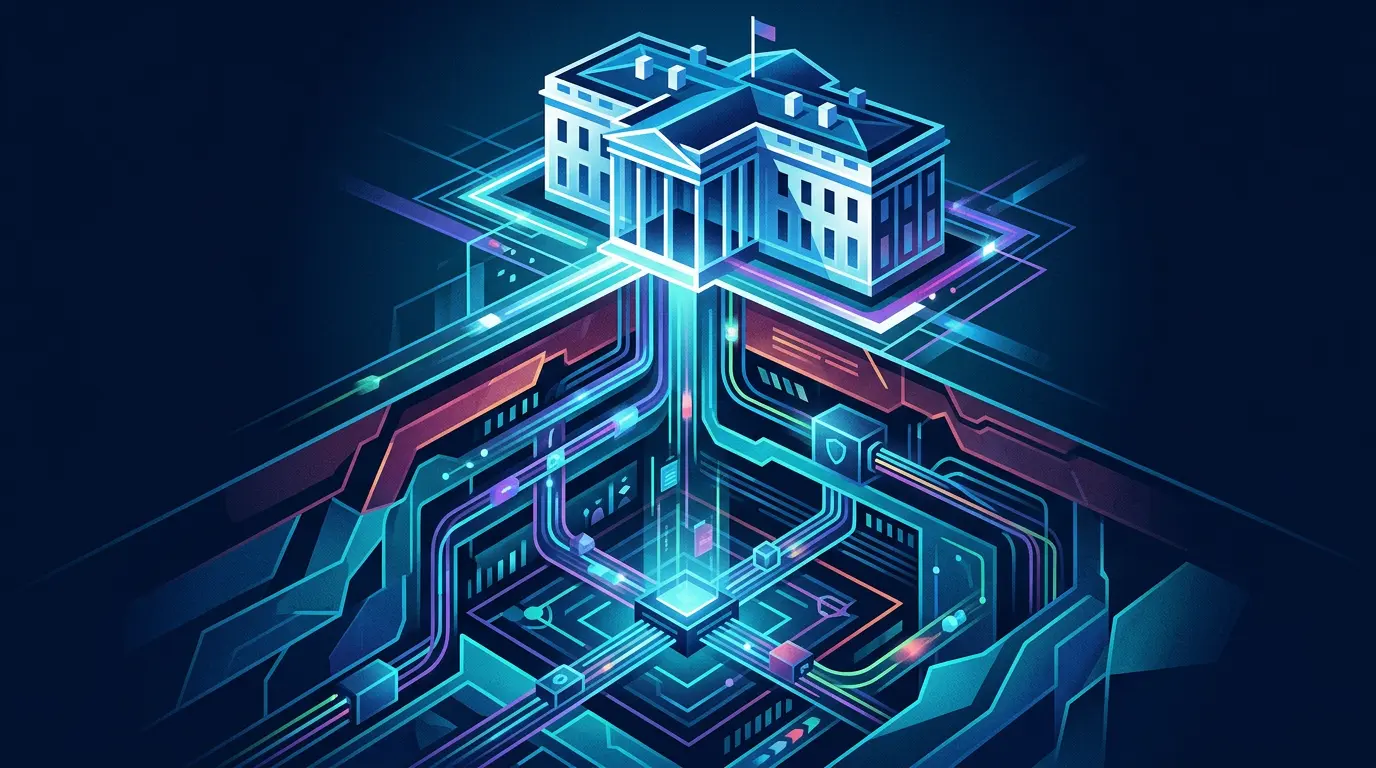
For decades, the White House has been playing a high-stakes game of hide-and-seek with its own security. We’ve watched the perimeter creep outward, the fences grow taller, and the snipers on the roof become a permanent part of the skyline. Now, the Trump administration is looking to change the entry game entirely by burying the front door.
A new formal proposal suggests moving the entire visitor screening process into a massive subterranean facility. It’s a move that would effectively hide the "machinery" of the Executive Mansion’s protection under several feet of dirt and concrete.
The Shift to Subterranean Security
The plan is surprisingly simple in concept: stop checking IDs and bags in white tents on the lawn and start doing it in a purpose-built bunker.
It’s a strategy borrowed from the modern museum playbook. If you’ve navigated the glass pyramid at the Louvre or the sprawling underground expansion of the U.S. Capitol Visitor Center, you’ve seen this before. You move the crowds out of the elements and into a controlled environment before they ever set foot in the historic structure.
From a tactical standpoint, it’s a no-brainer. Above-ground checkpoints are "loud"—they’re exposed to the weather, vulnerable to long-range surveillance, and they frankly clutter the view of one of the world's most famous buildings. By moving everything underground, the Secret Service gains a literal bottleneck that is easier to defend and nearly impossible to scout from the street.
Of course, digging a giant hole next to a building that hasn't seen a major structural overhaul since the Truman administration is a logistical nightmare.
The "Invisible" Security Protocol
There is a psychological shift happening here. The administration seems to be chasing the "Apple Store" vibe of security—where the guards and sensors are omnipresent but tucked behind a minimalist aesthetic.
By hiding the gauntlet, the White House can maintain its image as the "People’s House" on the surface while running a high-tech filter underneath. While the proposal is light on specific hardware, we can read between the lines. We’re likely looking at a facility designed for "security density"—a space packed with advanced biometrics and automated scanners that can process a crowd without the clunky, slow-moving lines that currently snake around the sidewalk.
The goal isn't just to make the White House safer; it’s to make the security disappear.
The Knowns vs. The Unknowns
In typical government fashion, the proposal tells us the "what" while completely ignoring the "how much" and "when." There is no price tag, no projected depth, and no timeline for the first shovel to hit the dirt.
As someone who tracks how federal agencies deploy new tech, the lack of a public threat assessment is the most glaring omission. Why the sudden urgency to go underground? It could be a response to the rising threat of hobbyist drones or long-range surveillance tech, but the administration isn't saying.
Then there’s the dirt itself. Excavating near the West Wing isn’t like putting a pool in your backyard. You’re digging into 200 years of foundations, ancient utility lines, and historical secrets that rarely show up on a modern CAD drawing.
Historical and Logistical Constraints
The biggest hurdle isn't the engineering; it's the heritage. The White House is a home, an office, and a National Park all rolled into one. Every time a contractor wants to move a wall, they have to answer to preservationists who view the grounds as sacred.
Compared to the relatively exposed entrances of 10 Downing Street or the Élysée Palace, the White House has always felt somewhat accessible. This pivot toward a "bunker" entrance suggests a hardening of the American executive branch that we haven't seen since the days immediately following 9/11.
It’s the ultimate trade-off: we lose the traditional, open-air approach to the residence in exchange for a more controlled, tech-heavy experience.
As it stands, the proposal is a blueprint for a more discreet, fortified future. But as we wait for the budget and the tech specs to surface, you have to wonder about the symbolism. If the future of the presidency is subterranean, the most important work of the office might soon begin long before you ever see the light of day.