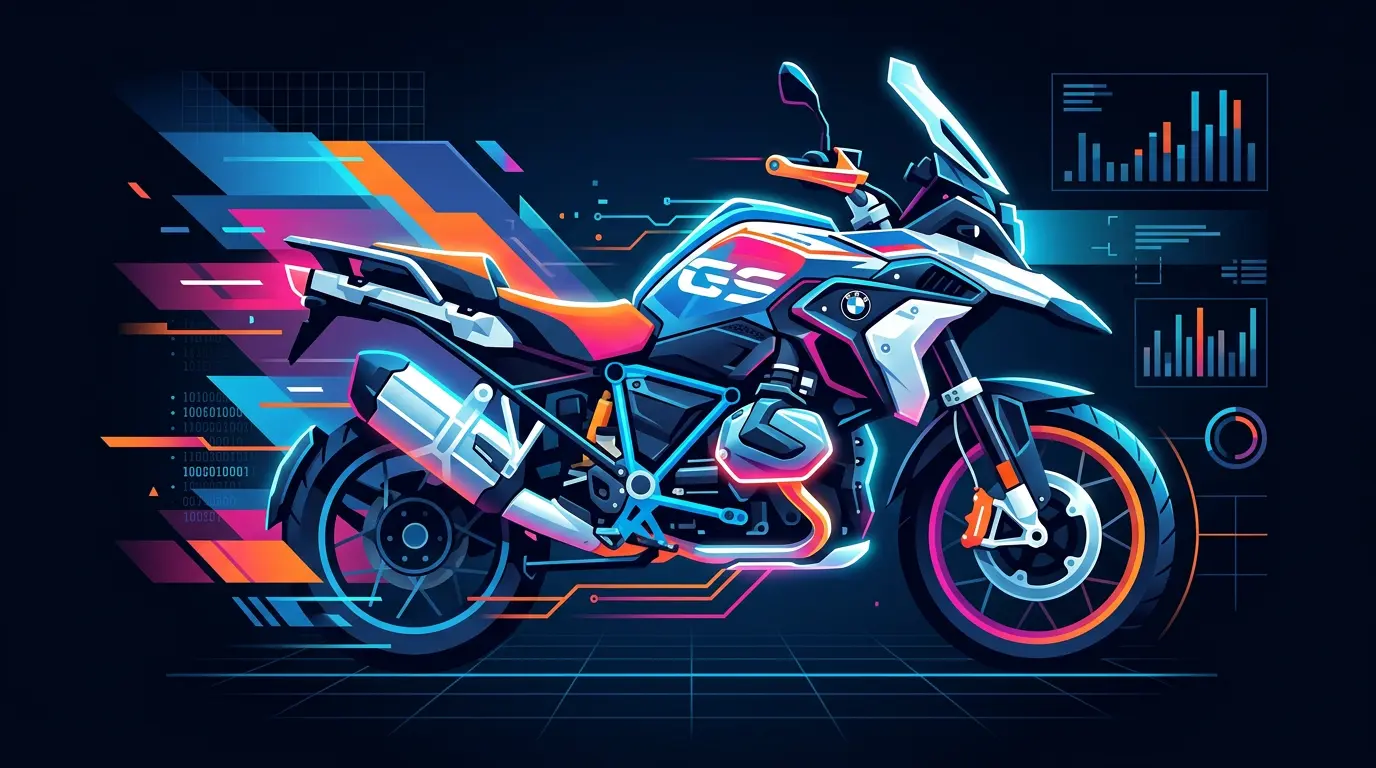
If you’ve ever dropped a BMW R 1250 GS on a muddy trail, you know the specific flavor of despair that follows. It’s a 600-pound realization that your "adventure" just became a CrossFit workout you didn’t sign up for. For decades, the GS has been the New Balance 990 of motorcycles: supremely comfortable, unkillable, and—let’s be honest—a bit chunky.
With the R 1300 GS Trophy, BMW is finally putting that elephant on a strict keto diet. This isn't just a mid-cycle refresh; it’s a total system reboot of what a flagship adventure bike should be in an era where software is doing more and more of the heavy lifting.
The Power-to-Weight Pivot
The headline here isn’t the horsepower. It’s the weight.
BMW managed to shave a massive amount of mass off the previous generation, and you can feel that engineering intent in every gram saved. By shrinking the footprint of the iconic boxer engine and tightening the chassis, they’ve effectively lowered the center of gravity.
It’s like moving from a bulky tower PC to a high-end MacBook Pro. You still have the processing power, but you can actually move the thing without throwing out your lower back. For years, the adventure segment was obsessed with "bigger is better." But as riders started taking these six-figure machines into actual dirt, that bulk became a liability. The 1300 GS Trophy is BMW’s way of admitting that agility beats scale every time.
Engineering "GS Competence"
BMW likes to use the phrase "GS competence" to describe the bike's uncanny ability to handle, well, everything. To back that up, they’ve completely overhauled the suspension.
It’s a delicate balancing act. You need the bike to be plush enough to swallow a 500-mile highway stint, but firm enough not to bottom out when you’re hopping over a creek bed. According to BMW, these mechanical tweaks allow the bike to bridge that gap more effectively than ever before.
In the past, the GS could feel a bit disconnected—almost like you were hovering over the terrain rather than riding through it. The Trophy trim aims to fix that, offering a more tactile connection to the ground. It’s a setup that finally rewards riders who actually want to feel the dirt beneath their tires.
The Rise of the "Automatic" Adventure
Then there’s the most controversial move: the shift toward automation. BMW is marketing this iteration as the "automatic choice," leaning heavily into their new Automated Shift Assistant (ASA).
This isn’t just a gimmick for beginners. It’s a strategic play for mental bandwidth.
Imagine you’re climbing a steep, technical hill littered with loose rock. Instead of worrying about feathering the clutch or timing a gear change to avoid a stall, you just focus on your line and your throttle. It’s the same existential crisis photographers faced when mirrorless cameras started tracking eyes with terrifying precision. Purists will argue the "soul is gone" when the machine takes over a core task, but the reality is that the tech allows you to get results you might otherwise miss.
Is it a compromise of manual control? To some, yes. But for the rider staring down a 400-mile day through rain and gravel, that assistance might be the difference between finishing the ride and calling a tow truck.
Aesthetics with a Purpose
The Trophy trim isn't just a fancy paint job, though it does look great. It’s designed to bridge the gap between a daily commuter and a rally-ready machine. The design language is sharper, leaner, and significantly more aggressive. It’s moved away from the "touring bike with knobby tires" look and toward something that actually looks like it belongs on a Dakar stage.
I’ve spent a decade watching the adventure market grow, and the trend is clear: we are moving away from "as big as possible" and into the era of "as smart as possible."
The Future of the Trail
As BMW leans into lighter architecture and silicon-driven riding aids, it forces a tough question: What does "adventure" actually mean in 2024? If the bike is managing the shifting, the damping, and the traction, where does the rider’s skill end and the machine’s intelligence begin?
The R 1300 GS Trophy is a bet that most riders would rather have a more capable, lighter partner than a stubborn, manual beast. It is a fundamental shift from brawn to brains. Whether veteran riders will embrace the "automatic choice" remains to be seen, but one thing is certain: the era of the bloated, heavy-metal adventure bike is officially coming to a close.