If you were hanging around a computer lab in the mid-1990s, you probably have the sound burned into your brain. It was a reassuring, high-pitched whir followed by a satisfying, mechanical thunk. That was the sound of 100 megabytes of freedom.
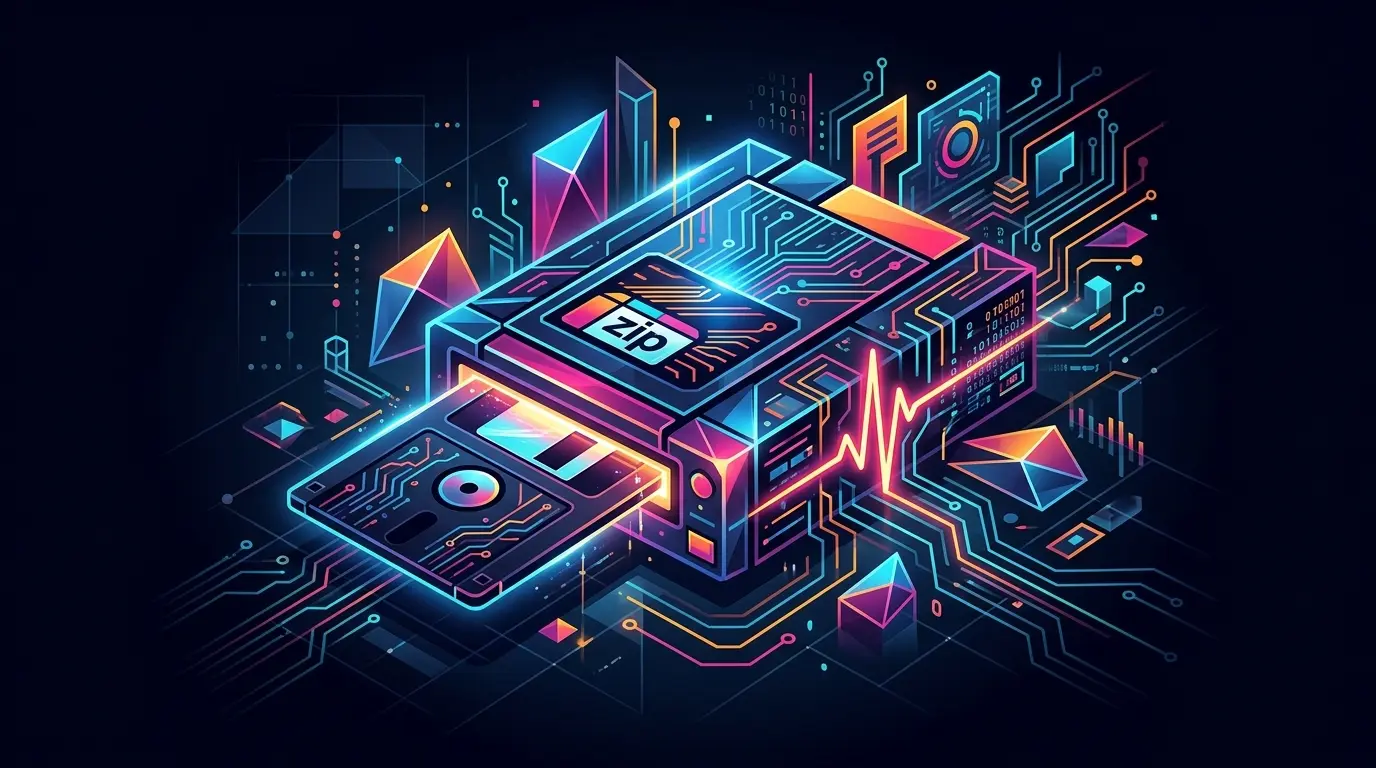
At a time when standard floppy disks topped out at a pathetic 1.44 megabytes, the Iomega Zip drive felt like it had been dropped off by a passing UFO. It was the essential bridge for anyone dealing with high-resolution scans or the first waves of digital video. But as any veteran builder can tell you, that mechanical dream often turned into a nightmare known as the Click of Death.
Today, the Zip drive is basically a museum piece. Most of the original disks are currently losing a slow battle against bit rot, which is the inevitable decay of magnetic data over time. Even if your disks still work, finding a functional drive is an expensive game of eBay roulette.
This is where a new hardware preservation project enters the frame. A new emulator has arrived to replicate the behavior of these legacy drives, specifically targeting the LPT (Parallel Port) interface that defined the era.
The Niche That Iomega Built
Iomega occupied a weirdly specific space in the nineties. They were not quite the industry standard, but they were much more than a passing fad. Their drives scaled from the original 100MB units up to 750MB versions, serving as the de facto way to move big files before recordable CDs got cheap or flash storage even existed.
I remember trying to back up a small website project in 1997. Floppies were a joke because the assets were too large. For a local developer, the Zip drive was the only viable architecture available. It offered a specific kind of developer experience that we take for granted now: you plugged it in, you played your files, and you stored them.
The mechanical nature of the medium was always its Achilles' heel. Magnetic heads would eventually misalign, the disks would degrade, and the hardware would eventually just eat itself.
Engineering the Digital Bridge
The new emulator project fixes this by ditching physical moving parts entirely. From an architectural standpoint, it is a clever bit of trickery. The device connects via the LPT port, which is the old-school parallel interface used mostly for printers back in the day. By using modern flash storage to mimic the storage blocks of a magnetic disk, the emulator essentially gaslights the legacy operating system.
When you boot up an old MS-DOS or Windows 95 machine, the OS sends a request through the parallel port looking for an Iomega device. The emulator responds with the exact timing and signal protocols required.
The computer genuinely believes it is talking to a mechanical drive with spinning platters. In reality, it is reading and writing to a rock-solid SD card or a flash chip. This solves the reliability problem while maintaining the original connectivity standards that purists demand.
Why We Keep the Parallel Port Alive
Why bother with an LPT interface in an era of NVMe drives and cloud syncing? For the retro-tech community, the goal is more than just moving files. It is about preserving the authentic environment of the time. Many industrial machines and legacy software setups are hard-coded to look for these specific hardware addresses.
There is also a deeper, more philosophical motivation at play. This is hardware preservation as an act of history.
When we lose the ability to talk to nineties hardware through its native ports, we lose access to the software and data of that era. By building these emulators, developers are creating a digital time machine. They are bypassing the physical limits of magnetic media while keeping the logical structure of the past intact.
The Cost of Memory
In my years covering hardware, I have seen dozens of storage formats vanish into the ether. We like to assume that moving to the cloud solved our storage problems forever. However, the fragility of the Zip drive is a good reminder that all storage is temporary. Whether it is a clicking magnetic head or a server farm three states away, our data relies on physical infrastructure that will eventually fail.
Is the meticulous recreation of an obsolete parallel interface a necessary act of history or just a sentimental pursuit? For the user who has twenty-year-old files trapped on a failing disk, the answer is pretty obvious.
This emulator provides a way out. It turns a dead medium into a living archive.
As we drift further away from the era of physical disks, projects like this highlight a growing divide in tech. On one side, we have the convenience of modern, abstracted storage. On the other, we have the gritty, low-level reality of hardware that requires a specific cable and a specific port to function. By bridging that gap, this emulator ensures that the 1990s do not just fade into a series of unreadable sectors. It keeps the history of our early digital lives accessible, one parallel bit at a time.