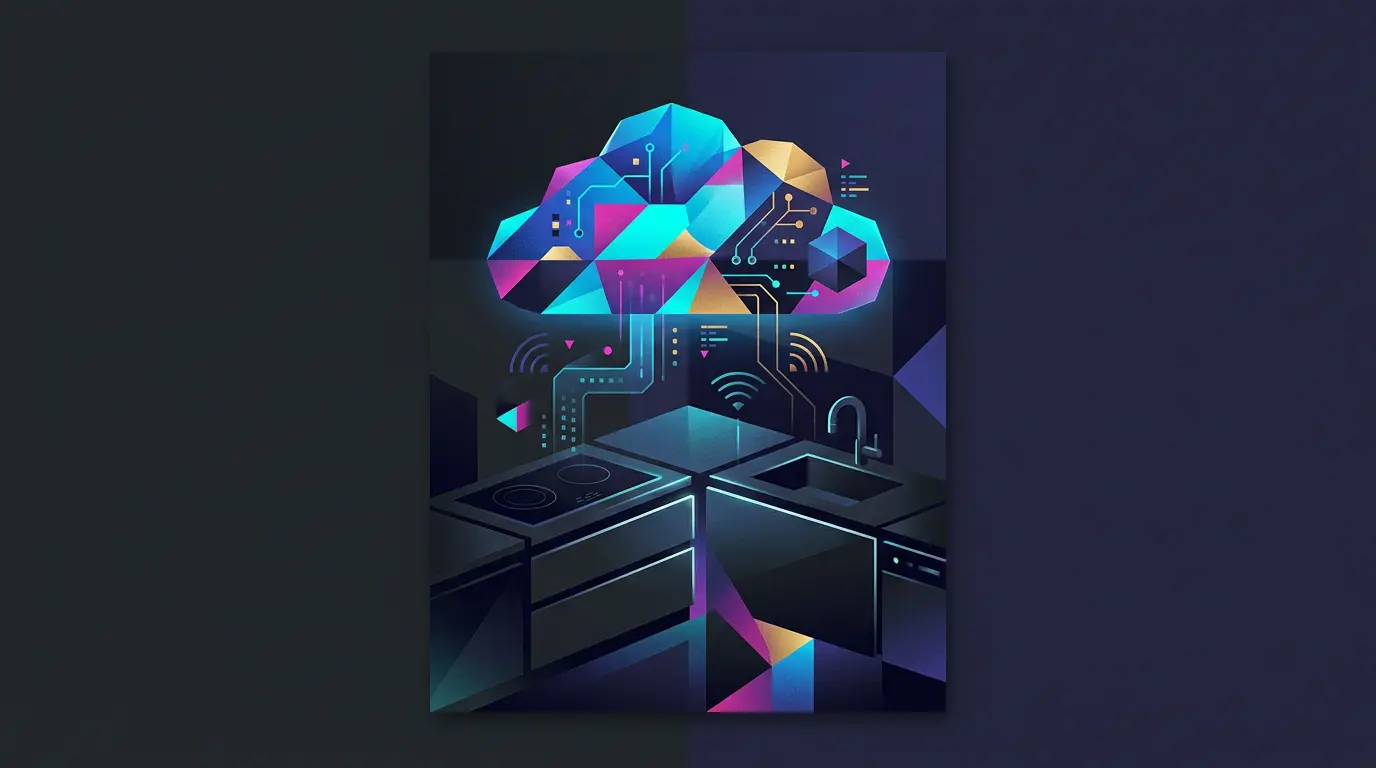
For the better part of a decade, the high-end kitchen has looked like it was designed by a committee of NASA engineers and Best Buy floor managers. We’ve endured refrigerators with tablet-sized screens, ovens that tweet status updates, and enough blue LED lighting to trigger a migraine.
But the pulse of the design world is telling us something loud and clear: we’ve reached peak gadget. The "smart kitchen" as we knew it—a blinking, beeping monument to the future—is being quietly dismantled.
There is a shift happening. Homeowners are ditching the laboratory aesthetic in favor of something that feels older and more grounded. If you look at the current wave of renovations, the mandate is simple: go back to basics.
But there’s a catch. We want the soul of a 1920s farmhouse, but we aren't exactly ready to give up our 2024 conveniences.
This has created a weird, wonderful tension in modern home design. We are witnessing a "back to basics" year where, as reported by Design Recipes, "timeless and elegant is taking center stage." Yet, that same report notes that "technology and innovation remain top of mind." We want the processing power of a supercomputer, but we want it to look like a stack of reclaimed oak.
The Visual Detox
Maybe it’s just screen fatigue. Most of us spend our lives staring at glass rectangles for work and leisure; the last thing anyone wants is for their kitchen backsplash to ask for a firmware update while they're trying to sear a steak.
This move toward the "timeless" is a psychological play. The kitchen is reclaiming its role as a sanctuary, not a showroom. We’re seeing a return to materials that feel permanent—honed marble, unlacquered brass, and heavy wood grains. These aren't just aesthetic choices; they are a rejection of the disposable nature of modern tech.
A touchscreen on a fridge is obsolete in five years. A well-carved stone countertop lasts a century.
The Tech-Aesthetic Tug-of-War
This creates a unique headache for designers. How do you satisfy a client who wants the lightning speed of an induction cooktop but hates the look of a black glass slab? How do you provide voice-controlled lighting without sticking a plastic puck on the wall?
It’s the kitchen equivalent of "Quiet Luxury" in fashion. It’s no longer about the loudest logo; it’s about the best materials and the most sophisticated construction. We are moving away from "tech-forward" visuals—the metallic industrial finishes and glowing buttons—and moving toward "tech-enabled" performance.
We want the results, not the display.
The Era of Invisible Innovation
The solution to this paradox is what I call "Invisible Innovation." The goal is no longer to show off your gadgets; it’s to hide them so perfectly that they feel like magic.
Take the evolution of the stovetop. We are seeing a move toward induction systems built literally underneath the porcelain or stone countertops. There is no visible burner. You simply place your pot on the stone, and it begins to boil. The technology is there, working harder than ever, but it’s completely invisible to the naked eye.
Similarly, smart appliances are being tucked behind custom cabinetry panels. The "smart" part hasn't left—the fridge still monitors your grocery list and optimizes temperature—but it no longer feels like a piece of hardware. It just feels like a cupboard. Technology is transitioning from a "statement piece" to an "invisible assistant."
Future-Proofing the Timeless
There is also a cold, financial reality to this trend. Homeowners are realizing that embedding rapidly aging technology into the very bones of a house is a recipe for a renovation nightmare.
By choosing a timeless aesthetic and supporting it with modular, hidden systems, they are essentially future-proofing their homes. You can update a hidden software-driven system or swap out a concealed appliance far more easily than you can fix a kitchen that was built around a specific, dated piece of hardware.
It’s a smarter way to build: let the surfaces be permanent, and let the tech be fluid.
The Sophistication of Silence
The incomplete thought in recent industry reports—the note that "Kitchens are not..."—invites us to fill in the blank. Perhaps the answer is that kitchens are no longer galleries for what we can buy, but reflections of how we want to live.
If the ultimate goal of 2024 design is to make technology disappear, we are entering an era where the most sophisticated kitchens are the ones that don’t look like they have any technology at all. It’s a strange irony: we’ve spent decades trying to make our homes look like the future, only to realize that the most futuristic thing we can do is make the technology get out of the way.
Are we finally reaching a point where we’re tech-literate enough to stop talking about it and just let it work? It seems the kitchen of the future isn't a spaceship after all. It’s just a kitchen.