The Death of a Digital Superstition
We have all done it. You glance at the clock, see it is 11 PM, and reach for the charging cable with a slight pang of guilt. For over a decade, we have lived under a collective tech superstition that leaving a smartphone plugged in overnight is a slow death sentence for the battery. We imagined our devices overfilling like a water balloon or suffering from thermal runaway while we slept.
This anxiety was once rooted in reality. In the early days of mobile hardware, battery architectures were significantly less sophisticated. Leaving a device on a continuous power intake could lead to genuine degradation.
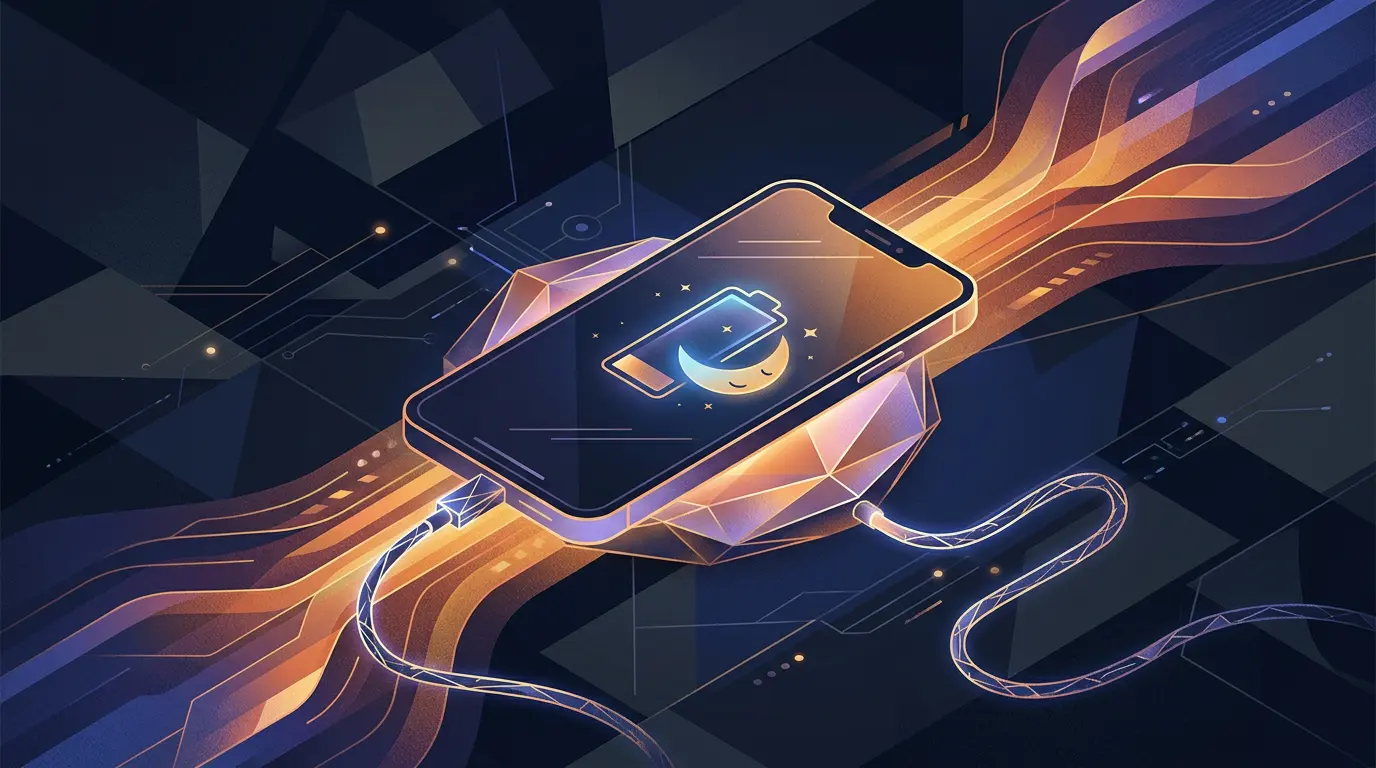
But the narrative has fundamentally changed. The ritual of waking up at 3 AM to unplug your phone is no longer a sign of a responsible owner. It is a relic of an era that modern engineering has entirely bypassed. Overnight charging is no longer a risk. It is a standard feature of modern device management.
The Silicon Bouncer
As someone who spends a lot of time looking at system architecture, I find the fix for this problem elegant. The solution was not just a change in battery chemistry, but a massive upgrade in the Power Management Integrated Circuits (PMICs) that act as the gatekeepers for your device. Modern smartphones are not dumb recipients of electricity. They do not just take whatever the wall outlet gives them.
Instead, these devices are engineered with internal mechanisms specifically designed to mitigate the potential harm caused by constant charging. When your phone hits 100 percent, the hardware effectively cuts off the power intake. It does not overfill because the circuit is designed to stop the flow. Think of it like a smart dam system rather than an open pipe.
Software That Knows Your Routine
We also see this intelligence in the software layer. Features like Optimized Battery Charging on iOS and Android have changed how we manage hardware. These systems learn your sleep patterns and throttle the charging speed accordingly. Your phone might zip to 80 percent and then sit there, waiting until an hour before you usually wake up to top off the final 20 percent.
This minimizes the time the battery spends at high voltage. It reduces stress on the lithium-ion cells without requiring any manual user intervention.
This is a classic example of an abstraction layer working perfectly. As a developer, I appreciate when a complex problem is handled by the system so the end user does not have to think about it. Battery health is now a background process. While we used to worry about trickle charging, modern devices are smart enough to maintain a charge without stressing the chemical structure of the battery.
The Real Villain Is Temperature
Of course, no hardware is immortal. While overnight charging is safe, there are still variables that matter. Heat remains the primary enemy of lithium-ion longevity. If you charge your phone overnight but leave it tucked under a pillow or in a thick, non-breathable case, you are creating a thermal trap. That heat, and not the electricity itself, is what will eventually kill your battery capacity.
There is also a research gap regarding next-gen battery chemistries. While our current lithium-ion standards are well understood, the long term impact of charging cycles on newer variants remains a subject of ongoing industry study.
We do know that deep discharge cycles (letting your phone hit 0 percent regularly) are far more damaging than keeping it at 100 percent overnight. The industry consensus has flipped. The safest place for your phone at night is on the charger, not sitting on a nightstand slowly draining toward zero.
Retiring the Manual Mindset
As battery technology continues to evolve, the burden of hardware maintenance is shifting entirely from the user to the device. We are seeing a transition where the hardware is finally as smart as the marketing claims. If our devices are now intelligent enough to manage their own longevity and thermal profiles, it makes me wonder what other common sense tech habits we are still performing that have already become unnecessary.
Are we still closing apps to save memory when the OS handles process management better than we ever could? Probably. Are we still worrying about signal strength bars that do not actually represent raw decibels? Likely.
The myth of the overnight charge is just the first domino to fall as hardware becomes self-correcting. It is time to stop treating our phones like fragile experiments and start treating them like the automated tools they have become. Your phone is smarter than your superstitions. Let it do its job while you get some sleep.