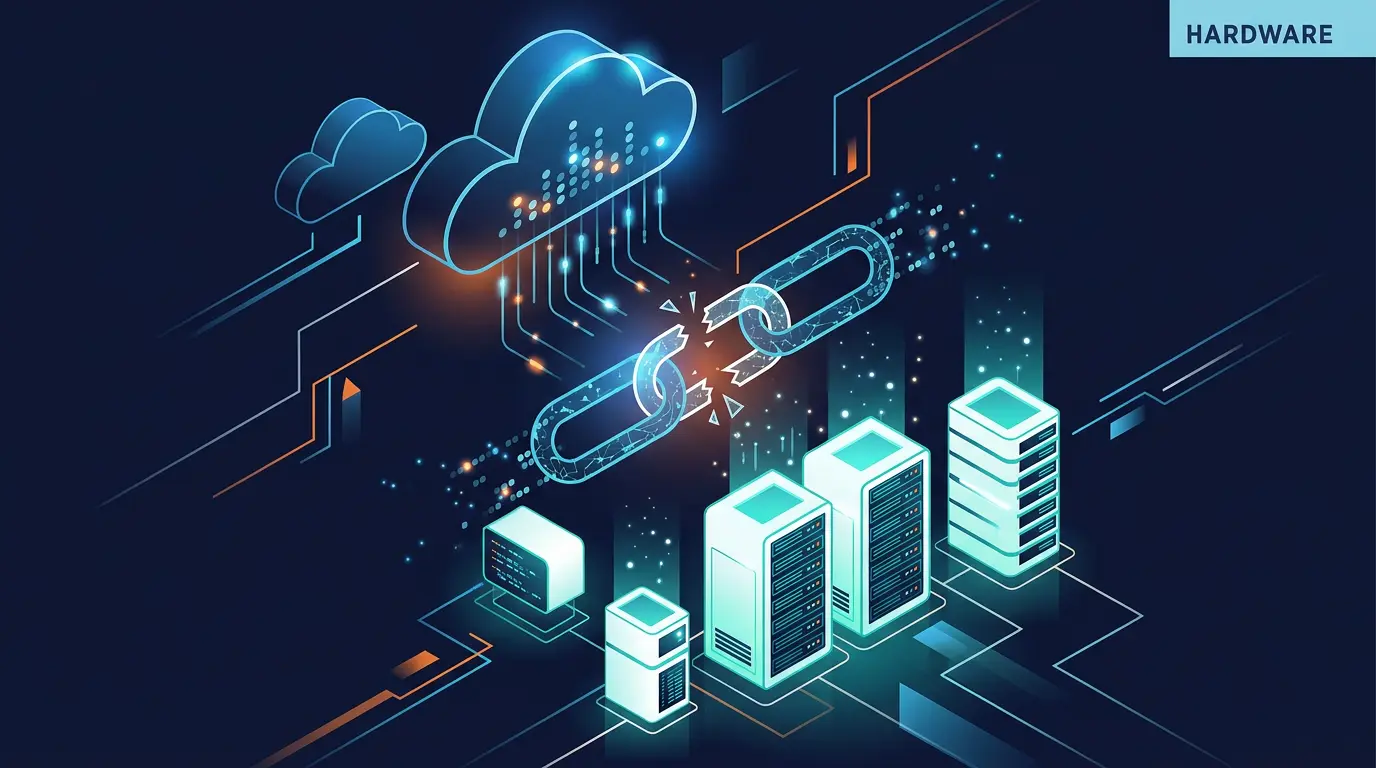
The notification arrives like clockwork every month. It is not a message from your landlord or a utility bill. It is Google, Apple, or Dropbox reminding you that your digital life has once again outgrown its allotted space. For years, we were told that local storage was a clunky relic of the past and that the cloud was a seamless, invisible grace. But as subscription costs climb and platforms feel more like digital landlords than service providers, a growing number of people are opting for a different architecture. They are moving back to the home Network-Attached Storage (NAS) server.
A NAS is more than just a hard drive with a network jack.
It is a centralized system for data backups and content streaming that lives under your own roof. Think of it as a private version of a cloud service, minus the monthly bill and the invasive terms of service that allow a corporation to scan your family photos. Wired recently highlighted that these servers are ideal for handling the heavy lifting of modern digital lives, providing a digital fortress that you actually own.
The Return to Personal Infrastructure
We are seeing a quiet pivot in how people think about their data. For a decade, the trend was to offload everything to the cloud. It was convenient, but it turned us into digital tenants. Building a home NAS ecosystem allows you to shift from renting data space to owning the infrastructure.
Modern home networks have finally matured enough to support this. With gigabit speeds becoming standard in many households, the bottleneck that once made local streaming feel sluggish has largely vanished. When you access a 4K movie from a local NAS, you are not fighting for bandwidth against the rest of your neighborhood. You are using fast local access that avoids the latency prone retrieval of a distant server farm. It is a more efficient, direct way to manage your bits and bytes.
The Dual Utility Powerhouse: Backups and Streaming
A NAS earns its keep by performing two primary roles. First, it acts as a centralized data management hub. Instead of having backups scattered across various external drives, phones, and laptops, you can automate protocols to send everything to one location. If your laptop motherboard fries tomorrow, your work is already safely sitting on the NAS in the other room.
Second, there is the matter of media sovereignty. In an era where streaming services frequently remove content due to licensing disputes, building a private library is the only way to ensure permanent access to your favorite films or music. You are no longer subject to the whims of a content executive. This is your media, on your terms, served over your own network. According to Wired, this dual utility makes the NAS a cornerstone of a modern home setup.
The Economics of Self Hosting
The most compelling argument for the NAS is often financial. We are currently trapped in a web of micro transactions. Two dollars here for extra photo storage, ten dollars there for a music sub, and suddenly you are spending hundreds of dollars a year on data you do not even control.
Wired reports that implementing a personal NAS server could even save you money in the long run. However, we have to be realistic about the math. This is not a guaranteed financial win for everyone. The initial investment for a decent two bay or four bay unit, plus the cost of high capacity drives, can range from $300 to over $600.
True savings depend on several variables, including your hardware selection, local energy consumption, and the actual duration of use. If you buy a premium server but only use it to store a few documents, the break even point will never arrive. But for power users or families with terabytes of photos and videos, the hardware often pays for itself within three to four years when compared to premium cloud tiers. You have to factor in the longevity of the drives as well, since physical hardware eventually fails and requires replacement.
Accessibility: The End of the Command Line Requirement
One of the biggest hurdles to NAS adoption used to be the complexity. Setting one up used to feel like a weekend project involving Linux terminal commands and networking degrees. That is no longer the case. Current solutions have lowered the barrier to entry significantly, offering experiences that rival any consumer gadget.
Today’s NAS manufacturers provide slick dashboards and mobile apps that make managing your server as easy as using a smartphone. You still have the responsibility of maintaining your own hardware, but the user interface no longer feels like an enterprise grade chore.
The New Digital Autonomy
As privacy concerns grow and the cost of digital living increases, the move toward home based storage represents a broader lifestyle shift. It is about reclaiming your digital autonomy. Is the convenience of the cloud truly worth the recurring cost and the loss of control? For many, the answer is increasingly a firm no. Bringing your data back under your own roof is not just a tech trend, it is a statement of ownership in an age of digital rentals. The question for most is no longer if they need a better storage solution, but how much longer they are willing to pay rent on their own memories.