We were promised a 10x productivity boost, a world where the days of hunting for missing semicolons were finally over. The pitch was simple: the machines would handle the plumbing while we focused on high-level architecture. It was one long victory lap for AI marketing. But a reality check is finally hitting the industry, and it is a sobering one.
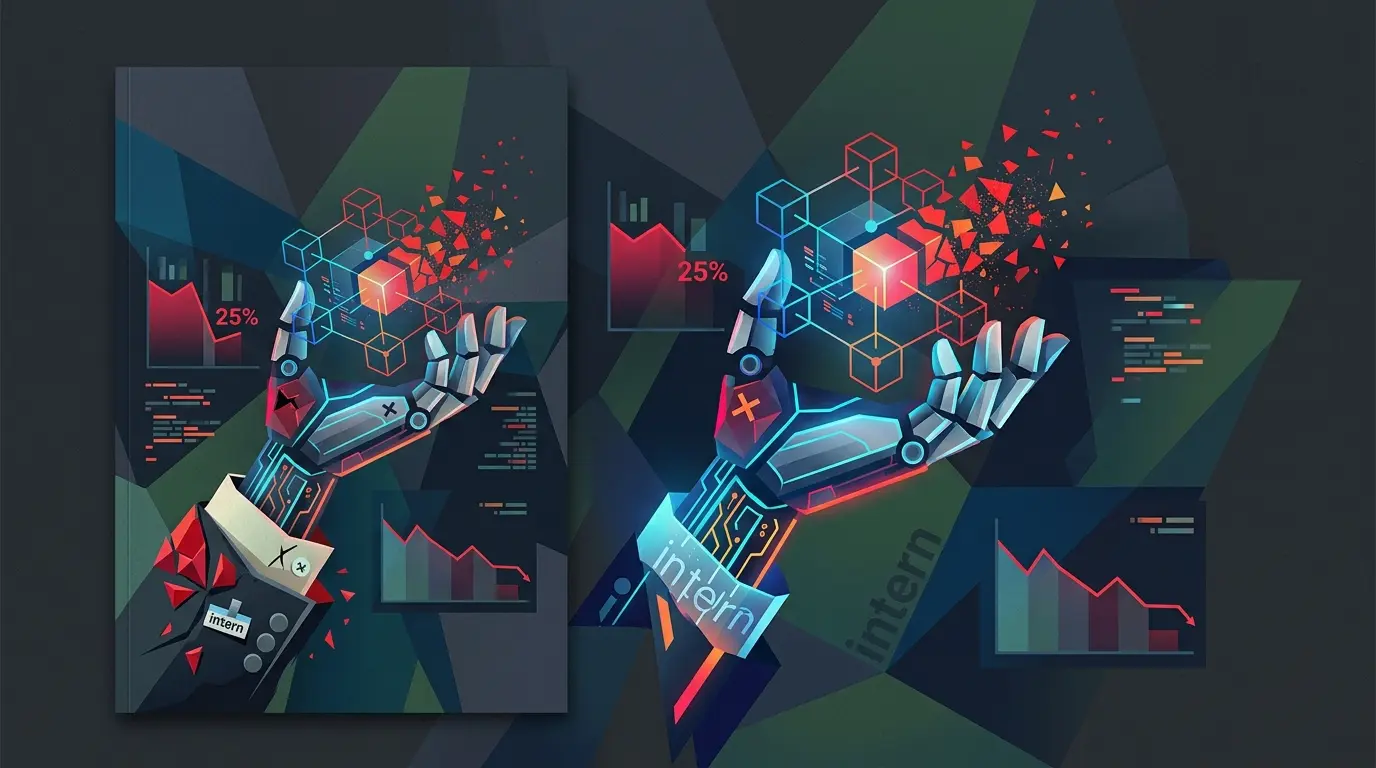
Recent reports circulating through developer communities suggest that the top AI coding tools are churning out incorrect code in roughly 25% of cases. That is a one-in-four failure rate. If you are a CTO or a lead engineer, that number should be enough to make you rethink your entire automated workflow.
The High Cost of the Wrong Answer
When we talk about a 25% error rate, we are not just nitpicking over minor formatting issues. We are talking about logic that flat-out fails to execute, security vulnerabilities that leave the door wide open for attackers, and the quiet, heavy accumulation of technical debt.
The developer experience has fundamentally shifted. We have moved from having a reliable co-pilot to managing a high-risk intern who is eager to please but utterly confident in their own mistakes.
In my fifteen years of shipping code, I have learned that the most dangerous tool is never the one that fails loudly. It is the one that fails subtly. If a compiler throws an error, you fix it and move on. But if an AI generates a functional-looking block of code that contains a latent race condition, you might not find it until it hits production and everything breaks.
Are you actually moving faster if you spend an hour auditing code that the AI wrote in three seconds? For many professional teams, the math is starting to look ugly.
The Transparency Problem
There is a significant catch to this 25% figure. The report lacks a certain level of methodological clarity, which makes it hard to pin down exactly who is failing and why. It refers to top AI tools in the aggregate. That is like saying all cars have a 25% chance of breaking down without specifying if you are driving a brand-new sedan or a rusted-out van from the eighties.
We do not know which specific models were tested. Was it the latest version of GPT-4, the specialized Claude 3.5 Sonnet, or older iterations of GitHub Copilot?
Furthermore, the definition of an error remains opaque. Does a missing import count the same as a SQL injection vulnerability? Without knowing the prompts used or the complexity of the tasks, we are looking at a black box. This lack of transparency is a major hurdle for teams trying to build reliable deployment pipelines. We need standardized, transparent benchmarks before we can truly trust these agents with our repositories.
Blind Trust and the Context Tax
This reliability gap is particularly dangerous for junior developers. A veteran engineer can glance at a snippet and realize the AI is hallucinating a library method that does not exist. A junior dev might spend half a day trying to make that hallucination work because they treat the AI as a source of truth.
We are seeing a rise in blind automation, the practice of shipping AI-generated code without a rigorous human-in-the-loop verification process.
This issue ties back to the Context Tax we have observed in other parts of the ecosystem. When tool definitions and system prompts are bloated, eating up tens of thousands of tokens per session, the model performance often degrades. We saw this recently with the Apideck CLI trying to trim down the massive token overhead that eats into an agent's reasoning capabilities.
When an AI is struggling under the weight of a messy context, the quality of its output is the first thing to go. If the model is drowning in data, it is going to start guessing. In software engineering, guessing is a recipe for disaster.
Architecture Over Syntax
The path forward requires a fundamental shift in how we teach and practice programming. The future of coding is moving away from syntax memorization and toward architecture and verification.
As a 14-year veteran developer recently pointed out, the highest-paid skill in the current market is not writing the code itself. It is translation and oversight. You need to be able to translate a business requirement into a prompt, and then translate the AI output into a verified, secure implementation.
Professional teams must implement mandatory code reviews, automated security scans, and comprehensive unit testing for every single snippet that originates from an AI. We cannot treat AI as a production-ready partner yet. It is a powerful, flawed tool that requires a human guardrail.
If we cannot trust the code our assistants generate, we have to ask if the productivity gain is worth the risk of a compromised codebase. We need to prioritize AI we can verify over AI that just works fast. Until these tools can prove their accuracy through transparent metrics, the most important tool in your kit is not your AI assistant. It is your own skepticism.
Are we building a future of efficient, high-quality software, or are we just automating the creation of tomorrow's legacy bugs?