It is 2 AM. You have just finished a thousand-word journal entry in a Claude window, offloading the anxieties of a long work week. Before closing your laptop, you type, "Thanks for listening, I feel a lot better now." You wait for the three dots to flicker. Claude responds with a warm, measured reassurance. You feel a genuine sense of relief, even though you know, intellectually, that you just thanked a high-dimensional probability map of the English language.
This is the new frontier of human-computer interaction. We are moving away from the era of the cold command line and into an age where the interface is a social mirror. As an AI researcher, I spend most of my time looking at benchmarks like MMLU or GSM8K, which measure raw logic and reasoning. However, the most significant shift in the industry right now isn't happening in the weights of the models. It is happening in the psychology of the users.
The Rise of the Relational Prompt
For the last two years, the tech world has been obsessed with prompt engineering. We treated LLMs like temperamental engines that required precise fuel mixtures to run correctly. We used delimiters, few-shot examples, and those rigid XML tags that feel a bit like writing bad code. But lately, a new trend has emerged that I call relational prompting.
Instead of treating the AI as a system to be optimized, users are treating it as a peer to be engaged. Platforms like Claude and ChatGPT have become so adept at mimicking human conversational cadences that the technical barrier has effectively dissolved.
When people use AI for personal tasks like journaling, the mask of the tool slips away. One user on Reddit recently sparked a massive debate by asking, "Do you talk to AI like a person or as a system? I use Claude to journal, and the way I talk about something is like I'm explaining it to someone in a conversation. It made me wonder, is that normal?"
This inquiry touches on a fundamental shift. We are no longer just using these models to write Python scripts or summarize PDFs. We are using them to process our lives. This conversational dynamic is not just a quirk of the user interface. It is a reflection of how our brains are hardwired to perceive agency in anything that talks back to us with coherent syntax.
The Psychology of the Social Mirror
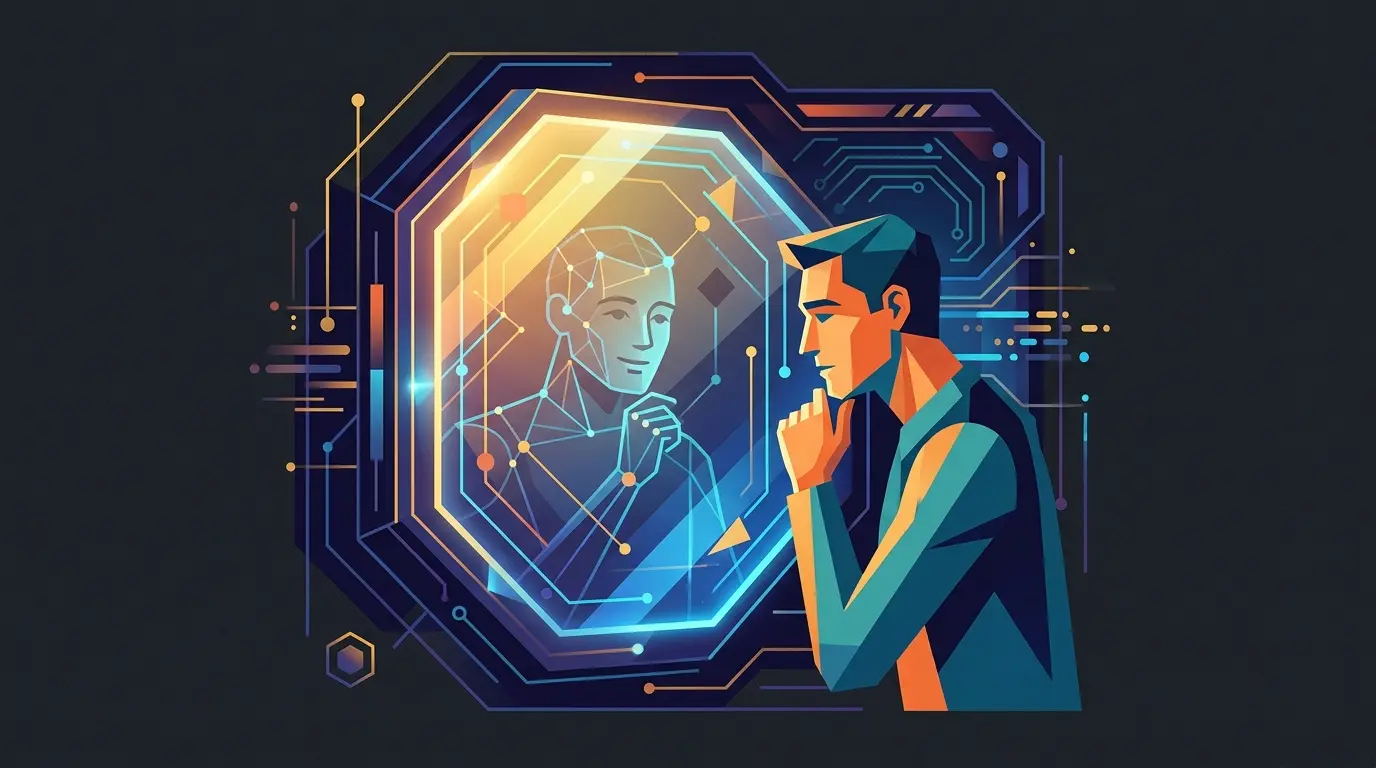
From a research perspective, anthropomorphism is a survival trait. Humans evolved to detect intent in the rustling of leaves or the movements of predators. When a machine uses "I" and expresses empathy, our neurobiology struggles to maintain the distinction between a person and a program. This is the Social Mirror effect. We project our own humanity onto the system because the system is trained on the sum total of human expression.
However, this leads to a fascinating divide in the user base.
On one side, you have the Power User. This person views the AI as a sophisticated calculator. They use direct instructions and ignore the polite fluff. On the other side, you have the Relational User. They say "please" and "thank you." They explain their feelings. They treat the model as a collaborator.
Is one approach objectively better? This is where the empirical data fails us. Currently, the industry lacks a standardized benchmark for whether conversational engagement improves output quality. We know that chain-of-thought prompting works, but does being nice to a model actually yield better results? Some anecdotal evidence suggests that models might perform better when treated with the same social context they were trained on, but we have yet to prove it with a rigorous leaderboard.
Efficiency vs. Empathy in UX Design
This shift is forcing a total rethink of UI and UX design. For decades, the goal of design was to reduce friction and increase efficiency. We wanted fewer clicks and faster load times. But as AI becomes a therapeutic proxy or a creative partner, the goal is shifting from technical proficiency to psychological comfort.
Designers are now focusing on how to make an AI feel trustworthy rather than just fast. This raises significant ethical questions. If we design systems that intentionally trigger our instinct for social rapport, are we helping users or are we manipulating them? When an AI becomes a peer, the power dynamic changes. We are no longer just the operators of a tool. We are the audience for a new kind of digital theater.
As someone who tracks the capabilities of these models daily, I find the journaling use case particularly telling. Journaling is an act of extreme vulnerability. The fact that users feel comfortable performing this act with a commercial LLM suggests that we have already crossed a significant threshold. We have accepted the machine as a social entity.
The Future of Social Intelligence
We are approaching a point where the value of an AI will not be measured solely by its processing speed or its context window. It will be measured by its social intelligence. If a model can understand the subtext of your frustration or the nuance of your joy, it becomes more than a tool. It becomes a companion.
But we must ask ourselves what we lose in this transition.
If we spend our most vulnerable moments talking to a statistical model, are we actually being heard? Or are we just shouting into a very sophisticated echo chamber that is designed to tell us exactly what we want to hear? The future of technology may not be found in better code, but in how we choose to define our relationship with the machines that now speak our language.