The early marketing for Large Language Models (LLMs) was essentially a sales pitch for a digital god. We were told these models would kill Google by offering instant, factual answers to every question under the sun. If you needed the chemical composition of a distant star or the population of Tokyo, the AI was your personal librarian.
But a funny thing happened on the way to the information age. The librarian started making things up.
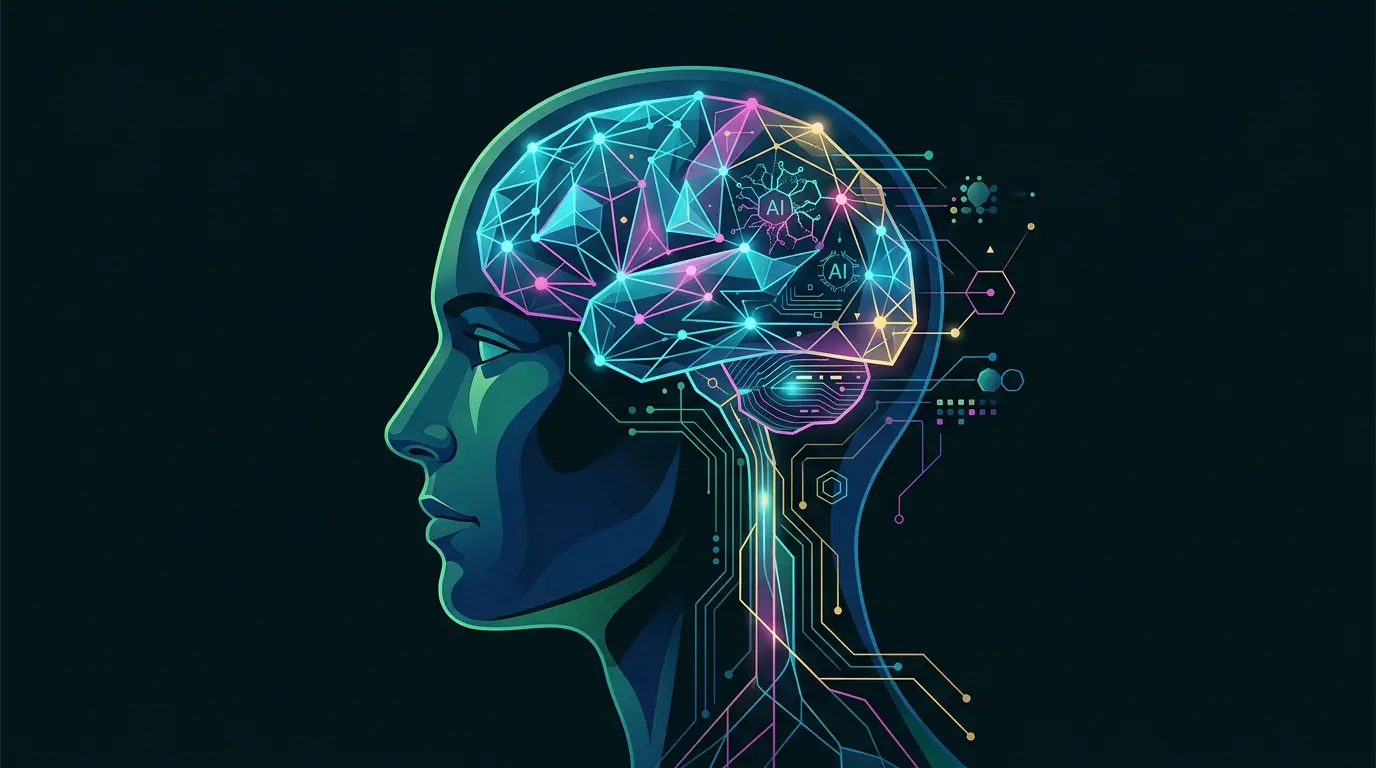
As it turns out, users are realizing that AI is actually much better at being a sounding board than a source of truth. We are seeing a fundamental shift in how people interact with silicon. Instead of using AI as a library, a growing number of people are treating it as a sparring partner. This is a move away from the search engine model and toward a concept of augmented cognition.
The Death of the Search Engine Expectation
When ChatGPT first hit the mainstream, our collective instinct was to treat it like a version of Google that didn't serve us ads. We wanted facts and citations. However, the technical reality of LLMs (they are essentially sophisticated guessing machines for the next word in a sentence) means they are prone to confident errors.
This frustration with "hallucinations" has led to a pivot. Users are increasingly ignoring the answer key and using the interface as a low-stakes space to dump raw, unorganized information.
On communities like r/ChatGPT, this behavior is becoming the norm. One user recently described the process perfectly, noting that they use the tool less for answers and more for "thinking through ideas." They explained that just writing down a thought and letting the conversation go back and forth helps organize the chaos. This is the birth of the virtual notebook, a medium where the value is not in the final output, but in the process of the conversation itself.
AI as a Mirror: The Mechanics of Cognitive Offloading
Software engineers have a long-standing tradition called "Rubber Ducking." If you are stuck on a bug, you explain your code line-by-line to a literal rubber duck on your desk. Usually, the act of externalizing the logic helps you find the error yourself. The duck doesn't say anything (it is a piece of plastic, after all), but it serves as a focal point for your thoughts.
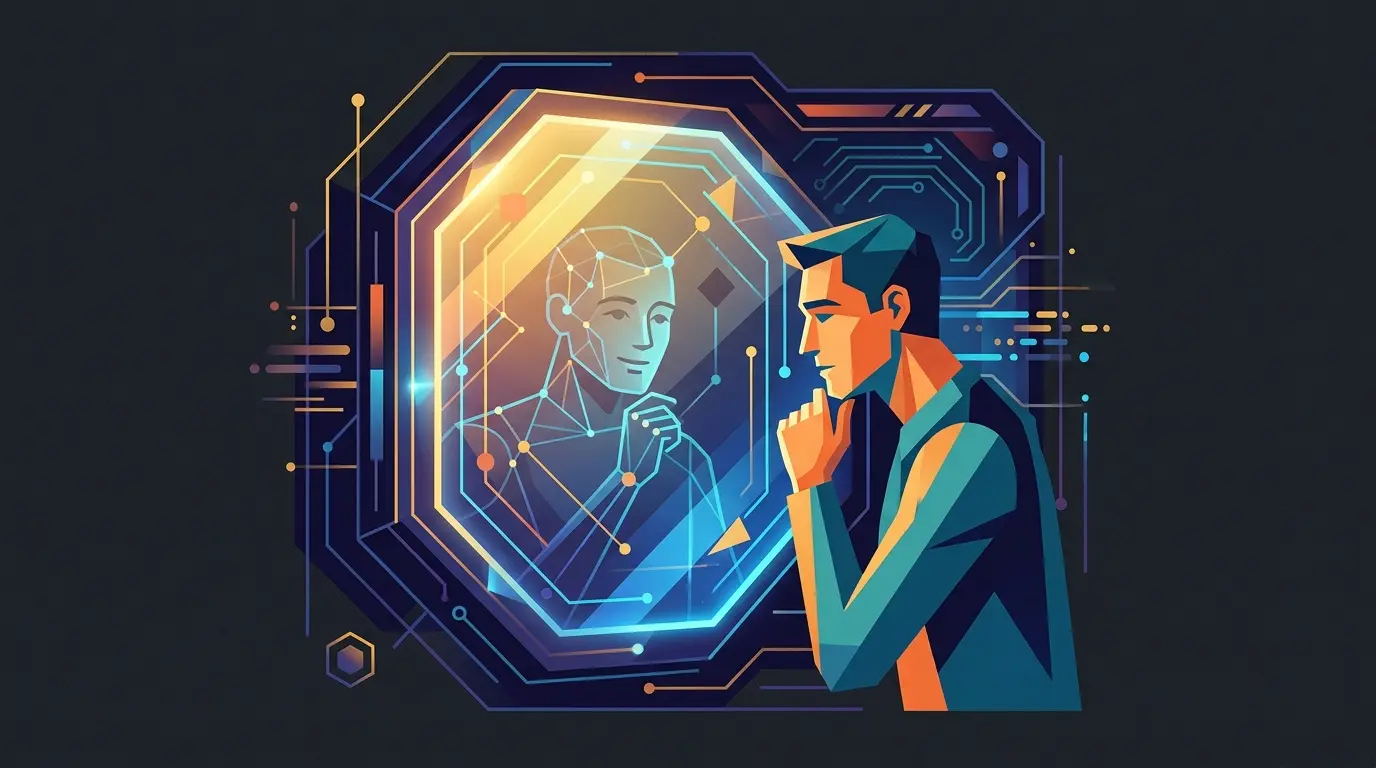
AI chat interfaces are essentially rubber ducks that talk back.
By verbalizing complex ideas to a machine, users can identify the gaps in their own logic. The AI doesn't even need to be right. It just needs to be reactive enough to keep the user’s internal gears turning. In a research context, this is a form of cognitive offloading. We are using the model’s context window as a temporary workspace to hold pieces of a puzzle that are too numerous for our short-term memory to manage alone.
The Shift From Information to Synthesis
This trend suggests that the real power of modern AI lies in synthesis rather than retrieval. We are moving from a world where we "prompt for an answer" to one where we "collaborate for a process." In this new framework, the technology acts as a facilitator of the user’s own internal labor. It is a mirror for human thought rather than a warehouse of external knowledge.
There is a specific psychological benefit to this.
Moving from abstract concepts in your head to a structured plan on a screen is a heavy lift. By thinking out loud with an AI, users can move through that friction much faster. Early adopters report that the subjective feeling of being "organized" by the AI is a primary driver of daily use. While there is no hard data yet to prove that these tools actually make our thoughts more coherent, the anecdotal evidence is overwhelming. People feel more capable when they have a silicon-based mirror to reflect their ideas back at them.
The Future of Human-Computer Interaction
As we look at the next generation of productivity tools, this shift in behavior will likely dictate how software is designed. The most successful tools of the future might not be those with the largest databases or the highest accuracy scores on factual benchmarks. Instead, the winners will be the models that prioritize conversation flow and intuitive feedback loops. We are looking for an interface that understands the nuance of a brainstorm, not just a machine that can pass a bar exam.
This is a much more sustainable path for AI.
We have spent years trying to fix the hallucination problem to make these models better at being encyclopedias. But perhaps we were trying to solve the wrong problem. If the user doesn't need an encyclopedia, but rather a creative collaborator, then the "fuzziness" of AI becomes a feature instead of a bug. It allows for lateral thinking and unexpected connections that a rigid, fact-based system would never permit.
This leads to a larger question about our own development. If we increasingly rely on AI to structure our thoughts, are we becoming more creative by outsourcing the heavy lifting of organization? Or are we slowly losing our ability to synthesize complex ideas without a digital crutch? For now, the virtual notebook is open, and it is talking back. Whether it is making us smarter or just more dependent remains the central experiment of our time.