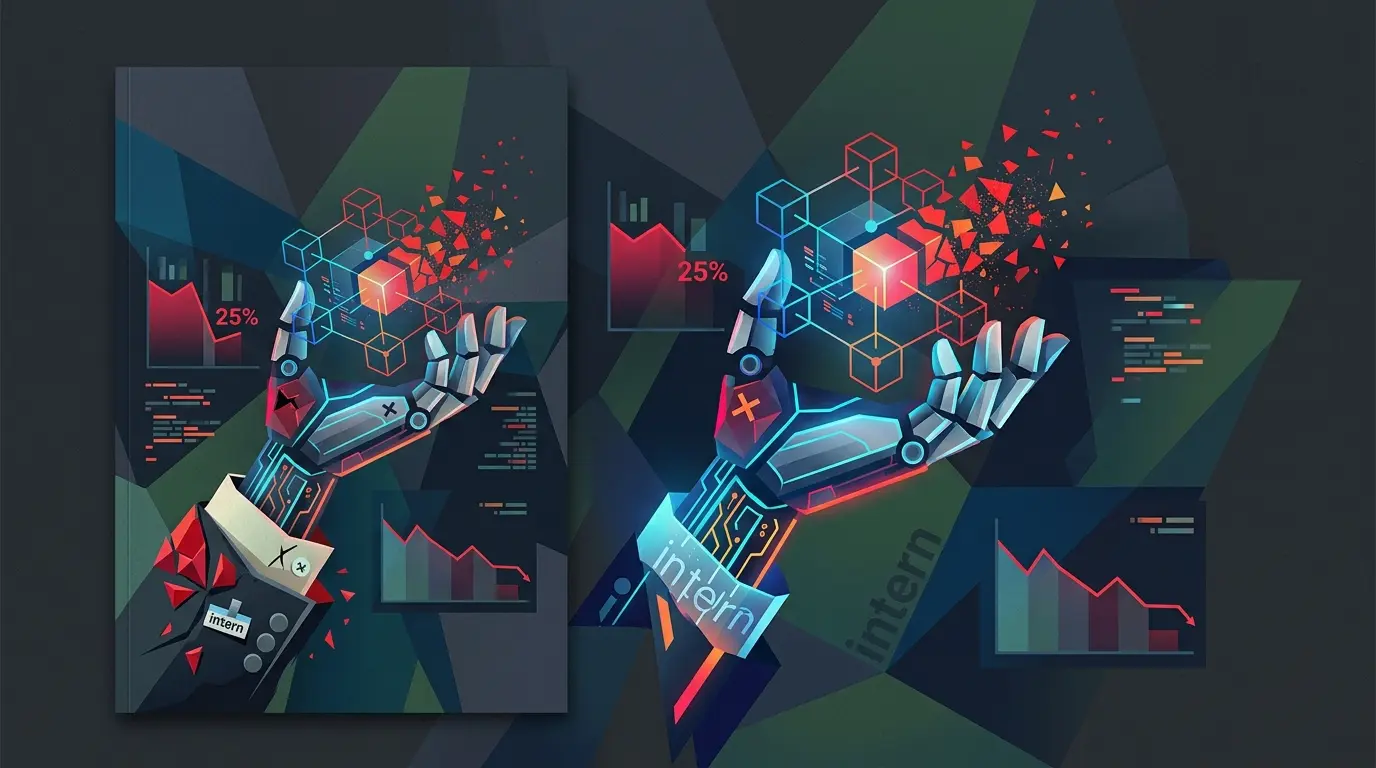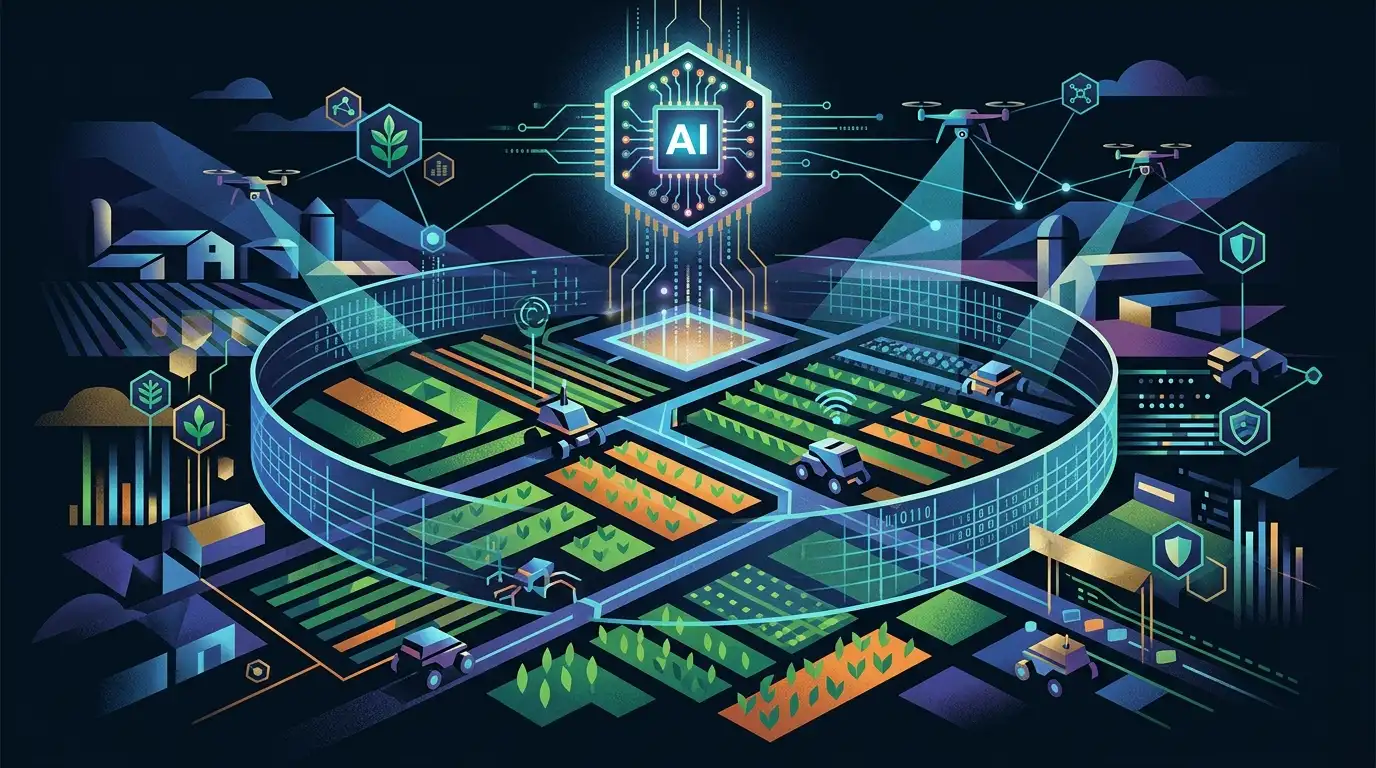
The modern industrial pig farm is quietly becoming one of the most sophisticated laboratories for autonomous systems on the planet. Forget the pastoral imagery of a farmer in overalls. The next generation of swine production looks more like a high-security data center where the assets happen to be alive and the primary objective is keeping biological "bugs" out of the system.
We are seeing a transition from traditional labor to a closed robotic ecosystem. The drivers behind this shift are as pragmatic as they are urgent.
Two massive pressures are squeezing the industry right now. First, there is a legitimate labor crisis. Recruiting humans to work in the demanding, often isolated environment of a factory farm is becoming nearly impossible. Second, and perhaps more critically, humans are a liability. We are walking vectors for disease. Every time a worker enters a facility, they risk introducing pathogens that can wipe out an entire population in days. This is the catalyst for what researchers are calling autonomous biosecurity.
The Technical Framework: AI as a Sentry
A recent paper published in the journal Agriculture (MDPI, Volume 16, Issue 3) outlines the technical parameters for this shift. This isn't just about automated feeding. The research focuses on integrating AI and robotics to perform tasks that previously required human intuition and physical presence. We are looking at a stack that includes real-time health surveillance and sophisticated behavioral analysis.
In an AI researcher's view, the swine pen is a high-noise environment. Traditional monitoring fails because pigs are social, active, and frequently obscure one another.
The systems being piloted now use advanced computer vision to track individual animal movement. These models identify the subtle signatures of respiratory distress or lameness long before a human worker would notice. This is edge computing at its most literal. By processing data locally, these systems provide a continuous stream of health metrics, turning biological life into a set of manageable data points.
Building the Biological Firewall
The concept of autonomous biosecurity represents a fundamental change in facility management. If you remove the human from the equation, you remove the most frequent breach in the biosecurity perimeter. Robotic units can handle facility cleaning, monitoring, and even basic medical interventions. These machines don't need to leave the site, they don't go home to other farms, and they can be sterilized with chemicals that would be toxic to a human operator.
This shift moves the industry from a labor-centric model to a high-tech asset management model.
In this framework, the farm becomes a closed loop. Monitoring is 24/7, data-driven, and significantly more granular than human oversight. We are essentially building a firewall around the food supply, using silicon to protect the protein.
The Implementation Bottleneck
As someone who monitors model performance and hardware reliability, I see some significant hurdles before this becomes the global standard. The first is the sheer capital expenditure. Replacing a human workforce with a fleet of specialized robots requires a massive upfront investment. While the long-term operational savings on labor and disease mitigation are compelling, the initial bill is a tough pill for many producers to swallow.
Then there is the black box of scalability. Laboratory results in controlled settings are one thing, but can these AI models handle the chaotic, corrosive reality of a large-scale industrial barn?
Pig farms are famously hard on equipment. Dust, moisture, and ammonia create a hostile environment for sensitive electronics. The benchmarks for these systems need to prove they can survive the physical environment just as well as they can process the visual data.
There is also the question of animal welfare. While removing human-to-animal contact reduces stress and disease risk, we are effectively placing living creatures in a machine-dominated environment. How this impacts the social behavior of the animals over multiple generations is a subject of ongoing research. We might solve the biosecurity problem only to find new behavioral issues that our models aren't yet trained to recognize.
The Future of the Pork Stack
We are witnessing a moment where the agricultural sector is forced to innovate its way out of a survival crisis. The integration of AI and robotics in swine production isn't a luxury. It is a strategic response to a world where labor is scarce and viruses are evolving.
Does the removal of the human element secure our food production, or does it create a new kind of fragility?
If a facility becomes entirely dependent on an autonomous stack, a software bug or a hardware failure becomes as dangerous as a viral outbreak. As we push toward total automation, we must ensure that our digital defenses are as resilient as the biological ones they are designed to protect. The agricultural experiment of the next decade won't be about better feed, it will be about better algorithms.