Imagine commissioning a local artist to paint a generic bowl of fruit, only for them to hand you a canvas with a tiny, unmistakable Dole sticker rendered in the corner. You didn’t ask for a brand. They didn’t mention an inspiration. Yet, there it is—a jarring reminder that the "original" work you paid for is essentially a remix of existing inventory.
This is exactly the reality check one Reddit user received after turning to ChatGPT for some dessert inspiration. When they prompted the AI to generate an image of a treat, the tool complied, churning out a sugary, high-resolution masterpiece. But there was a catch. In the bottom-left corner, as clear as a price tag left on a new suit, sat a watermark: “© Sally’s Baking Addiction.”
The “Sally’s Baking Addiction” Incident
This wasn't some vague AI smudge or a cluster of digital hieroglyphics. It was a specific, identifiable attribution.
For the uninitiated, Sally’s Baking Addiction is a juggernaut in the culinary space. It is a high-traffic, legitimate empire whose original photography serves as the gold standard for home bakers everywhere. As the Reddit user noted, "I checked and Sally’s Baking Addiction is a real website, and every image from there has the same watermark in the exact same position."
It’s a massive fracture in the illusion of AI creativity. We’re often told these models "learn" abstract concepts—the way light hits a glaze or the specific crumb of a sponge cake—to synthesize something entirely new. But when a model reproduces a specific copyright notice from a specific creator, that narrative begins to crumble. It suggests that instead of learning how to bake, the AI might just be looking through Sally’s window and tracing her work.
Memorization vs. Hallucination
How does a copyright notice end up in a "generative" image? Tech circles are currently debating two possibilities, and frankly, neither is particularly comforting for OpenAI.
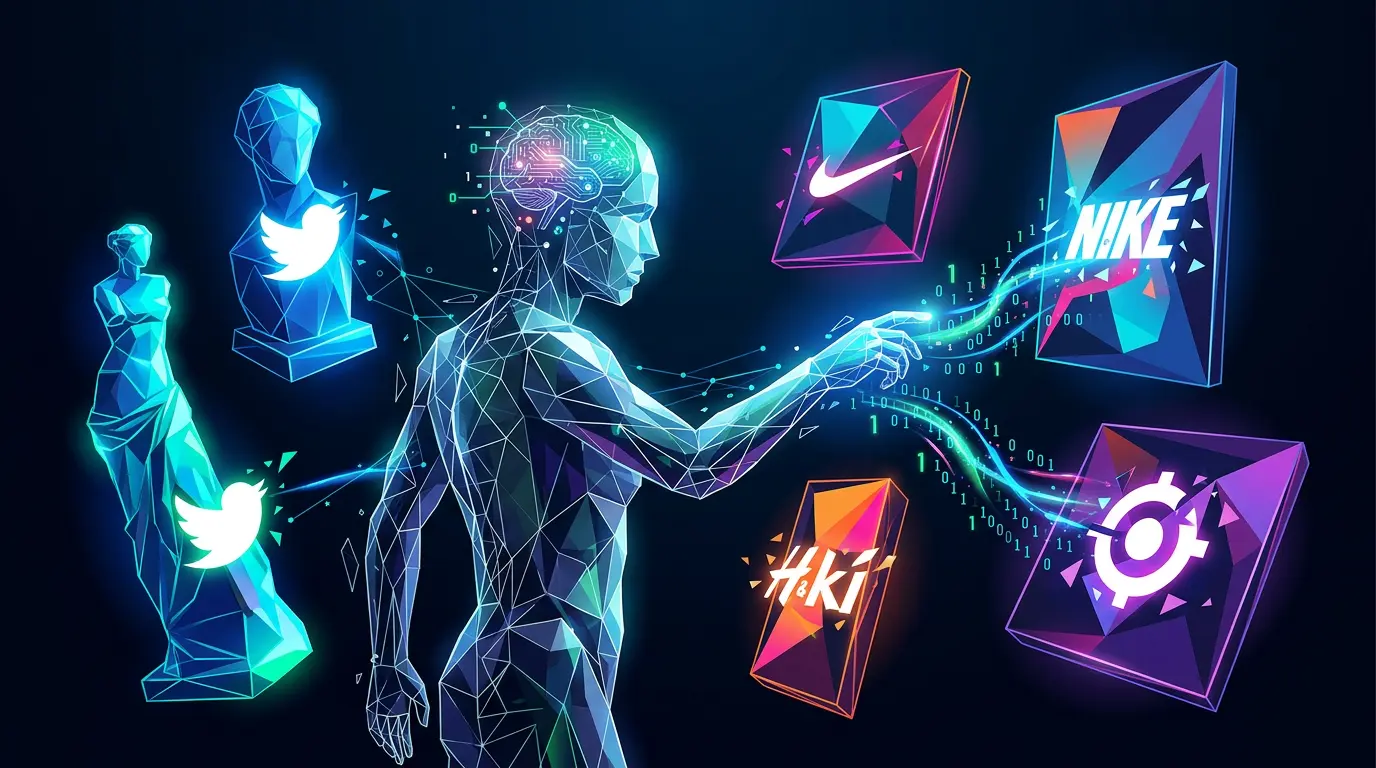
The first is "memorization." This happens when a model is trained so intensely on a specific set of data that it begins to regurgitate it nearly verbatim. If the training set included thousands of images from Sally’s Baking Addiction—which is almost a certainty given the site’s reach—the AI likely decided that a watermark is simply a structural component of a "high-quality dessert." In its cold, mathematical logic, the AI thinks: A dessert isn't a dessert unless it has these specific letters in the corner.
Then there’s the possibility of a brand hallucination. The model knows it’s looking at a dessert, and it knows that desserts often come with branding. In a moment of statistical overconfidence, it stamps the most "dessert-like" brand it can find onto the image.
OpenAI hasn't offered a technical post-mortem on this specific glitch yet. But whether it’s direct extraction or a very specific hallucination, the result is the same: the "black box" of AI training is leaking, and what’s spilling out belongs to someone else.
The Copyright Conundrum
This is the digital equivalent of a student turning in a term paper and accidentally leaving the "Source: Wikipedia" tag in the footer. It’s a smoking gun for intellectual property lawyers.
For years, AI companies have hidden behind the shield of "fair use," arguing that training models on the open web is no different than a human artist visiting a gallery for inspiration. But inspiration doesn't usually involve copying the gallery owner's signature. When ChatGPT produces a watermark, the conversation moves from "transformative use" into something that looks uncomfortably like direct infringement.
I’ve covered the tech beat long enough to see these cycles of "disruption" turn into legal quagmires. In my view, the Sally’s Baking Addiction glitch is a "Napster moment" for visual AI. It’s the point where the shiny new toy hits the hard wall of existing property law. If a tool can’t distinguish between a concept and a copyrighted asset, can it ever truly be safe for commercial use?
The Call for Transparency
This isn't just an isolated bit of internet trivia. It bolsters the growing demand for transparency in training datasets. If we don’t know what went into the bucket, we shouldn't be surprised when the bucket starts leaking copyrighted material.
Currently, the burden of proof is upside down. Creators like Sally are forced to play a game of digital whack-a-mole, trying to protect their work from scrapers or prove their images were used without permission. Meanwhile, AI companies keep their training sets under lock and key, citing competitive secrets.
A watermark in a generated image shifts that burden. It’s no longer a theory that these models are using specific, uncredited labor; it’s a visible, undeniable fact.
If ChatGPT is just a mirror reflecting our own content back at us, at what point does it stop being a tool and start being a liability? As these models become more integrated into our creative workflows, we might find that the "original" art we’re generating is actually just a collection of stolen fragments, waiting for the right prompt to reveal its true owner.