Let’s be honest: for a while there, AI was basically a very sophisticated pen pal. You’d send a prompt, wait a beat, and get back a wall of text. It was impressive, sure, but it was also a dead end.
Anthropic just decided to break that wall down. By flicking a switch on Claude, they’ve transitioned the model from a polite conversation partner into something much more utilitarian: a host for interactive applications.
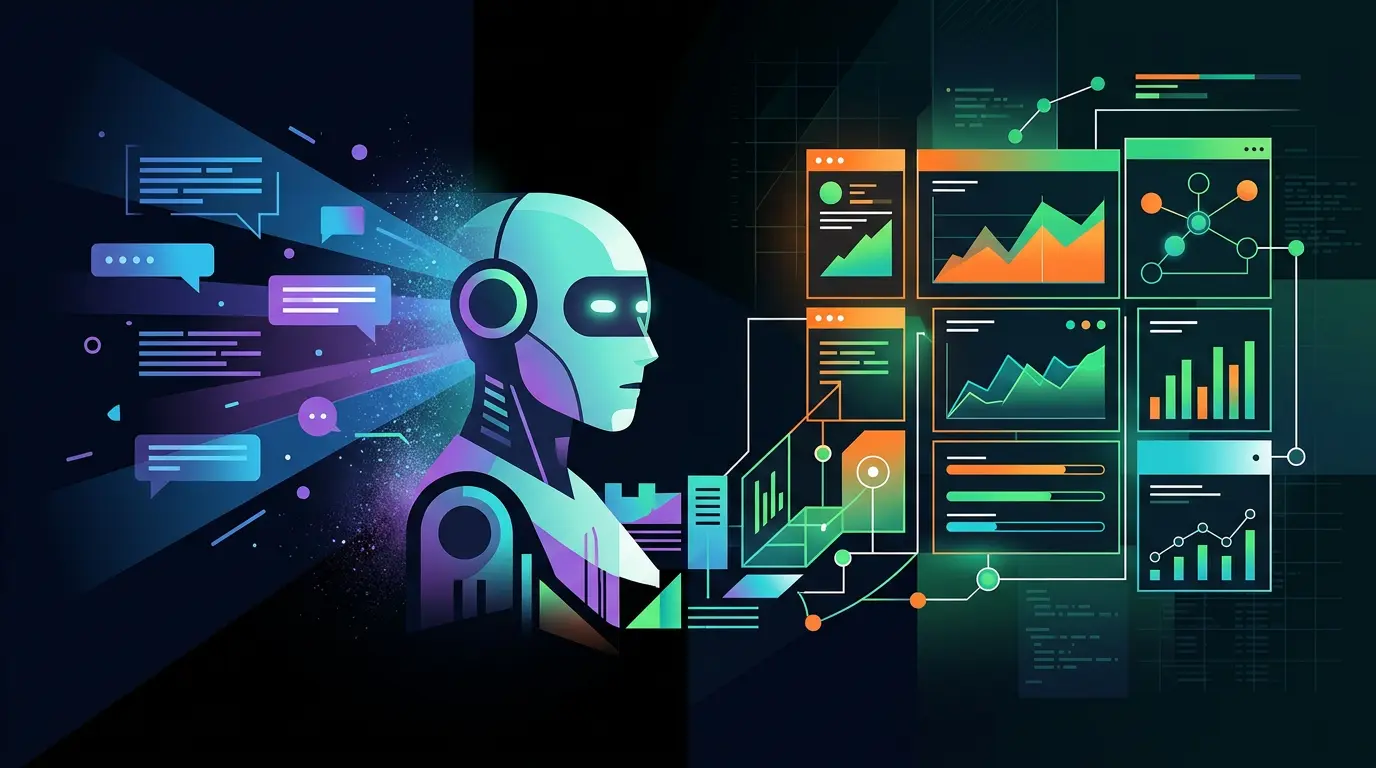
The update is simple on the surface, but the implications are massive. Claude can now generate and display interactive apps—starting with dynamic data visualization tools—directly within your chat window. It’s a move that signals the end of the "passive chatbot" era and the birth of the AI-driven workspace.
Killing the Copy-Paste Workflow
For the last two years, working with AI has felt like trying to build furniture through a letterbox. You ask for a design, they slide a blueprint through, and then you have to go into the garage (or Excel, or Tableau) to actually build the thing yourself.
Anthropic is clearly tired of that friction.
By introducing interactive UI components, Claude is moving from "telling" you the answer to "showing" it to you in a way you can actually use. When you ask for a data breakdown now, you aren't just getting a bulleted list of numbers that makes your eyes glaze over. You’re getting a functional tool. You can hover over data points, inspect variables, and manipulate the visual output without ever leaving the thread.
It’s the difference between someone reading you a recipe over the phone and someone handing you the keys to a fully stocked kitchen. One is information; the other is infrastructure.
A Destination, Not a Pit Stop
This isn't just a UI glow-up. It’s a strategic land grab.
Historically, we’ve treated AI assistants as a sidecar to our actual work. We go to the AI to get a draft or a snippet of code, then we bring that draft back to our "real" tools to finish the job. Anthropic is trying to flip that script.
If Claude can host the tools you need to analyze data, why would you ever leave the tab? By transforming the chat interface into an integrated workspace, Anthropic is gunning for the time you currently spend in specialized productivity software. It’s a bid for "stickiness."
In my view, this is where the AI race finally gets interesting. We’re moving past the "who has the smartest model" phase and into the "who has the most useful interface" phase. It doesn't matter how high a model scores on a logic benchmark if the user has to jump through three hoops just to see a trend line.
Data You Can Actually Touch
For the analysts and researchers who live in the weeds, this is a massive quality-of-life upgrade. Interactive charts allow for faster comprehension. You can spot the outlier in a scatter plot instantly in a way that’s nearly impossible when reading a 500-word summary.
According to the report "Claude charts a new course with charts, of course," these conversations can now be accompanied by interactive apps that render in real-time. This isn't just about aesthetics; it’s about engagement. When you can touch the data, you understand the data. It turns a static report into a living document.
While the focus is currently on charts, the phrase "interactive apps" suggests the ceiling is much higher. If Claude can render a chart today, what's stopping it from rendering a project timeline, a clickable prototype, or a custom calculator tomorrow? Anthropic is building a modular software environment where the code is written and executed on the fly based on exactly what you need in that specific moment.
The Battle for the Browser
This move puts Anthropic on a direct collision course with OpenAI and Google. OpenAI has its Advanced Data Analysis features, and Google is busy weaving Gemini into every corner of the Workspace suite.
But Anthropic’s approach feels different—it’s more about the experience of the conversation.
By focusing on these mini-apps, Claude is carving out a niche as the "pro" tool for people who want to get work done without the bloat of a hundred different browser tabs. It feels less like a search engine and more like a Swiss Army knife that grows new blades as you use it.
The Future of the Chat Window
As these functional components bleed into our AI interactions, the line between an assistant and a full-scale operating system begins to blur. We are witnessing a shift where the chat window is becoming the primary interface for software itself.
If AI can now host our tools rather than just write our reports, we have to ask: will the future of software development even involve stand-alone apps? Or will we simply describe the tool we need to a chat box and watch it manifest in front of us?
If Claude is any indication, the era of clicking through menus and exporting CSVs might finally be coming to an end. The real question is how many other tools will find themselves replaced by a simple, interactive chat bubble.