James Talarico never said those words. But if you saw the video on your feed between work and dinner, you wouldn’t have doubted it for a second. His mouth moves with the rhythmic precision of a man who has spent a decade behind a podium. His voice carries that familiar, seasoned Texas lilt.
It looks like a smoking gun. In reality, it’s a ghost.
This isn't a scene from a Black Mirror script about a hijacked future. It’s just Tuesday in the American midterm cycle. The recent release of AI-generated content targeting State Representative Talarico—reportedly linked to Republican-aligned interests—is more than a standard campaign smear. It’s a signal that our democratic process is officially drifting away from objective reality.
The Talarico Incident: A Case Study in Synthetic Smears
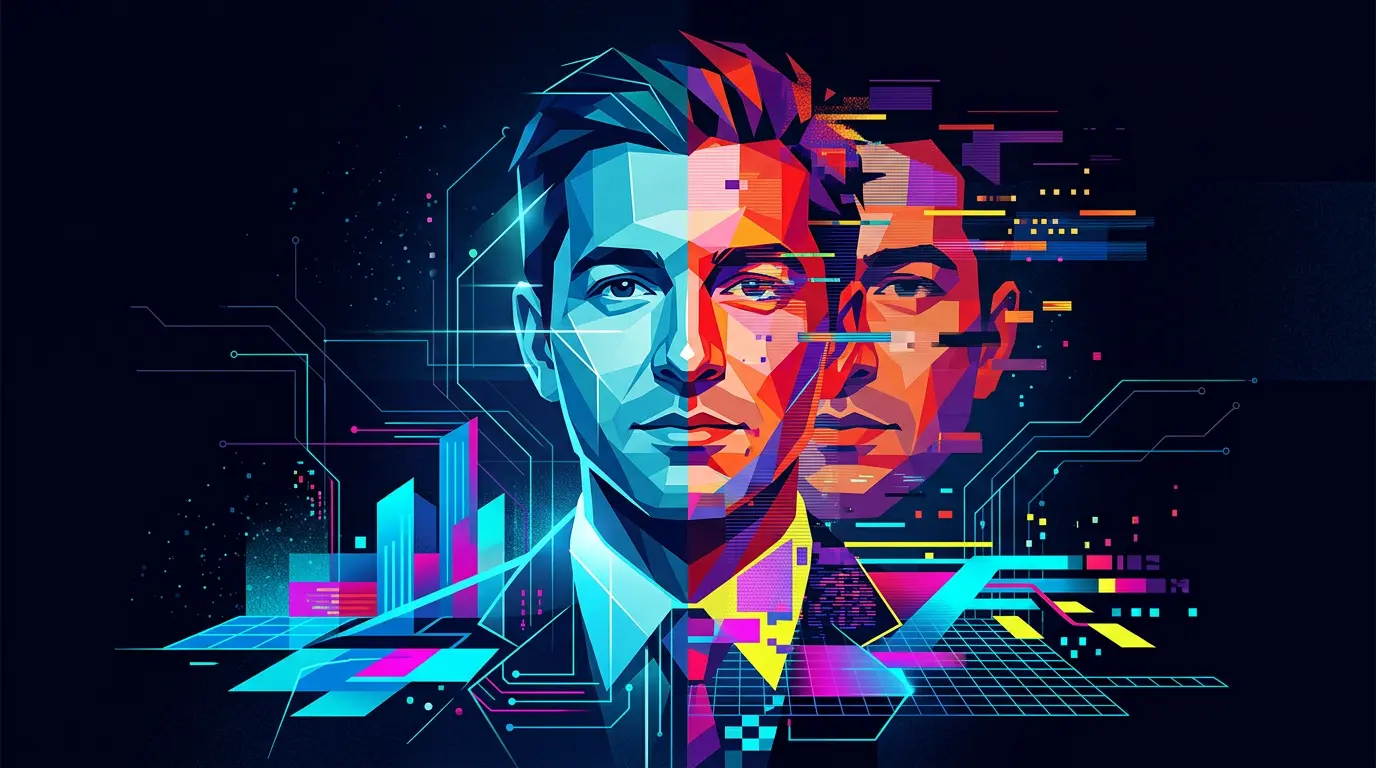
The video in question isn't some clunky, glitchy montage. It’s a sophisticated piece of synthetic media designed to erase the friction between truth and fiction. According to CNN Politics, the content was engineered to cast the representative in a damaging light, using generative AI to manufacture a narrative that simply never happened.
Politics has always been a dirty business, but we used to fight with blunt instruments.
In the old days of the "dark arts," a campaign might take a quote out of context or use some unflattering lighting to make an opponent look sinister. Those were analog sins. What we’re seeing now is political ventriloquism. With generative AI, you don't need a film studio or a massive budget to turn a candidate into a puppet for their own opposition. You just need a decent GPU and a grudge.
The Normalization of Digital Deception
We’ve officially graduated from the era of the "isolated incident." The Talarico video is part of a broader, accelerating trend of phony content bleeding into midterm races. Generative AI has become a force multiplier for misinformation, allowing campaigns to churn out high-quality attack ads at a speed that traditional fact-checking can’t touch.
I’ve tracked synthetic media from the uncanny, flickering deepfakes of five years ago to the liquid-smooth deceptions of today. The technical leap is staggering, but the psychological shift is what should keep you up at night.
Researchers call it the "Liar’s Dividend." Once the public accepts that any video could be a fake, it becomes remarkably easy for politicians to claim that authentic footage of their own scandals is also a deepfake. If everything can be fabricated, nothing has to be true.
The Verification Gap
Here is the uncomfortable reality: the tools for deception are lightyears ahead of the tools for detection.
While we talk about "forensic verification," there isn't an industry-standard, real-time tool that can definitively slap a "FAKE" label on a video before it hits a million views. By the time a newsroom or a platform’s moderation team flags a video as synthetic, the damage is done.
Misinformation moves at the speed of fiber optics; the debunking process moves at the speed of a committee meeting. We are essentially asking voters to be their own forensic analysts—a burden that is both unfair and totally unrealistic in a high-stakes election.
Implications for Election Integrity
This isn't just about one Representative in Texas. It’s about the very idea of an informed electorate. If we can’t tell the difference between a candidate’s actual platform and a digital hallucination, the concept of "informed consent" starts to crumble.
Deepfakes are the ultimate toolkit for the "October Surprise." Imagine a video of a candidate conceding, or using a slur, or calling for voter suppression, released 48 hours before the polls close. Even if it’s debunked by noon the next day, the emotional residue sticks. It incites anger, suppresses turnout, and hammers another wedge into our already fractured tribal politics.
Legislators are currently scrambling to figure out how to regulate code without strangling free speech. Platforms are tweaking algorithms that were fundamentally built for engagement, not accuracy. But the technology is simply moving faster than the law.
We are entering an era where our eyes are no longer reliable witnesses. If we reach a point where we can no longer agree on what was actually said or done, the idea of a shared reality becomes a relic. The Talarico incident suggests we are already there. The big question for 2024 isn’t just who will win, but whether we’ll even recognize the truth by the time the ballots are counted.