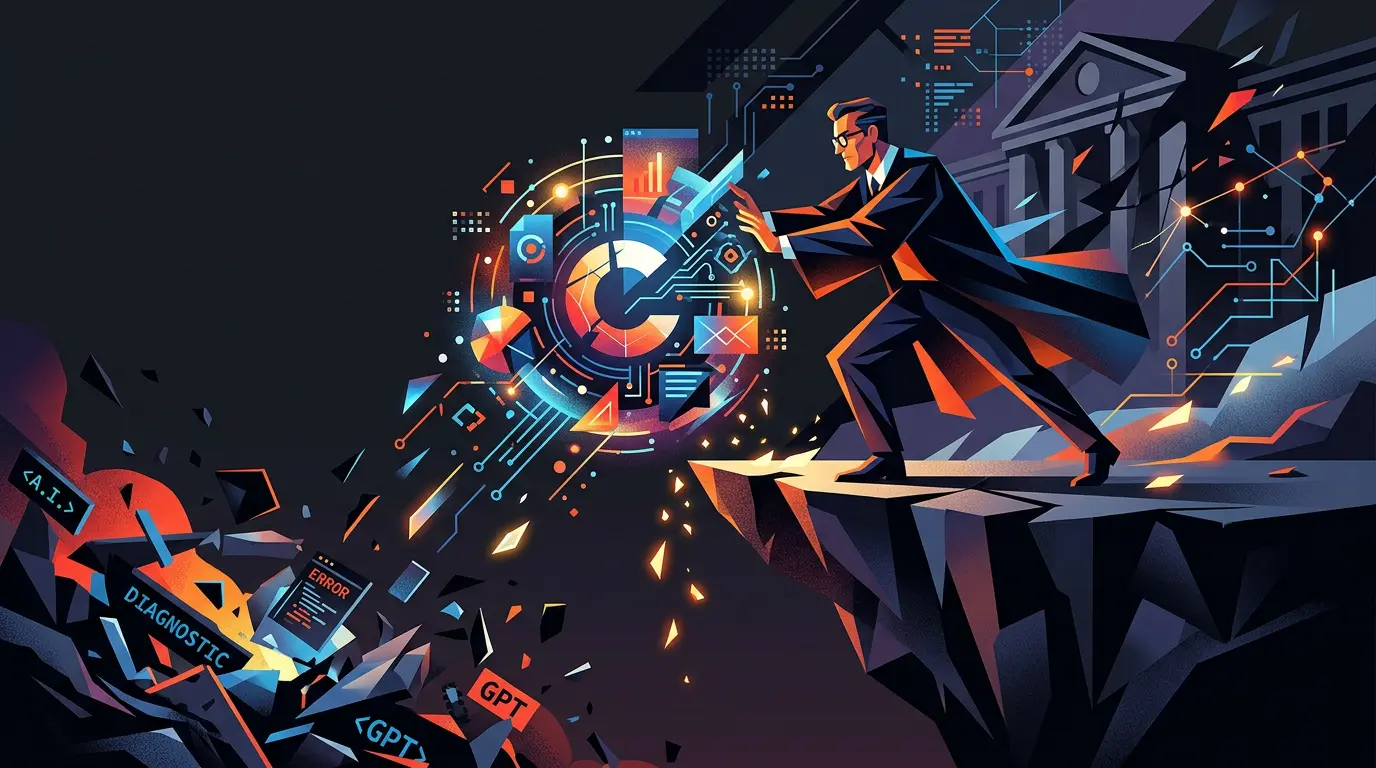
There is a specific kind of desperation currently haunting the halls of academia. One professor recently admitted a desire to push ChatGPT off a cliff. It is a visceral image, one that captures the raw frustration of faculty members who feel as though the very foundation of critical thinking is being eroded by a chatbot.
But as an AI researcher who spends my days looking at the statistical weights and token probabilities of these models, I have a different perspective. We are not witnessing the death of intelligence. We are witnessing the ultimate stress test of a legacy system that was already showing its age.
The Panic vs. The Reality
The immediate reaction from many universities has been a retreat into the past. We see institutions scrambling to implement lockdown browsers or returning to the era of pen and paper exams.
This "ban-it" mentality stems from a fear that if a student can generate a B-plus essay in thirty seconds, the educational process has lost its meaning. There is a deep-seated tension here between the preservation of academic tradition and the reality of a world where information synthesis is now a commodity.
From a research standpoint, the panic is revealing. If a large language model can defeat an assignment, that assignment was likely testing for pattern recognition and structural mimicry rather than original thought. We have spent decades refining a system that rewards students for sounding like an authority. Now that we have built a machine that is the literal embodiment of "sounding like an authority," we are horrified to find that the machine is better at it than the humans.
The Diagnostic Mirror
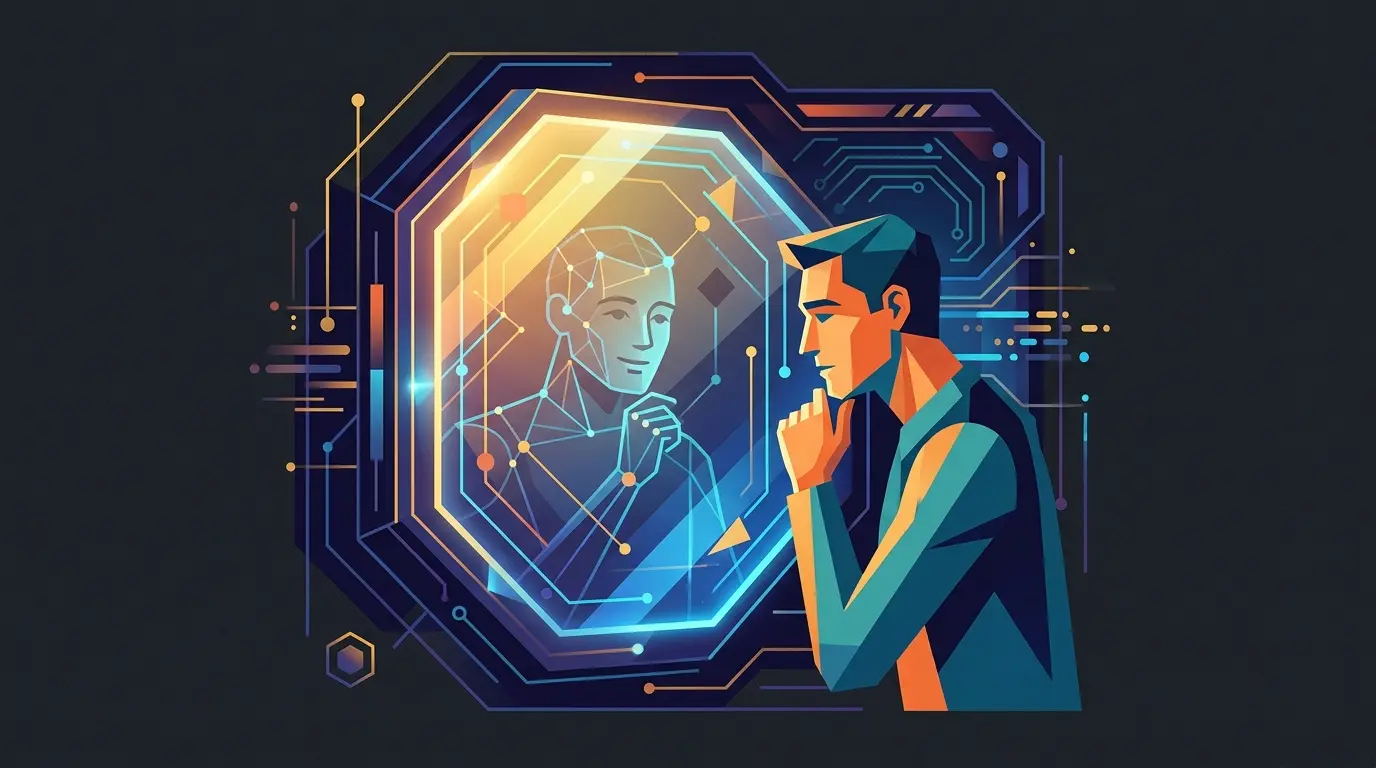
Dr. Nafisa Baba-Ahmed offers a perspective that cuts through the noise. She argues that AI has not necessarily created a new crisis. Instead, it has exposed age-old problems with how we design and assess coursework. In her view, AI is a diagnostic tool. It is a mirror reflecting the fragility of existing pedagogy.
For too long, the standard university essay has functioned as a proxy for learning. We assumed that if a student could assemble five thousand words on the causes of the French Revolution, they had mastered the material. Dr. Baba-Ahmed suggests this was always a bit of a leap.
The "cheating" narrative is a convenient distraction. It allows us to blame the technology rather than acknowledging that our assessment methods were already failing to measure deep, transformative learning. We were measuring the ability to follow a process, and processes can be automated.
Beyond Romanticizing the Past
There is a dangerous tendency in these debates to romanticize the pre-AI era. We talk about the 2010s as if they were a golden age of student engagement and intellectual rigor. In reality, many students were already struggling with a lack of meaningful knowledge transfer. The lecture-to-essay pipeline was already leaking.
Dr. Baba-Ahmed calls for universities to stop looking backward. The goal should not be to return to a world without generative tools, but to fundamentally re-evaluate what we want students to demonstrate.
If I can prompt a model to synthesize three research papers into a coherent summary, then "summarization" is no longer a high-value skill. We need to move toward modern competencies. This might mean focusing on the ability to verify claims, the capacity to ask the right questions, or the skill of integrating AI outputs into a larger, more complex project.
The Unsolved Curriculum Gap
Here is the reality from the research side: we do not actually know how to do this yet. There is a significant lack of empirical data on which institutional adaptations actually work. While many universities talk about reform, very few have successfully overhauled their curricula to account for a world where the baseline for output is no longer zero, but the output of a GPT-4 class model.
There is a massive gap between the theory of pedagogical reform and the daily practice of teaching. Administrators are writing policies while the technology is changing faster than the ink can dry.
We are essentially trying to rebuild an airplane while it is in a steep dive. The difficulty lies in defining what a "modern" assessment looks like when the goalposts move every six months with the release of a new model architecture.
The Real Threat
As someone who studies the benchmarks of these models, I can tell you that they are getting better at logic, reasoning, and even creative synthesis. This leads to a provocative question that every dean should be asking: if our current assessments are so easily defeated by a statistical model, were they ever actually testing for human intelligence? Or were they merely testing for the ability to perform a sequence of tasks that machines have now mastered?
The real threat to higher education is not the chatbot. It is the refusal to evolve.
We can try to build higher walls around our ivory towers, or we can accept that the nature of work and thought has changed. If we continue to test for things that a machine can do, we are essentially telling our students that they are obsolete. The task ahead is to find the things that only a human can do (the messy, intuitive, and deeply critical parts of learning) and make those the center of the university experience. If we do not, we might find that it is not the AI that belongs off the cliff, but the outdated models of education we have clung to for too long.