AI agents have always been like that brilliant friend who gives great advice but has never actually left their house. They can write a flawless React component, but the second you ask them to fix a bug on a private dashboard, they hit a wall. Until now, asking an agent to troubleshoot a secure site was like asking a master locksmith to open a door from three states away. They might know exactly how the tumblers work, but they can’t reach the handle.
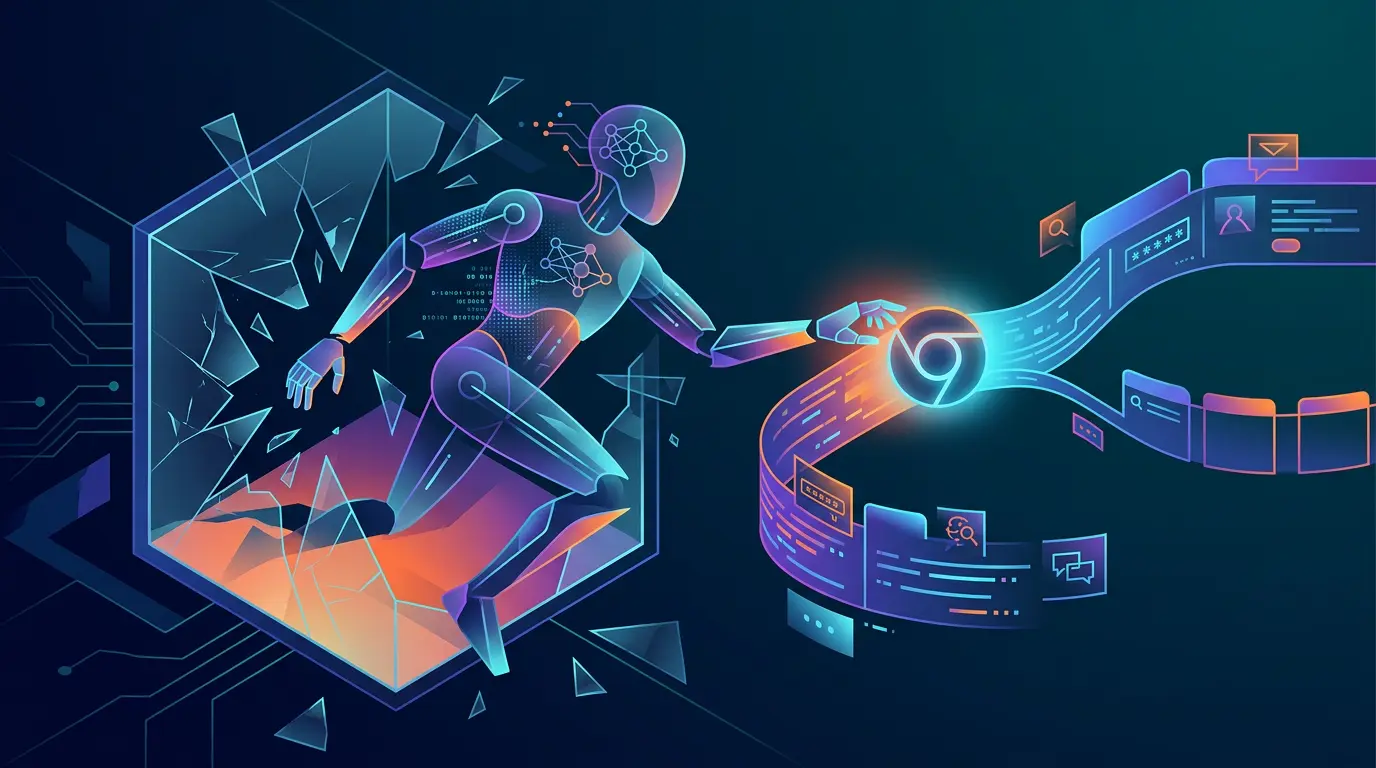
Google is finally handing over the keys. With a major update to the Chrome DevTools Model Context Protocol (MCP) server, AI coding agents can now step directly into your active, authenticated browser sessions.
Breaking the Sandbox: The Evolution of AI Context
For the last year, AI agents have lived in a lonely, sterile vacuum. When a developer triggered an agent to inspect a web app, the agent would usually spin up a fresh, headless browser instance. This was a blank slate. It had no cookies, no saved passwords, and zero session tokens. For any application more complex than a basic landing page, the agent would immediately run into a login screen and get stuck.
It was a massive workflow killer. Developers had to either manually feed the agent session tokens (a security nightmare) or watch the agent fail at basic navigation. The Model Context Protocol was designed to fix this by creating a standardized language for AI to talk to developer tools. This latest update is the most functional version of that vision we have seen. It moves us away from agents acting as guest users and toward agents acting as authenticated extensions of the developer.
How the Chrome DevTools Update Works
The magic here is all about session inheritance. Instead of the MCP server launching a hidden browser in the background, it hooks into the Chrome instance you are already using. It gains access to the same cookies and local storage that keep you logged into GitHub, your AWS console, or your company Jira.
This piggyback mechanism is a massive jump in capability. The agent no longer needs to know your credentials, because it is operating within a session where you have already proven your identity. From an architectural standpoint, this makes the developer experience much cleaner. You don’t need to configure complex environment variables for every new task. If you can see the bug in your browser, the agent can see it too.
From Chatbots to Active Users
This shift turns AI from a passive assistant into an active participant in the dev cycle.
Consider the headache of debugging a state issue in a React application that only happens after a specific user flow in a secure dashboard. Previously, an AI could look at your code, but it couldn't interact with the running application to see those state changes in real time.
Now, a developer can ask the agent to inspect the active session, look at the network tab, and identify exactly why a specific API call is failing. The agent can perform the multi-step web tasks that used to be reserved for human testers. We are moving beyond simple code generation and into the realm of autonomous troubleshooting within secure environments.
The Security and DX Trade-off
Of course, this is a double edged sword. The productivity gains are obvious, but the security implications deserve a hard look. By giving an AI agent access to an active session, you are essentially giving it read and write access to your digital identity within that browser. Google built this with transparency in mind (ensuring developers stay in control of which sessions the agent can touch), but it still requires a new level of trust in the underlying model.
We are entering an era where we stop treating AI as a separate entity and start treating it as a specialized layer of our own operating system. This update is a clear signal that the future of web development isn't just about writing code. It is about managing the agents that navigate our authenticated worlds for us.
If AI agents can now act as authenticated users, we have to ask how much longer manual web navigation will be a requirement for modern work. We aren’t just building tools anymore. We are building digital proxies that can finally walk through the doors we have already unlocked.