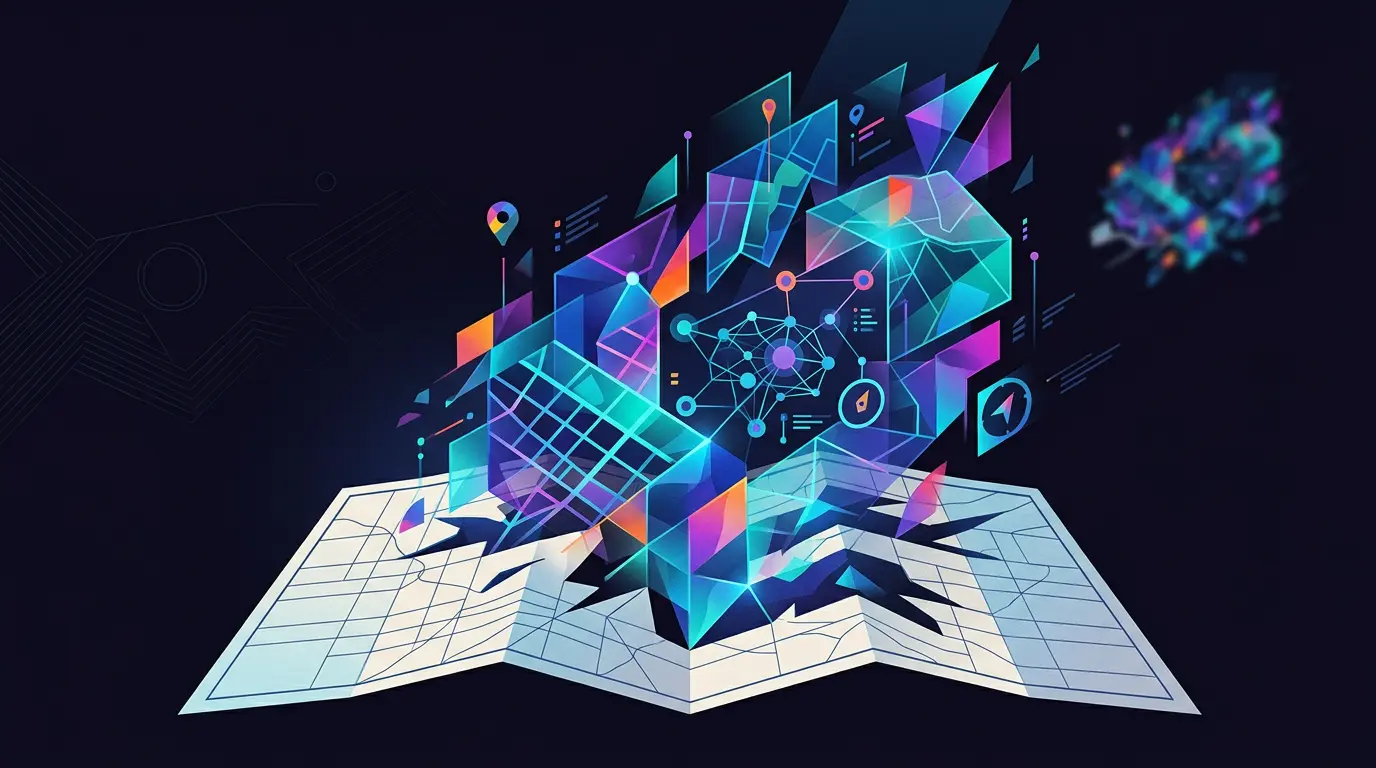
Remember the era of printing MapQuest directions and praying the ink didn’t smudge before you hit the freeway? We’ve come a long way from physical paper, but Google seems to think the glowing blue lines on our phone screens are starting to look a little dusty. In a massive overhaul, the company has begun embedding deep layers of generative AI into Google Maps, fundamentally changing how we move through the physical world.
This is more than a UI refresh. According to a recent report from the Niagara Gazette, Google is retooling the app to act as an active, intelligent assistant rather than a passive digital atlas. It wants to tell you where to go before you even realize you’re hungry.
Beyond the Blue Line
For over a decade, Google Maps has been the gold standard for getting from Point A to Point B. It solved the problem of getting lost. But in the current tech climate, solving a problem isn't enough; you have to anticipate it. Google’s strategic pivot focuses on the space between those points.
Instead of simply calculating the fastest route through Friday afternoon gridlock, the app is evolving into a discovery engine. Think of it like a local friend who happens to have memorized every square inch of the city. We’re moving toward a world where the app doesn’t just answer "How do I get there?" but helps you decide where "there" even is.
Big Tech is no longer content with providing tools; they want to provide experiences. By weaving AI into its most-used products, Google ensures that Maps remains essential even as our expectations for software become more conversational and intuitive.
The Concierge in Your Pocket
Imagine you’re looking for a place to work. Traditionally, you’d type "coffee shop" into the search bar and filter through a list of pins. The new vision for Maps aims to do that mental heavy lifting for you. The app wants to understand context—finding you a quiet spot with reliable Wi-Fi and a specific "vibe," rather than just the nearest caffeine fix.
In short, Google is trying to solve decision fatigue.
We are constantly bombarded with options, and the AI’s job is to act as a filter. By prioritizing predictive features, the app aims to become a personalized concierge. It’s a bold bet on the idea that users want more than raw data—they want curation.
The Invisible Tech
While the direction is clear, the technical specifics remain a bit of a black box. We don't yet know exactly which models are powering these updates or how they will affect the back-end routing algorithms. Will we see more advanced predictive traffic modeling? Will the "Live View" augmented reality features finally become seamless?
The focus remains on utility, but there is a recurring challenge here: feature creep.
The beauty of Google Maps has always been its simplicity. As they layer in complex AI discovery tools, they face the delicate task of keeping the interface clean. Nobody wants to feel like they’re navigating a 747 cockpit just to find a grocery store. There is also the nagging question of transparency. As AI begins to influence our real-world movement, we have to wonder how much of that "discovery" is organic and how much is being nudged by an algorithm with its own set of priorities.
The Death of the Spontaneous Detour?
As we look ahead, this update raises a fascinating question about the nature of travel. If an AI can perfectly predict what we want, where does that leave the accidental discovery? Some of the best travel memories come from getting slightly lost and stumbling into a hole-in-the-wall bistro that wasn't on anyone’s "Top 10" list.
If Maps becomes an autonomous layer between us and the physical world, we gain incredible efficiency. We save time, we avoid bad meals, and we never miss a turn. But are we surrendering our spontaneity to an algorithm that thinks it knows us better than we know ourselves?
Google is betting that we’ll trade a bit of mystery for a lot of convenience. For now, the digital atlas is officially retiring, and the AI concierge is punching the clock. We might never get lost again, but we might also forget how to find something on our own.