The Death of the Black Box Dream
The tech world spent the last few years obsessed with a specific flavor of magic called autonomy. We were promised systems that could gulp down the world’s data, process it in a digital vacuum, and hand us perfect decisions without a single human finger touching a keyboard. It was a seductive, set-it-and-forget-it vision of the future. But as AI moves from laboratory experiments to the messy reality of the corporate world, that dream is hitting a wall of cold, hard pragmatism.
We are starting to admit that the most reliable AI systems are not the ones left to their own devices. Instead, the industry is pivoting toward Human-in-the-Loop (HITL) methodologies. This is not a step backward or an admission of failure. It is a functional requirement. We are moving away from the black box model and toward a hybrid architecture where human judgment acts as the ultimate guardrail. In the high-stakes world of enterprise AI, a model that operates in total isolation is a liability, not an asset.
The Three Pillars of HITL
To understand why this shift is happening, we have to look at how people actually interact with these machines. Martin Keen, a veteran in the space, suggests the process is about much more than just checking boxes. It involves three distinct roles: teaching, tuning, and monitoring.
At the foundational level, we have Reinforcement Learning from Human Feedback (RLHF). This is where humans help shape model behavior by ranking outputs or providing corrections. Think of it as a form of digital parenting. The model might have the raw intelligence to generate a thousand responses, but humans provide the moral and contextual compass to determine which of those responses are actually useful or safe.
Then comes the active learning phase. This is where the system gets smart enough to know what it does not know. Instead of guessing when it encounters an edge case, the AI uses confidence thresholds. If the model’s internal probability of being correct falls below a certain percentage, it pauses. It raises a digital hand and asks for human intervention. This mechanism transforms the AI from a confident liar into a cautious collaborator.
Operationalizing Trust with IBM Watsonx
This is not just a theory for whiteboards. Companies like IBM are already building these safeguards into the core of their products. Through platforms like IBM Watsonx, the HITL framework is being operationalized for businesses that simply cannot afford to hallucinate. Martin Keen highlights that the goal is to maintain control in complex environments. The idea is to ensure that as a model moves from the initial training phase into full deployment, it never loses its tether to human oversight.
From the perspective of a researcher, this is where the real engineering happens. It is easy to build a model that looks impressive in a controlled demo. It is significantly harder to build a system that remains stable when it hits the unpredictable data of the real world. By integrating human feedback directly into the loop, we are essentially building a continuous improvement circuit. The human provides the signal, and the AI reduces the noise.
The Scalability Dilemma
However, we have to address the elephant in the room. Can humans actually keep pace?
This is the central, unsolved challenge of the HITL movement. As AI systems grow faster and more complex, there is a risk that human oversight could become a bottleneck. If an AI can process a million transactions a second but requires a human to verify every thousandth one, the system is only as fast as the person sitting at the desk.
There is a popular assertion that HITL is the definitive solution for safety and trust. While that sounds good in a press release, it remains an unverified empirical outcome in many high-velocity contexts. We are currently in a race to see if we can develop better tools for humans to monitor AI at scale, or if the sheer volume of AI-generated content will eventually overwhelm our ability to provide meaningful feedback.
A Fundamental Limit or a Necessary Bond?
This brings us to a provocative crossroad. If the ultimate goal of AI research is to create systems that exceed human capability, does the requirement for human oversight represent a fundamental limit on the technology’s potential? Or is it the only way to ensure that super-intelligent systems remain aligned with human values?
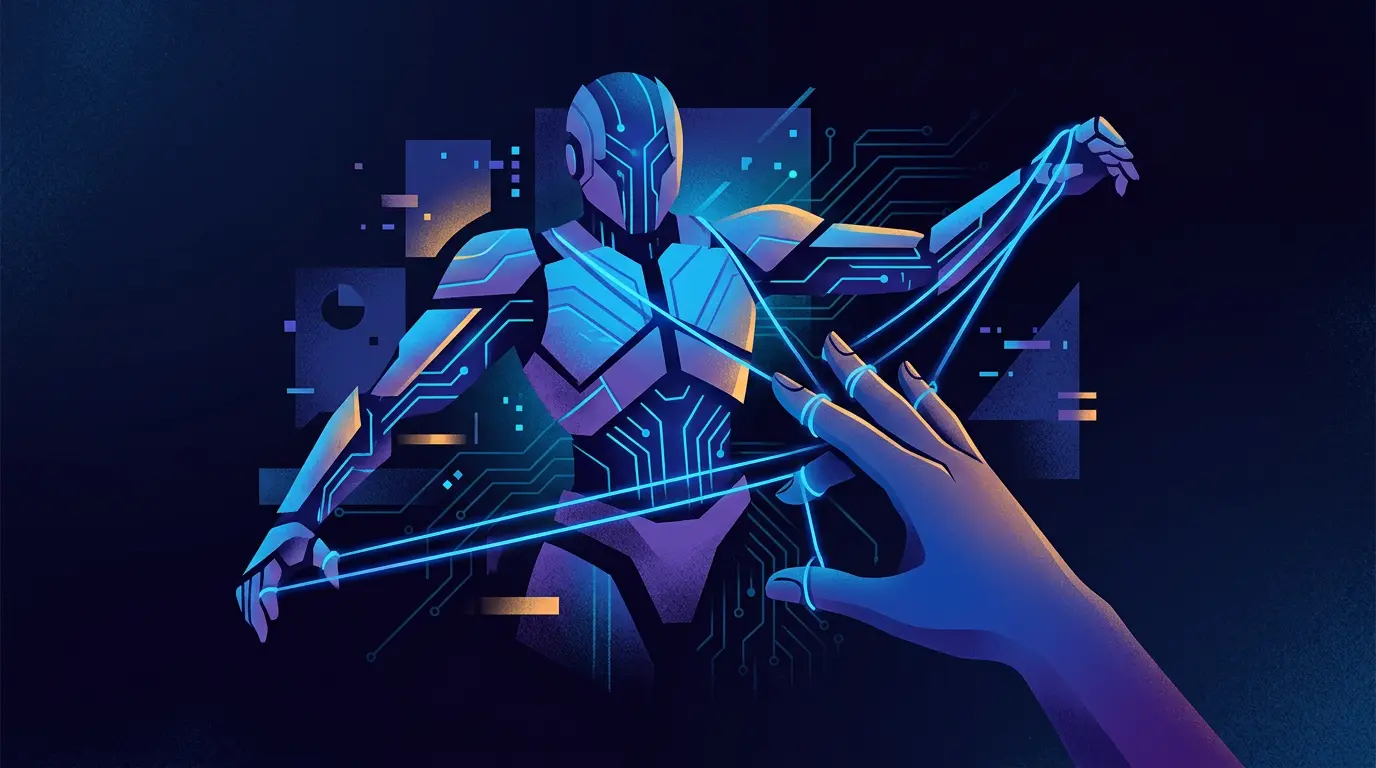
We might be entering an era where the most sophisticated AI is defined not by its ability to act alone, but by how effectively it can be steered. We are not just building machines to replace us. We are designing digital partners that are permanently tied to our judgment. Whether that tether is a safety line or a leash remains to be seen. The real question is no longer how fast the AI can run, but whether we have the stamina to keep hold of the reins.