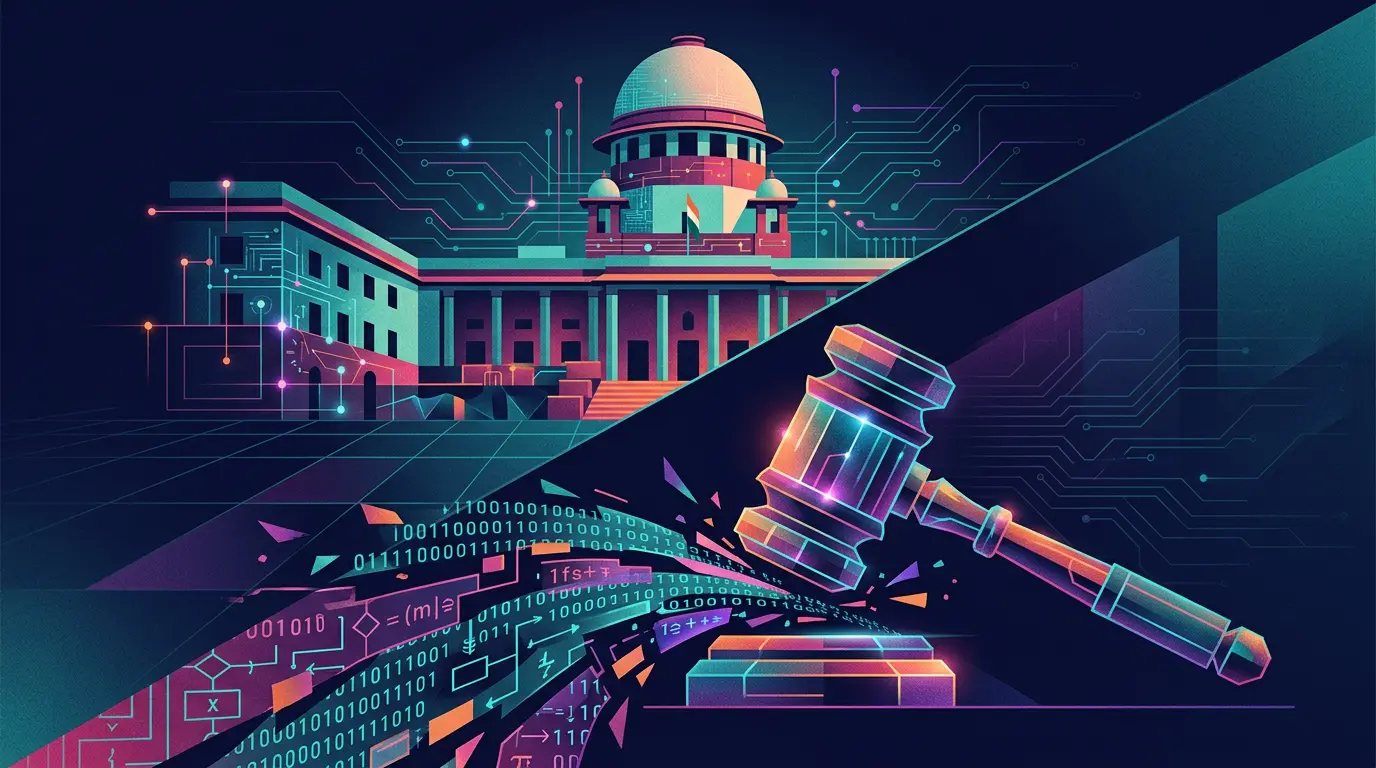
Forget the dystopian trope of a robot judge handing down sentences from a server rack. While Large Language Models are already drafting briefs and whispering predictions into the ears of litigators, the Supreme Court of India has just placed a firm, human hand on the brake.
In a recent address, a Supreme Court justice drew a line in the digital sand. The decree? AI is a co-pilot, not the captain. It’s a high-level policy signal that effectively caps the ambitions of anyone hoping to automate the bench. AI, the justice argued, should function exclusively as a supportive tool for legal professionals, never as a replacement for the human beings who wear the robes.
The Human-Centric Mandate: Redefining AI’s Role
It comes down to the fundamental difference between processing and perceiving.
AI is undeniably fast. It can devour a million pages of case law before you’ve even finished your morning espresso. But the law isn't a math problem. It’s a messy, emotional, and often contradictory crawl through the nuances of human behavior. A judge doesn’t just match Fact A to Law B; they weigh intent, societal context, and the kind of ethical gray areas that would make a GPU melt.
Discernment isn't something you can code. Think of it like a high-end GPS. It can suggest the fastest route and warn you about a speed trap, but it shouldn't be the one deciding where you're going or why the trip matters in the first place. In this courtroom, the human remains the driver.
The "Assisted Judiciary" Model: Where Tech Actually Fits
This isn’t Luddism. The Indian judiciary is currently staring down a case backlog that borders on the legendary, and they know they need help.
By embracing an "Assisted Judiciary" model, the court is actually throwing a lifeline to its administrative staff. AI can summarize 5,000-page dumps, flag conflicting precedents, and handle the soul-crushing grunt work of document drafting. The goal is to strip away the administrative "busy work" so judges can focus on the one thing they’re actually paid for: judging. Research can be automated, but the final verdict must remain a human act of will.
The Ethical Minefield
Then there’s the "black box" problem.
If a human judge rules against you, they owe you a written justification rooted in logic and law. If an algorithm does it, the "reasoning" is a set of weighted probabilities buried in a neural network that even its creators might not fully grasp. You can’t appeal to a line of code’s sense of mercy, and you certainly can’t cross-examine a prompt.
There is also the persistent shadow of algorithmic bias. If an AI is trained on past data that contains societal prejudices, it doesn't just learn the law—it scales the flaws. For a judiciary tasked with upholding equity, that’s a gamble with too much downside.
Industry Impact: Cooling the Hype Cycle
For the legal-tech gold rush in India, this is a bucket of cold water.
The pitch decks promising "AI lawyers" and "automated justice" are suddenly looking a bit optimistic. We are likely to see a shift in how these companies market themselves. The smart money is moving away from the "AI Judge" dream and toward the ultimate "AI Paralegal."
For law firms, the future isn't about replacing associates with bots; it’s about training associates who know how to work alongside them. Regulatory frameworks will almost certainly favor tools that keep a human firmly in the loop.
The Ghost in the Machine
In tech journalism, we often mistake velocity for progress. we assume that because a tool is fast, it must be right. The Supreme Court of India is making a necessary stand for wisdom over raw compute.
But here’s the nagging question: as these tools become more "helpful," where does support end and influence begin? If an AI assistant serves up a perfectly curated set of precedents that all lean toward one specific conclusion, is the judge still making an independent decision, or are they just rubber-stamping the algorithm’s homework?
As we move toward this hybrid judiciary, the challenge won’t just be building the tech—it will be ensuring the "supportive tool" doesn't become a subtle master. If the machine does all the thinking, does it really matter who’s wearing the robes?