Benjamin Netanyahu recently sat in a Jerusalem café and performed a physical Turing test. He wasn't there to debate policy or discuss the war. He was there to count to five.
As an AI researcher who spends my days staring at the flickering noise of diffusion models, I find this moment chilling. We are watching a world leader perform a manual hardware check simply to convince a skeptical public that he still has a pulse.
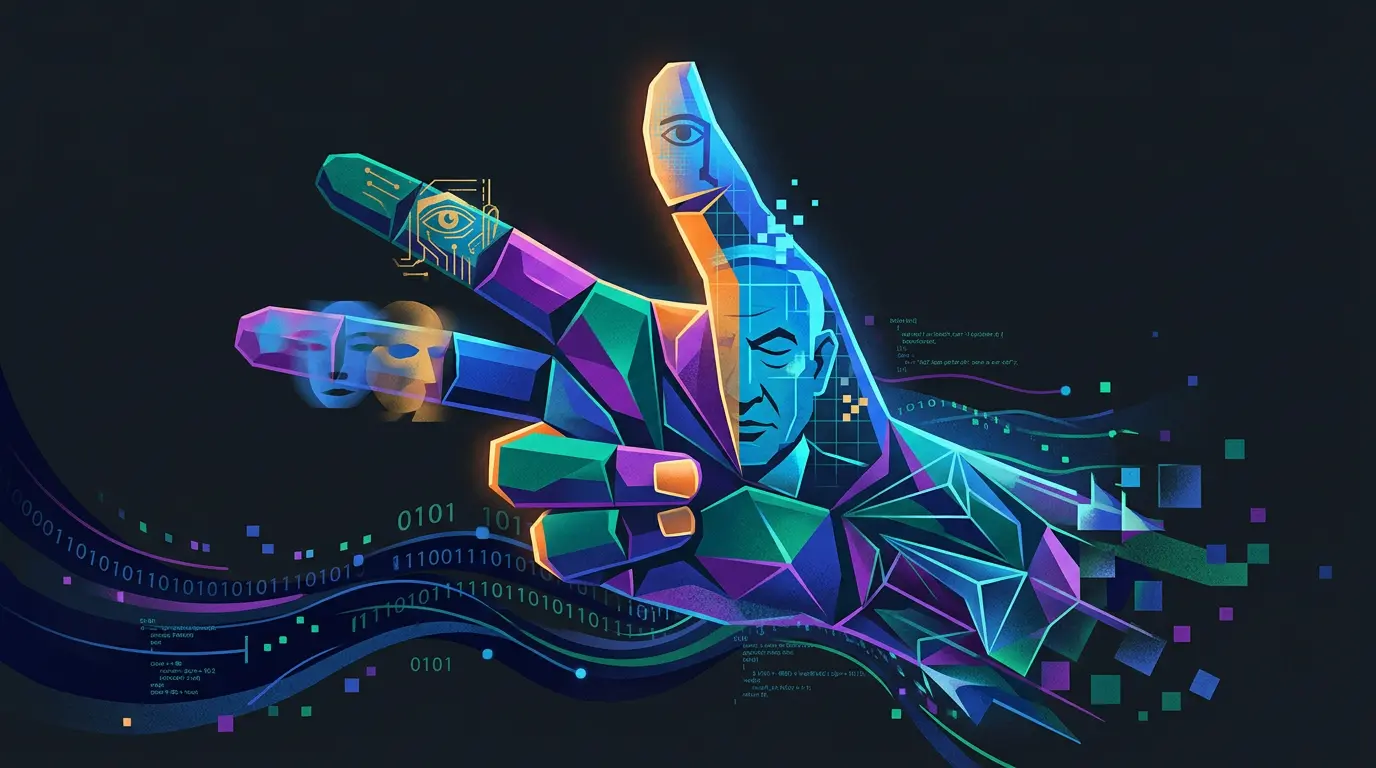
The video, released on March 15, was a response to a viral conspiracy theory that claimed a previous clip featured a six-fingered hand. In the world of latent space and neural rendering, extra digits are the classic smoking gun of a poorly tuned generator. By holding his hands up to the camera, Netanyahu was trying to patch a perceived software glitch in the physical world.
The Six-Fingered Fallacy
To understand why this happened, we have to look at how we have been trained to spot AI. Early versions of DALL-E and Midjourney famously struggled with human anatomy, often merging fingers into fleshy blobs or adding extra limbs where they did not belong. This has created a form of collective trauma in the public consciousness.
People now scan every frame of political footage looking for those same artifacts. When rumors of Netanyahu’s death began to circulate, the six-finger theory provided the perfect technical justification for disbelief.
The café rebuttal was a calculated attempt to debunk technical skepticism with physical evidence. Netanyahu wasn't just saying he was alive. He was trying to prove he wasn't a collection of pixels. Yet, the gesture failed. Instead of providing closure, it only deepened the cynicism. Critics immediately suggested that the finger-counting itself was part of a more sophisticated deepfake script, perhaps a meta-commentary designed to trick us.
This is the nightmare scenario for those of us in the field. When the very act of proving reality is viewed as evidence of a more clever fabrication, the game changes.
When Skepticism Becomes Cynicism
We are shifting from a healthy skepticism of digital media to a state of Deepfake Default. This is a cognitive bias where any footage that challenges a person's worldview is automatically labeled as AI-generated. It is no longer about whether the tech is good enough to fool us. It is about whether we want to be fooled.
In online echo chambers, users project their AI-anxiety onto legitimate media to support their pre-existing narratives. If you want to believe a leader is gone, even a high-definition video of them becomes a generative phantom.
This phenomenon creates what researchers call the Liar’s Dividend. In a world where deepfakes are possible, bad actors can dismiss genuine, incriminating footage by simply claiming it is an AI fabrication. But we are seeing the reverse here too. Legitimate proof of life is being dismissed as a synthetic lie. This creates a recursive loop of doubt that no amount of café footage can fix.
Grok and the Recursive Doubt
Adding a layer of technological irony to the situation is the involvement of Grok. Elon Musk’s AI chatbot reportedly contributed to the discourse by raising doubts about the video’s legitimacy.
This is a dangerous development. We have AI-driven platforms acting as arbiters of truth, inadvertently validating conspiracy theories by treating them as legitimate queries. When a chatbot (which is essentially a statistical engine designed to predict the next token in a sequence) suggests that a video might be fake, the internet treats that as a technical verdict.
The public forgets that these models do not have eyes. They do not know what happened in that Jerusalem café. They only know what people are saying about it. By prioritizing sensationalism and engagement, social media algorithms ensure that the allegation of a fake travels ten times faster than the reality of the original footage.
The Crisis of Post-Truth Governance
This event raises a terrifying question for the future of political communication. If a live, physical appearance is no longer sufficient evidence, what tools remain? We are quickly reaching a point where visual evidence is worthless. As an industry, we have spent years trying to make AI look more real. We may have succeeded so well that we have destroyed the value of reality itself.
I suspect we are moving toward a future of cryptographic identity verification. We may soon require every frame of official communication to be digitally signed and anchored to a blockchain just to prove it happened. Without some form of cryptographic proof of origin, we are entering a state of total epistemic chaos.
Last week, we saw the EU trying to rewrite the code on synthetic crimes, attempting to close the photographic loophole. But legislation cannot fix a broken sense of reality. The Netanyahu video shows us that the technical battle is over, and the psychological one has begun.
When a world leader has to count his fingers like a child to prove he exists, we aren't just looking at a deepfake problem. We are looking at the end of the shared human experience. If we can no longer agree on the number of fingers on a hand, we certainly won't agree on the state of the world.