The Crisis of Verification: When Proof Isn’t Proof
Not long ago, if a world leader appeared on camera, the rumors stopped. You saw the face, you heard the voice, and the debate was over.
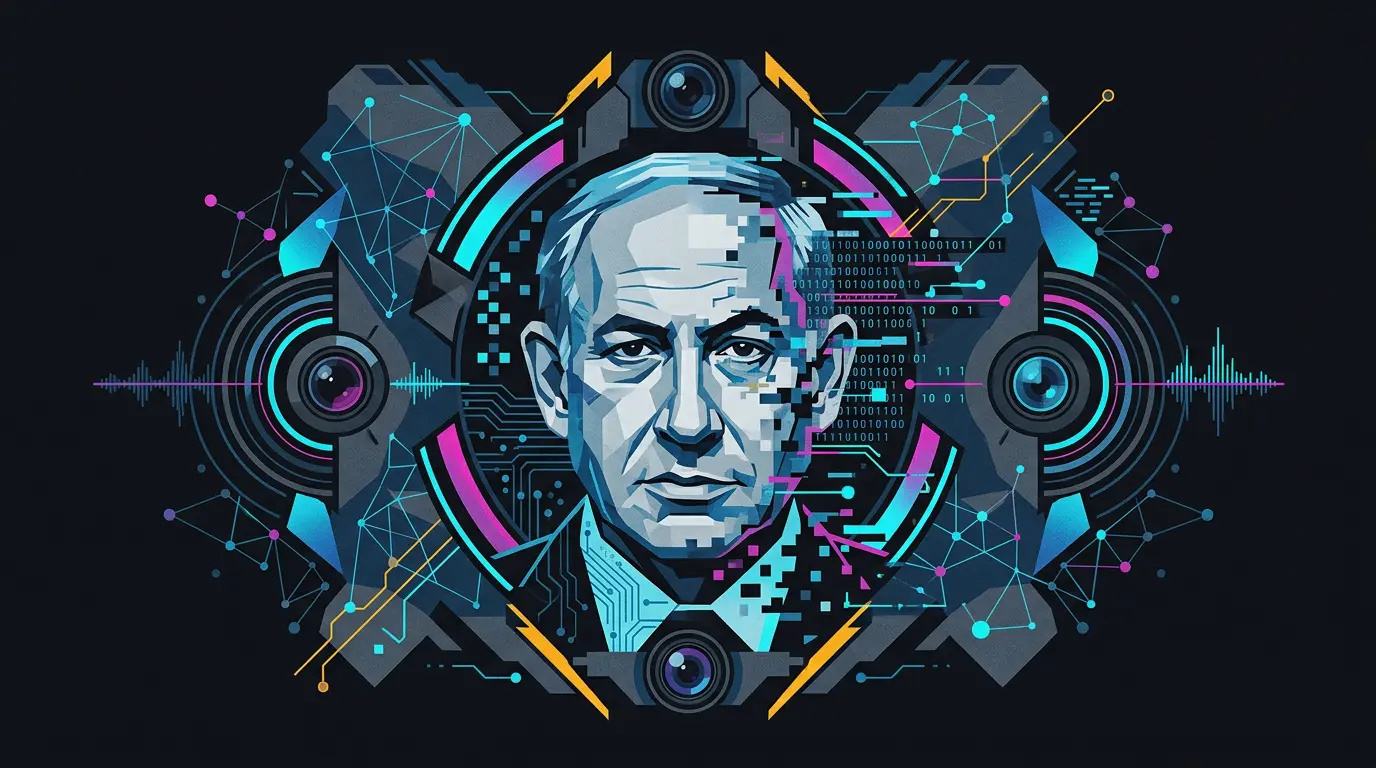
That era ended this week. When Israeli Prime Minister Benjamin Netanyahu released a video intended to serve as proof of life, he didn't just walk into a political firestorm. He walked straight into a technological identity crisis.
On platforms like Reddit, the reaction was instant and telling. Instead of analyzing the message, users performed a digital autopsy on the medium. They hunted for skin artifacts, inconsistent lighting, and unnatural eye movements. The default setting for the public has flipped. In a world where high-fidelity synthetic media is only a few prompts away, the public no longer asks if a video is important. They ask if it is real.
This is the Liar’s Dividend in action. It is a phenomenon where the mere existence of deepfake technology allows anyone to dismiss legitimate evidence as a fabrication. When everything could be fake, nothing has to be true.
The Tech Behind the Doubt
From the perspective of a research lab, this skepticism is a logical response to the current state of generative models. We have moved past the era of clunky AI that struggled with basic facial symmetry. Today, diffusion models can synthesize frames with a level of temporal consistency that was unthinkable three years ago. We are reaching a point where the human eye is no longer a reliable forensic tool.
Ironically, the very nature of official communication makes it more vulnerable to these accusations.
Governments often release videos that are compressed for mobile viewing or filmed in sterile, static environments. In the eyes of a skeptic, a clean background and high compression are not just technical constraints. They are places to hide the glitches of an AI model. This creates a fascinating technical paradox. The more professional a video looks, the more it resembles the output of a high-end synthetic generator. The more raw and low-quality it looks, the more people suspect it was degraded on purpose to mask AI artifacts.
The Erosion of Institutional Trust
We are witnessing a total breakdown of the traditional official channel model. For decades, the seal of a government office acted as a cryptographic signature of sorts. We trusted the source, so we trusted the content. But algorithmic skepticism has effectively bypassed the authority of the office.
This is not just about Netanyahu. It is about the fundamental utility of video as a historical record.
When a population stops believing in the possibility of visual proof, the vacuum is filled by whatever narrative fits their existing bias. This is the geopolitical equivalent of a zero-day exploit. If a leader cannot prove they are alive or present during a high-stakes crisis, the potential for chaos is limitless. We are seeing a shift where the burden of proof has become an impossible weight. It is no longer enough to show up on camera. You now have to prove that the camera, the sensor, and the broadcast stream were not compromised by a model running on a GPU cluster halfway across the world.
The Future of Digital Forensics
Is there a way out? Technically, yes. We are seeing a push toward cryptographic authentication standards like C2PA (Coalition for Content Provenance and Authenticity). These systems use digital watermarking and blockchain-based provenance to track a file from the camera sensor to the end user's screen.
It is a bit like a digital passport for every pixel. If the metadata shows the video was captured on a verified device at a specific coordinate, it becomes much harder to claim it was generated in a lab.
However, technical solutions rarely solve sociological problems. You can provide all the cryptographic hashes in the world, but if the public does not trust the institution providing the hash, the skepticism remains. We are moving toward a world where the technical arms race between fakes and detection is secondary to the war over who gets to define reality.
The Post-Visual World
We have entered the Post-Visual era. For over a century, the phrase "seeing is believing" was the bedrock of our shared reality. That bedrock has turned to sand.
As we look at the discourse surrounding the Netanyahu video, we are seeing the birth of a new standard of evidence. Perhaps we will return to physical presence, or perhaps we will rely on decentralized verification networks that no single government can control.
One thing is certain. The next time a world leader needs to prove their existence, a simple video will not be enough. We are currently inventing the new rules of truth in real time, and right now, the only thing we can verify with 100 percent certainty is our own doubt. What happens to global diplomacy when the world's most powerful people are treated as nothing more than potentially sophisticated prompts?