The era of experimental chatbots that hallucinate spaghetti recipes is officially over. We have entered the age where the inference engine is the new middle manager.
Nordea, the financial powerhouse based in Helsinki, recently signaled that the research and development phase of AI has ended. They are moving straight into a structural overhaul that trades human hours for compute cycles. It is a cold, hard calculation in algorithmic efficiency, and the rest of the banking world is watching the telemetry closely.
The Scope of the Shift
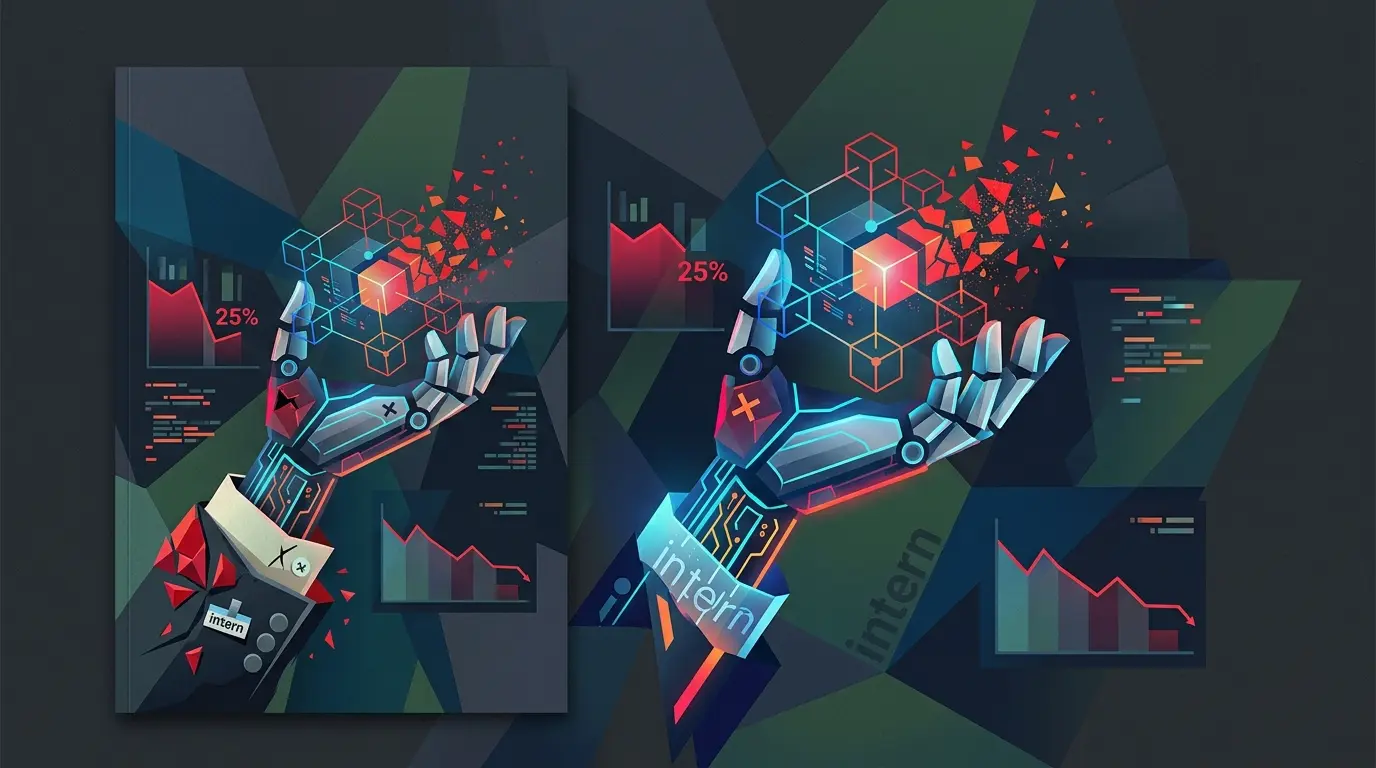
The math is as brutal as it is clear. Nordea plans to eliminate 1,500 positions over the next two years. In a workforce of roughly 30,000 employees, this represents a five percent reduction in human capital.
To facilitate this, the bank has earmarked €190 million in restructuring costs. In the world of enterprise technology, that is a massive buy-in for an automated future. This money is not just for severance packages. It is a down payment on a system where data processing and decision making happen at the speed of silicon rather than the speed of a weekly meeting.
The timeline is equally revealing. By spreading these cuts over 24 months, Nordea is acknowledging that model integration is not an overnight switch.
It is a gradual migration of workflows. They are essentially refactoring their entire operational codebase while the system is still running. It is a risky maneuver, but one that highlights their confidence in the current generation of large scale models and data analytics pipelines.
The Nordea 2030 Strategic Context
This move did not happen in a vacuum. It is the tactical execution of the Nordea 2030 strategy, which was first introduced in November 2025. During that initial announcement, the bank was clear about its intentions. They noted that technology, data, and automated infrastructure would be the pillars of their future. We are now seeing the logical conclusion of that thesis.
Management is using the phrase "workforce composition" to describe these layoffs.
In the vocabulary of the tech sector, this is essentially a change in the stack. They are moving away from a labor intensive architecture toward one where humans act as supervisors for automated agents. By framing it as a change in composition rather than a simple downsizing, the bank is suggesting that the roles remaining will look very different from the roles being cut. The tasks of the past are being deprecated in favor of data centric oversight.
AI as a Tool for Operational Efficiency
Why is this happening now? For years, AI in banking was relegated to the periphery. It was used for things like basic fraud detection or simple sentiment analysis in customer emails.
The benchmarks have changed. We are seeing AI move into the core of banking workflows. Risk assessment, which once required legions of analysts to validate hundreds of variables, is now a complex pattern matching problem that models can solve in milliseconds.
Automation is directly enabling the reduction of human labor because the error rates for specialized models have dropped below the human baseline in specific domains. Think of it like the transition from physical switchboard operators to automated telephone routing. The technology reached a point where the human element became a source of latency rather than a source of value. At Nordea, the €190 million investment is the cost of building that digital switchboard for the next decade of finance.
Industry Implications and the Human Gap
Nordea’s move is a significant precedent for the European financial sector. While American banks have been vocal about their tech spending, European institutions are often more conservative regarding labor changes.
This restructuring signals a shift in that dynamic. If Nordea can maintain its service levels and regulatory compliance while trimming its headcount by five percent, every other major bank in the EU will likely follow suit. They are essentially running a live production stress test for the entire industry.
However, there is a catch. Models are trained on historical data. They are masters of the known universe. When you remove the humans who understand the nuance and the "why" behind the numbers, you risk creating a rigid system that cannot adapt to black swan events.
We might be reaching a structural peak for the banking workforce, but the true test of this strategy will not come during a period of efficiency. It will come during the next global financial crisis. We are about to find out if a bank can truly run on code and conviction alone, or if they are simply automating their way into a future they can no longer explain.