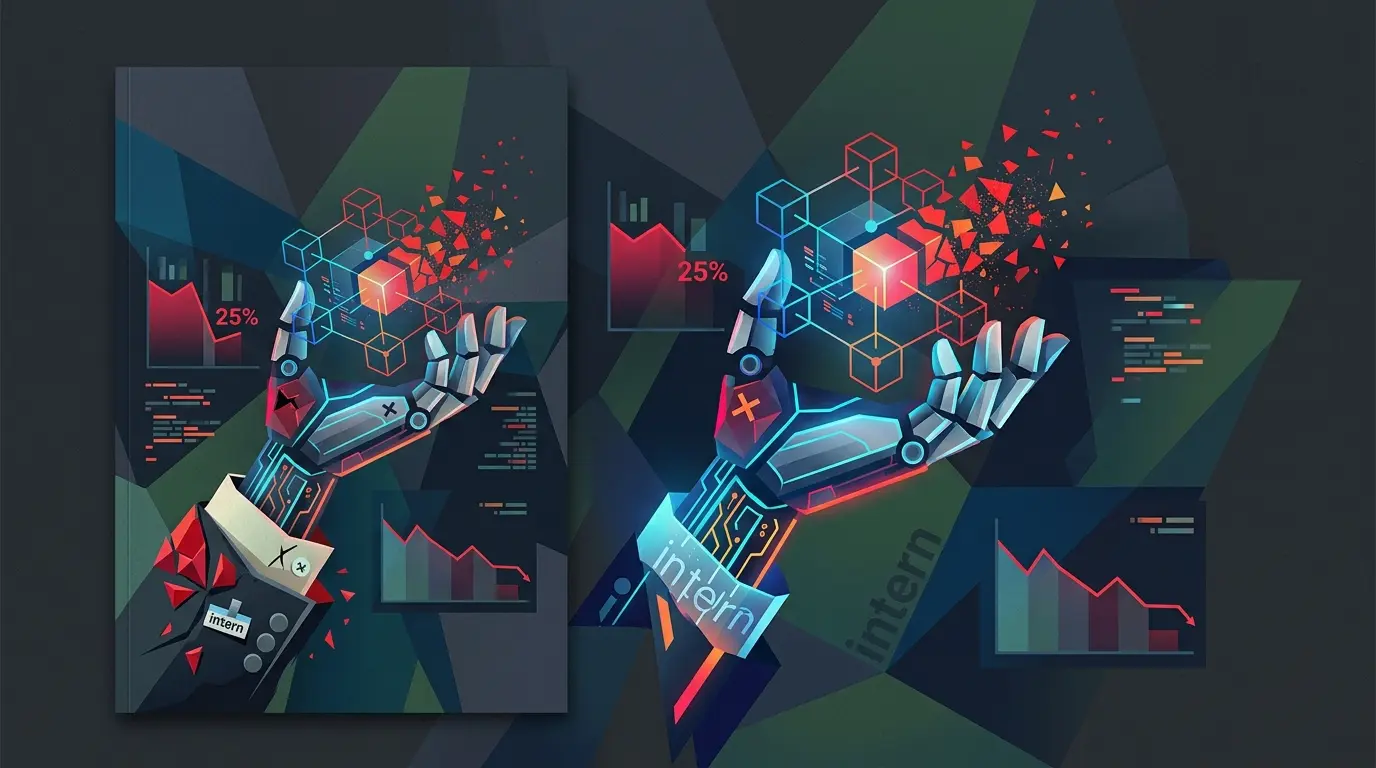
The high-stakes science fair is over. For the last few years, the world has watched OpenAI like a crowd at a magic show, mesmerized as each new version of GPT performed increasingly impressive parlor tricks. But the carnival is packing up its tents. According to a recent report by the Wall Street Journal, OpenAI is shifting its operational focus to prioritize its core B2B business. The goal is simple: they want to nail the enterprise model, even if it means cutting back on the side projects that once defined their public image.
From a technical standpoint, this move is the logical conclusion of the scaling laws we have seen play out. Training and maintaining frontier models requires an astronomical amount of compute power. When you are running a laboratory, you can justify those costs as research R&D. When you are running a business, those costs need to be offset by predictable, recurring revenue.
Enterprise contracts provide that stability. Companies do not want a chatbot that hallucinates poetry or writes fan fiction. They want a reliable, secure, and highly available inference engine that integrates into their existing workflows without breaking anything. By consolidating resources, OpenAI is essentially telling the market that they are ready to stop being an experiment and start being infrastructure.
The Pivot: From Public Playground to Corporate Powerhouse
This strategic realignment marks a significant departure from the company’s earlier strategy of rapid, public experimentation. In the past, we saw a constant stream of new features and small scale tools released to the general public. Now, the company is actively trimming the fat. This consolidation of resources suggests that internal focus is being redirected toward high value commercial integration.
It is a lot like a high-end restaurant that decides to stop serving walk-in diners so it can focus exclusively on massive catering contracts for Fortune 500 companies. You lose the eclectic energy of the dining room, but you gain the financial security of a guaranteed check. For OpenAI, this means prioritizing enterprise grade reliability over the quirky, consumer-facing bells and whistles that often dominate social media headlines. They are moving away from the wild west of AI development and toward a phase of institutional stability.
Deconstructing the WSJ Report
The Wall Street Journal reporting highlights a company in the middle of a fundamental identity shift. While the public still associates OpenAI with the chat box on their screen, the internal compass is pointing toward the B2B sector. This isn't just about making a better product. It is about defining what a sustainable AI business actually looks like. The shift toward enterprise grade reliability is the new North Star for the product roadmap.
On platforms like Reddit, this news has sparked a wildfire of speculation. Some users are asking if the company is currently in a financial hole or facing a liquidity crisis. While the reports do not provide specific internal metrics to confirm these theories, the aggressive focus on revenue-generating products suggests that the pressure to monetize is higher than ever. The community sentiment is clear. People are worried that the magic of the early days is being traded for a corporate balance sheet.
The Consumer Conundrum: Are General Users Cooked?
One of the most poignant questions raised in the community was simply, "Are general users cooked?"
It is a fair concern. If R&D funding moves away from consumer-facing features to satisfy the demands of corporate clients, a feature gap will likely emerge. We might see the standard ChatGPT interface become a secondary priority, receiving updates only after the enterprise APIs have been perfected.
There is a natural tension here. OpenAI needs a massive user base for data collection and public mindshare, but they need B2B contracts to pay the electricity bills for their H100 clusters. If the free tier starts to lag behind or if the development of new, creative tools stalls, the company risks alienating the very community that helped them reach a billion-dollar valuation. We are witnessing a transition from a consumer-first era to a corporate-first era, and the casual user may find themselves sitting in the back of the bus.
A Shift in the AI Trajectory
This move signals a broader trend for the entire tech industry. As Microsoft, Google, and Anthropic race to capture the same corporate dollars, the AI sector is entering a "boring but profitable" phase. This is the maturation of a technology that must finally prove it can pay its own way. The challenge for OpenAI will be balancing the closed-door requirements of enterprise clients with the public transparency that researchers and hobbyists have come to expect.
As someone who has spent years tracking model benchmarks and latency improvements, I see this as the inevitable professionalization of the field. We are moving from the era of "look what this can do" to the era of "look what this can solve for a global supply chain." It is less exciting for the average person, perhaps, but it is necessary for the technology to survive.
As OpenAI pivots toward institutional stability, we have to ask if the window for radical, public innovation is closing. Is the era of the "AI for everyone" experiment coming to a close, or is this just the necessary growing pains of a company trying to build a foundation that can actually support the weight of the future?