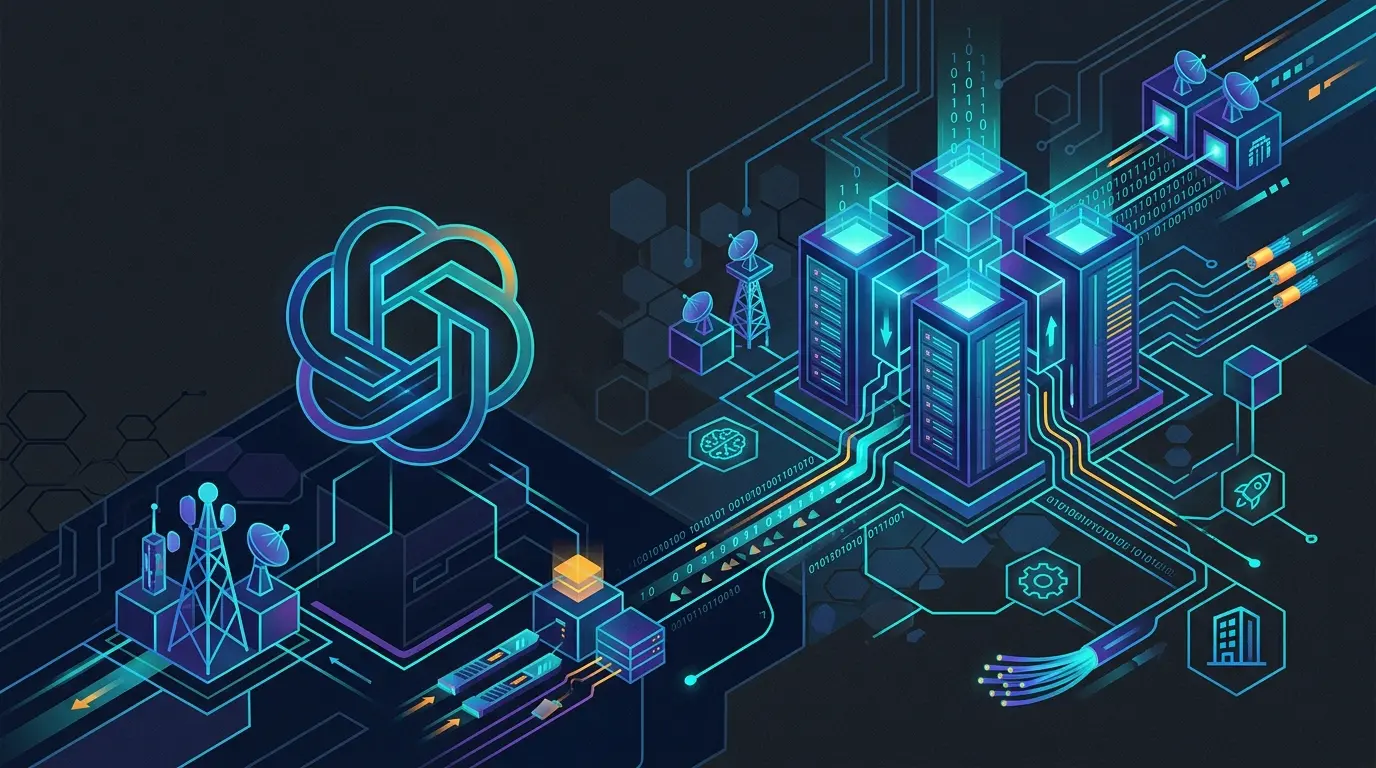
The prompt box era is officially over. For two years, we treated AI like a digital parlor trick, a place to dump text and pray for a decent poem or a snippet of code. OpenAI just killed that vibe. At DevDay 2025, the company made it clear that they are no longer just a research lab with a viral website. They are an infrastructure company now. By opening the API gates for GPT-5 Pro and Sora 2, they are handing the keys to the kingdom to the people who actually build the world (the developers).
This event was not about flashy demos for the general public. It was a technical hand-off.
The new suite of tools, specifically the Apps SDK and AgentKit, targets the biggest migraine in the industry: reliability. If you have ever tried to build an autonomous agent, you know the frustration of watching it wander off-task, hallucinate a fake API, or spin into an infinite loop. AgentKit looks like the answer to this structural mess. It provides a framework for building agents that can actually finish a job without a human constantly babysitting the screen.
We are witnessing the industrialization of AI. We are moving away from flimsy "wrapper" startups and toward deep, structural integration. The introduction of the Apps SDK suggests that OpenAI wants ChatGPT to be more than a destination. They want it to be a platform where developers can scale applications with the same ease that we currently deploy web apps on modern cloud providers. OpenAI claims it is the best time in history to be a builder, and looking at this stack, it is hard to tell them they are wrong. They are essentially erasing the friction between a whiteboard sketch and a production-ready agent.
The real heavy hitters, however, are the models themselves.
Moving GPT-5 Pro and Sora 2 into the formal API is a massive strategic pivot. Previously, these flagship models were kept behind internal walls or limited to specific research partners. Now, they are public, scalable utilities. The "Pro" branding on GPT-5 is particularly telling. While OpenAI has been quiet on specific performance benchmarks, that suffix implies a focus on enterprise reliability and stable reasoning. It is the difference between a high-performance sports car and a heavy-duty industrial engine. One is for show, while the other is built for a double shift.
Sora 2 is equally transformative. We have all seen the viral videos, but moving it into the API turns it into a "video primitive." This means apps can now generate high-fidelity video on the fly as part of a larger software workflow. Imagine a project management tool that automatically generates a video summary of a weekly sprint, or an educational app that builds custom visual aids based on a student’s specific questions. The potential for high-end generative video inside third-party apps is finally a reality, even if we are still waiting on the exact technical specifications.
For those of us who have followed these tools since the early days of the Codex model, this feels like a full-circle moment. OpenAI explicitly cited Codex during the launch, which serves as a reminder that the backbone of this entire movement remains the ability to translate human intent into executable code. The new tooling environment simplifies the complexity of building on top of massive models, allowing developers to focus on the user experience rather than the plumbing. This focus on "coding velocity" is a direct nod to the senior developers who have been asking for less magic and more stability.
Of course, we should still be cautious.
There is still a massive black box problem. Despite the excitement of the YouTube replays and the polished announcements, we still do not have granular performance metrics. We do not know the exact token costs for Sora 2 or the latency numbers for GPT-5 Pro. OpenAI is hosting an Ask Me Anything session to address some of these community questions, but the tension between rapid release cycles and the need for predictable business infrastructure is real. Developers need to know that the API they build on today will still be functioning the same way six months from now.
The barrier to entry for building world-class AI agents has effectively vanished. The tools are out, the models are available, and the infrastructure is ready. But as we rush to integrate these powerful systems into our businesses, we have to ask a difficult question. Can the developer community actually keep up with this pace? Building a lasting business is about more than just having access to the best API. It is about safety, sustainability, and finding real value in the noise. OpenAI just gave us the most powerful engine in the world. Now we have to see if we can actually drive it.