The Invisible Labor of the AR Hunt
You’re standing on a street corner, squinting through the midday glare, desperately trying to land a Great Curveball on a Bulbasaur. To a passerby, you look like a 2016 nostalgia act. To the tech giants, you look like a high-precision, low-cost research assistant.
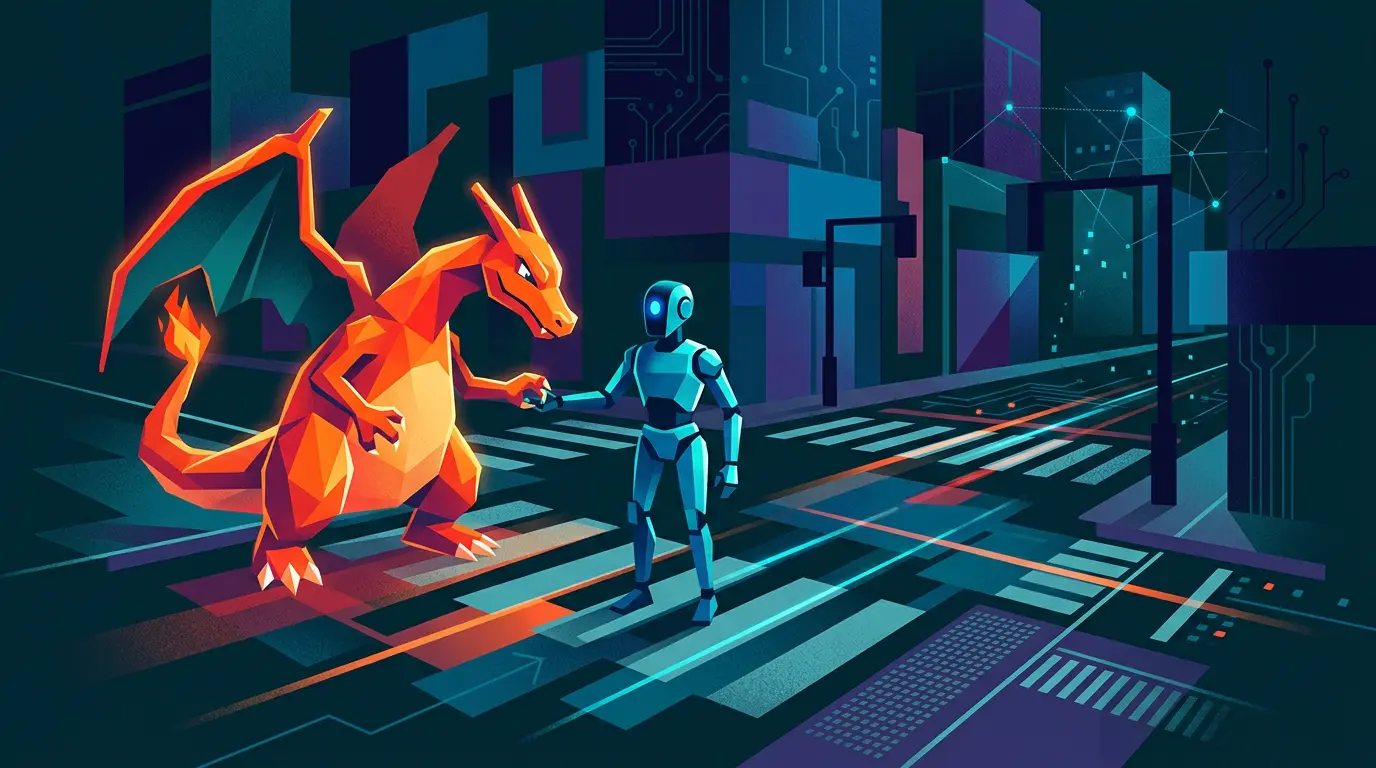
It feels like a hobby. But according to a growing chorus of skeptics in the tech community, you’re actually an unpaid intern for the next generation of autonomous delivery bots.
Every time a Pokémon Go player scans a Pokéstop or hikes a specific trail to hatch a 10km egg, they aren’t just playing a game; they’re feeding a ravenous spatial algorithm. The core loop of the game—constant GPS tracking paired with AR cameras that "see" the physical world—creates a high-fidelity stream of data that robotics companies would kill for. While you’re hunting for a Shiny Eevee, you’re effectively mapping curb heights, the exact placement of mailboxes, and the subtle textures of the sidewalk. You are providing the granular detail that machines, lacking human eyes, find incredibly difficult to parse.
From Pokéstops to Pavements
Mapping the world is an expensive, slow-motion nightmare.
Companies like Starship or Amazon’s Scout division need more than a static Google Map; they need a "living" map that understands exactly where a permanent obstacle ends and a pedestrian walkway begins. Manually surveying every suburb in the country is a logistical black hole.
Niantic solved this problem by gamifying the labor. By turning exploration into a quest, the developer has effectively deployed millions of mobile sensors across the globe. Reports surfacing on Reddit suggest this visual data is being repurposed to sharpen the navigation and obstacle-avoidance skills of autonomous delivery robots.
It is digital sharecropping at its most efficient. We provide the movement, the hardware (our own expensive smartphones), and the data. In return, we get a virtual creature wearing a tiny, pixelated hat. Meanwhile, that underlying data becomes the structural foundation for a multi-billion dollar logistics industry. We’re doing the heavy lifting, but we’re entirely excluded from the profit loop.
The Transparency Gap
The specifics of these corporate handshakes remain hidden behind a thick veil of proprietary secrets. We don’t know which robotics firms are tapping the vein, or if Niantic is simply stockpiling a master mapping product to auction off to the highest bidder later.
There is also the inconvenient reality of consent.
Let’s be honest: no one reads the Terms of Service. We click "Accept" on those vague paragraphs about "improving services" and "third-party partnerships" because we just want to catch the monster. It’s a classic bait-and-switch. You think you’re the player, but to the company, you’re a data-labeling tool.
This represents a significant turning point in the relationship between humans and hardware. We’ve moved past the era where companies just wanted to know what we like to buy. Now, they want to use our physical bodies to teach their machines how to navigate the physical world. It’s a transition from being a consumer to being a biological component in a machine-learning supply chain.
The Future of Human-in-the-Loop AI
This isn’t just about one app. It’s a broader trend toward "human-in-the-loop" training, where our daily behavior is the primary fuel for automation. We are essentially building the infrastructure for the very robots that may eventually replace human delivery drivers—all while we think we’re just killing time on a lunch break.
The privacy implications are equally messy. If a gaming app is effectively mapping the interior of public parks, private apartment complexes, and quiet suburban cul-de-sacs, who owns the rights to that map? And what happens when that data is used for something less benign than a robot delivering a burrito?
We are currently operating in a Wild West of data ethics. If our leisure time is the engine fueling the autonomy of commercial robotics, it’s time to stop treating our data as a byproduct and start treating it as a resource. We should be asking for more than digital stickers in exchange for building the commercial infrastructure of the future.
If we’re the ones teaching the robots how to walk, don’t we deserve a cut of the dividends? At the very least, Niantic should give us a button in the settings menu that says: "Stop using my walk to train your robots." Until then, every step you take to find a Pikachu is a step toward a future you’re building for free.