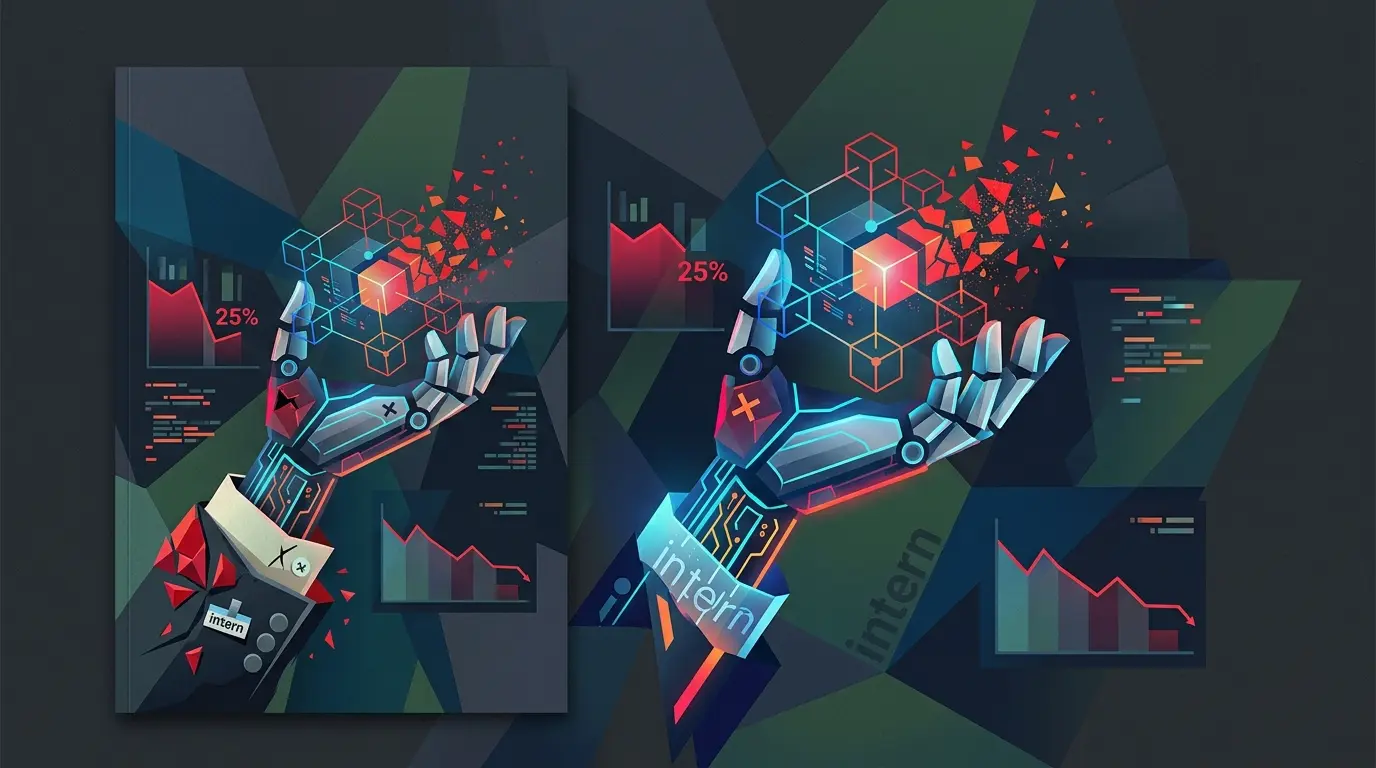
The magic trick has finally worn thin. If you spend any time hanging out with founders lately, you can feel the collective exhale of a honeymoon period ending. The initial dopamine hit of watching a chatbot draft a marketing email or a generic business plan has been replaced by a quiet, persistent annoyance. Entrepreneurs are starting to realize a hard truth: a tool that can do everything usually does nothing particularly well when the stakes actually matter.
We call this the Swiss Army knife problem. A Swiss Army knife is a lifesaver if you are lost in the woods, but you would never want a surgeon to pull one out during a heart transplant. In the real world of business, precision is worth more than versatility.
This sentiment is currently boiling over in communities like r/Entrepreneur. Founders are moving past the industry giants to hunt for the underrated, specialized tools that actually move the needle.
The Shift: From Generalist to Specialist
For the last year, OpenAI and Anthropic have owned the room. They have built incredible reasoning engines. However, as an AI researcher, I have watched the benchmarks tell a very specific story. While Claude and ChatGPT remain the gold standard for broad reasoning, they often trip over the high precision tasks that define a successful business. They hallucinate data when they lack specific context, and their broad training makes them prone to generic, uninspired outputs that feel like a high schooler’s book report.
Entrepreneurs are feeling the utility gap. They are moving away from the "look what it can do" phase and toward a hunt for tangible ROI. One Reddit user captured this mood perfectly, noting that while the big names were useful, they were specifically hunting for the lesser known, underrated alternatives. This is a pivot toward niche AI. The goal is no longer conversation, but workflow integration. Founders want tools that don’t just talk about work, but actually perform it.
The Reddit Pulse: What the Community is Seeking
The discourse on r/Entrepreneur suggests the novelty of generic AI has officially died. Users are expressing a growing boredom with the big names. They are looking for tools that solve specific, unglamorous, and often boring problems.
Think hyper-local lead generation, automated financial reporting for specific tax codes, or niche compliance monitoring. These are the dark corners where a general model fails because the required data is too specialized or the workflow is too rigid for a chat bubble.
This is the power of community-led discovery. Peer recommendations are quickly displacing traditional tech marketing. When a founder says a specific tool saved them ten hours a week on supply chain logistics, that carries more weight than a million-dollar ad campaign from a Silicon Valley giant. The community is effectively crowdsourcing a new tech stack that prioritizes specialized utility over general intelligence.
The New Competitive Arena for Developers
This shift creates a massive opportunity for smaller developers, but it also changes the rules of the game. For a while, the trend was to build a simple wrapper around a major LLM and call it a startup. Those days are over. VibeReporter has previously covered how major investors are already pulling back from these thin layers. To survive now, developers must focus on vertical integration.
Vertical AI tools are built for a specific role, such as a legal assistant or a creative director. These tools offer better data security, specialized user interfaces, and compliance features that general models simply cannot match. From a technical standpoint, these niche tools are often more efficient. They utilize smaller, fine-tuned models that have lower latency and higher accuracy within their specific domain. They don't try to know everything (they just try to know your business).
However, a reality check is needed here. These under-the-radar tools do not have the massive R&D budgets of OpenAI. When using a niche tool, entrepreneurs must verify the claims. Is the tool actually using a proprietary model, or is it just a clever prompt template? Does it offer the security needed for sensitive business data? The risk of using unverified tools is real, but for many founders, the potential competitive edge is worth the gamble.
The Verdict on Vertical AI
I believe we are witnessing the fragmentation of the AI market. The era of the all-in-one AI assistant is not ending, but it is being relegated to the background. These giants will become the operating systems, the invisible layers that power our devices. But the tools we actually use to build businesses will be hyper-specialized.
As AI becomes a commodity, your moat as an entrepreneur will no longer be the fact that you use AI. Everyone uses AI. Your advantage will come from which specialized tools you choose and how well they play with your existing SaaS stack.
The real question is no longer what AI can do, but what your specific AI can do that no one else's can. Are we ready for a world where our workflows are managed by a dozen different, highly efficient micro-intelligences? It seems the entrepreneurs on the ground have already made their choice.