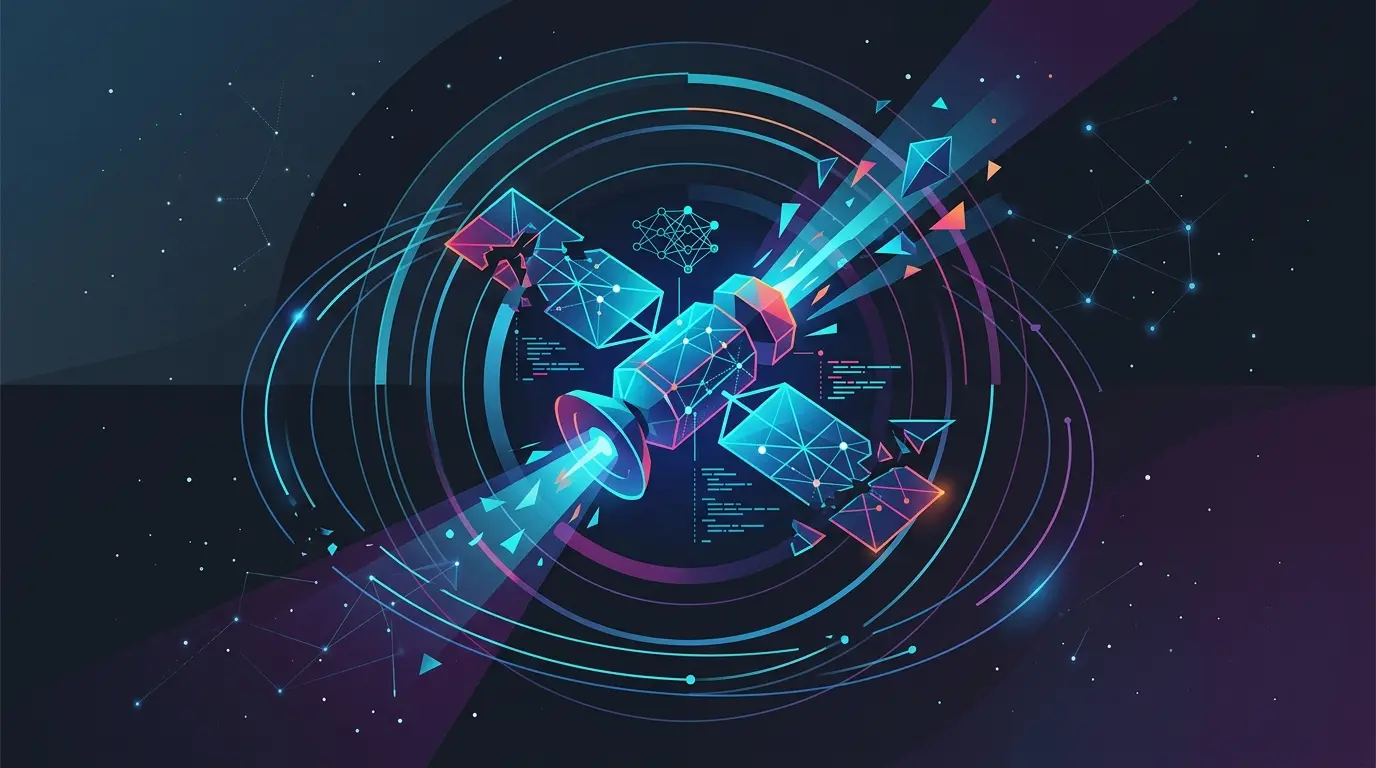
Space is getting messy. We have thousands of satellites whizzing around at different altitudes, turning the sky into a high-stakes game of 3D Tetris played at orbital velocities. For decades, managing these connections required constant human intervention and rigid, rule-based systems. If a signal dropped or a gateway got congested, an engineer usually had to step in to manually fix the routing. That era is officially over.
On March 17, 2026, Herndon-based ST Engineering iDirect announced the launch of Intuition Foresight. This is not just another monitoring dashboard with blinking lights. It is an AI-driven orchestration suite designed to automate the actual nervous system of network management. From a research perspective, this is a major leap toward the industry's ultimate goal: a self-healing, autonomous network.
The End of Reactive Satcom
Traditional satellite operations have always been reactive. You wait for a metric to hit a red zone, then you scramble to respond. But as we move toward multi-orbit constellations (mixing assets in Low Earth Orbit, Medium Earth Orbit, and Geostationary positions) the sheer volume of data makes human reaction times a joke. You cannot manage a swarm of bees with a clipboard and a whistle. You need a digital brain that lives inside the network.
Intuition Foresight is designed to be that brain. By automating service provisioning, the suite aims to kill the manual bottlenecks that usually slow down how quickly a provider can spin up new capacity. ST Engineering iDirect is pitching this as a way to create networks that do not just report problems, but actually resolve them without human oversight. In the AI field, we look at this as a closed-loop system where the model constantly tweaks parameters based on real-time data to keep the system in an optimal state.
Under the Hood: Algorithmic Intuition
Orchestration is a fancy way of saying the software is acting as a conductor. It has to balance bandwidth allocation, minimize latency, and predict exactly when a hardware component might fail.
I have spent years looking at how predictive models handle high-dimensional data, and satellite networks are about as complex as it gets. You are dealing with weather patterns affecting ground stations, orbital decay, signal interference, and fluctuating user demand all at the same time. Intuition Foresight reportedly uses AI to synthesize these variables for real-time optimization. It moves the conversation from "What happened?" to "What is about to happen?"
For operators, the strategic value is obvious. If the software handles the grunt work of balancing loads and healing broken links, operational costs drop. More importantly, uptime increases. In a world where global finance and emergency services rely on these links, even a few seconds of downtime is a non-starter.
A New Standard for Resilience
The broader industry is watching this closely because the complexity of space-based internet is outstripping our ability to manage it by hand. We are seeing a shift where software-defined hardware is finally meeting the intelligence of the software management layer. ST Engineering iDirect is positioning itself as a key player in this transition, moving away from being a simple hardware vendor and toward being an intelligence provider.
This technology is vital for the integration of LEO and MEO constellations. When you have satellites screaming across the sky every few minutes, the handoff process is constant. Any inefficiency in that handoff results in jitter or dropped packets. An AI-driven suite can look ahead at the orbital paths and pre-allocate resources, making the transition seamless for the person on the ground.
The Human-AI Collaboration Model
One thing we often discuss in AI research is the displacement of roles. In this case, the network engineer is not disappearing, but their job description is being rewritten. They are moving from being troubleshooters who put out fires to being system architects who design the constraints within which the AI operates.
It is a bit like the transition from a pilot who manually flies a plane to one who manages a sophisticated flight computer. The strategic oversight remains a human function, but the micro-adjustments that keep the system stable are handled by the algorithms. This allows human talent to focus on long-term capacity planning rather than chasing ghosts in the machine.
As ST Engineering iDirect pushes the industry toward this "set-and-forget" model, we have to ask a difficult question. Can these autonomous networks achieve true perfection, or will the reliance on AI-driven orchestration create new, unforeseen vulnerabilities? We have seen in other sectors that when AI fails, it often fails in ways that humans find unpredictable. For now, however, the promise of a network that can fix itself is too compelling to ignore. The next few years will tell us if the foresight of these algorithms is as sharp as the marketing suggests.