The startup graveyard is littered with beautiful code that nobody asked for.
Ninety percent of new ventures fail, and while founders like to blame a lack of funding or bad timing, the reality is usually more embarrassing. Most startups die because they spend six months building a solution to a problem that does not exist. We call this the build-trap. Until recently, the only way to escape it was through a grueling, expensive marathon of user interviews and A/B tests that could take months to provide a clear signal.
A developer named Nghia H. thinks we can compress that timeline from months to roughly two minutes. He recently released Sybil Swarm, an open-source engine designed to act as a high-speed focus group simulator. The premise is simple, though it might be enough to make traditional market researchers sweat. You feed the engine your startup concept and it spawns 1,000 AI-generated personas to provide what the developer calls brutally honest feedback.
The Architecture of a Swarm
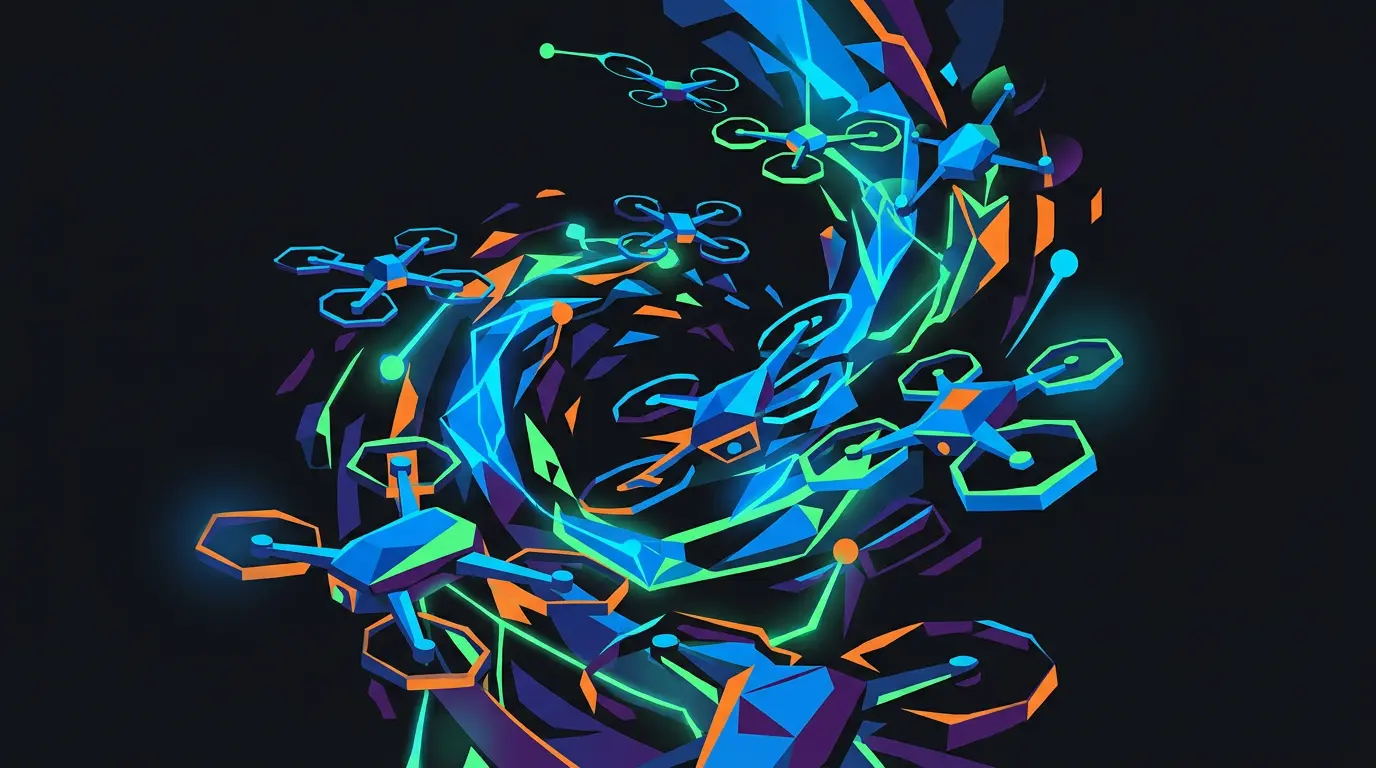
Under the hood, Sybil Swarm is an exercise in swarm intelligence. If you ask a single large language model if your idea is good, it will likely give you the kind of polite, useless encouragement that AI is known for. To solve this, the system creates a massive simulation. It distributes your prompt across 1,000 distinct personas, each operating with its own specific set of biases, needs, and personal pain points.
The goal is to move away from a single point of failure in reasoning. By aggregating the responses of a massive swarm, the tool looks for patterns of rejection. In the developer’s own words, the point is to get your idea roasted. If 1,000 simulated customers tell you they would never pay for your artisanal sock subscription, you might want to rethink your life choices before you hire a lead engineer. The entire process takes about 120 seconds, creating a feedback loop that is orders of magnitude faster than any human-centric method.
Synthetic Data vs. Human Friction
As someone who has watched the evolution of agentic workflows over the last year, I find the shift toward synthetic data both inevitable and a little bit risky.
The value proposition here is pure efficiency. Traditional market research is plagued by human friction. People lie to be nice. They claim they will buy a product in a survey but never actually open their wallets in reality. They are slow to respond, expensive to recruit, and often bored by the process.
Sybil Swarm removes the niceties because it is built to find the flaws. However, we have to ask a difficult question: Can a simulation truly predict the irrationality of a human market? AI models are trained on historical data. They are excellent at predicting the probable, but they are historically terrible at predicting the impossible or the truly novel. There is a risk of hallucinated consensus where the swarm simply echoes the prevailing biases found in its training sets. If you asked a swarm about the iPhone in 2006, it might have told you that a phone without a physical keyboard was a technical nightmare.
The Death of the Survey Panel
The release of this tool as an open-source resource is a pointed move. While SaaS companies are charging hundreds of dollars for basic AI wrappers, Nghia H. is giving the engine away for free.
This democratization of validation could fundamentally change how early-stage founders operate. It moves the fail-fast philosophy into the realm of the algorithmic. Professional market research firms should be paying attention. We are seeing a transition where synthetic stakeholders are becoming a standard part of the development stack. Why wait two weeks for a focus group when you can run a pre-flight check on your lunch break? This is not just about saving money (though that helps). It is about reducing the time-to-fail. In the startup world, the faster you realize you are wrong, the sooner you can find a way to be right.
Echo Chambers or Innovation Engines?
There is a deeper philosophical tension at play here. If every founder begins using the same swarm engines to validate their ideas, do we risk creating a startup echo chamber? If the AI roasts everything that does not fit into a predefined box of market viability, we might lose the weird, outlier ideas that actually change the world.
Sybil Swarm is a powerful diagnostic tool, but it should never be the final judge. Think of it as a stress test for your assumptions. It can tell you if your logic is flawed or if your value proposition is unclear. It can simulate a thousand angry customers who hate your pricing model. But it cannot replace the spark of human intuition or the strange, unpredictable way that a real person interacts with a new piece of technology.
As we move further into the era of synthetic agents, the most successful founders will be those who know how to use the swarm to sharpen their ideas without letting the algorithm kill their vision. The 120-second roast is a great way to start. Just make sure you are still listening to the humans when it is time to actually launch.