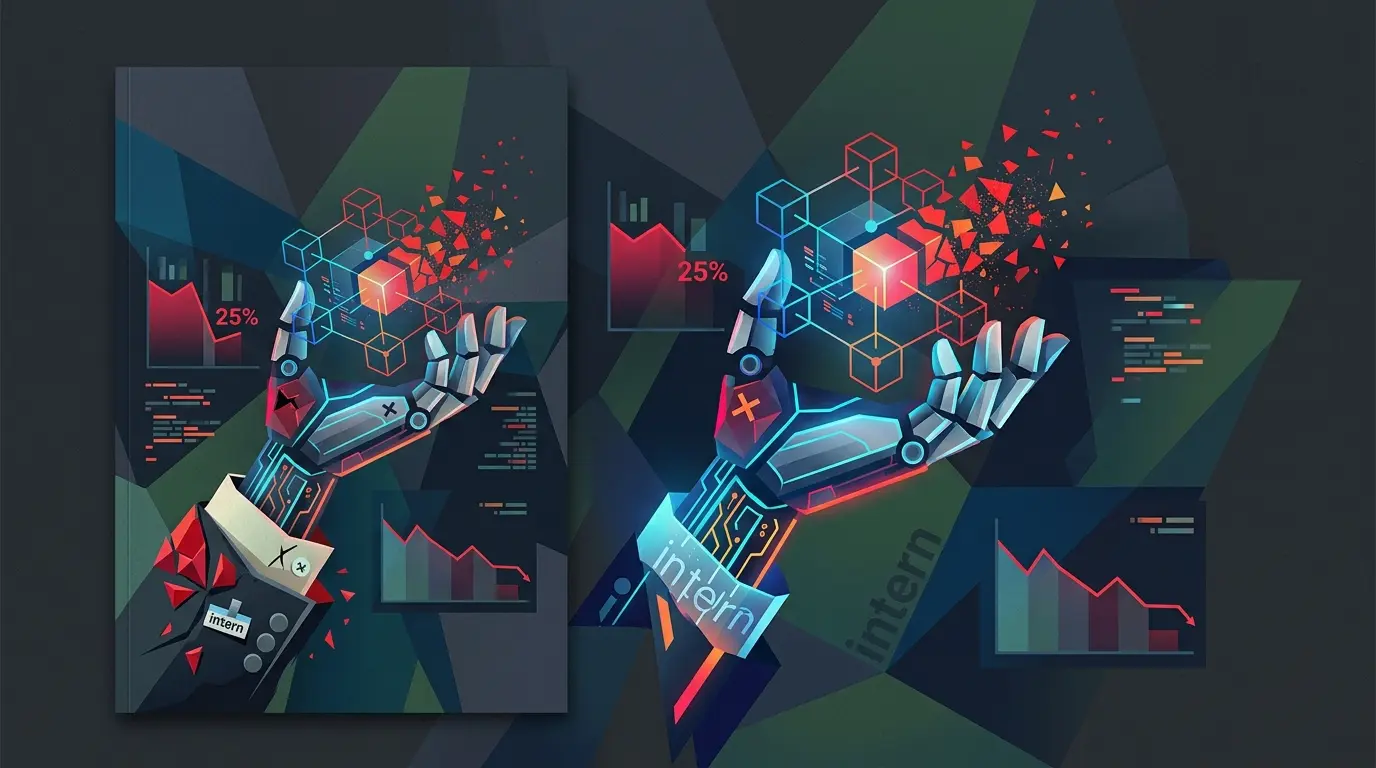
We spend our days in the lab arguing over weights, biases, and the theoretical ceilings of transformer architectures. We obsess over whether a model can pass the Bar or if it can handle a recursive coding prompt in one go. But it turns out the biggest bottleneck for the next generation of AI isn't a line of code. It is a local zoning board meeting in a town you have never heard of.
There is a growing friction between our digital dreams and the physical reality of the buildings required to run them. The data center was once an invisible utility, but it has recently become a lightning rod for political rage. This shift feels familiar to anyone who saw the retail world change twenty years ago. As economist Michael J. Hicks recently noted, the current uproar is a perfect echo of the angst directed at Walmart during its rapid expansion in the early 2000s.
The Physicality of the Cloud
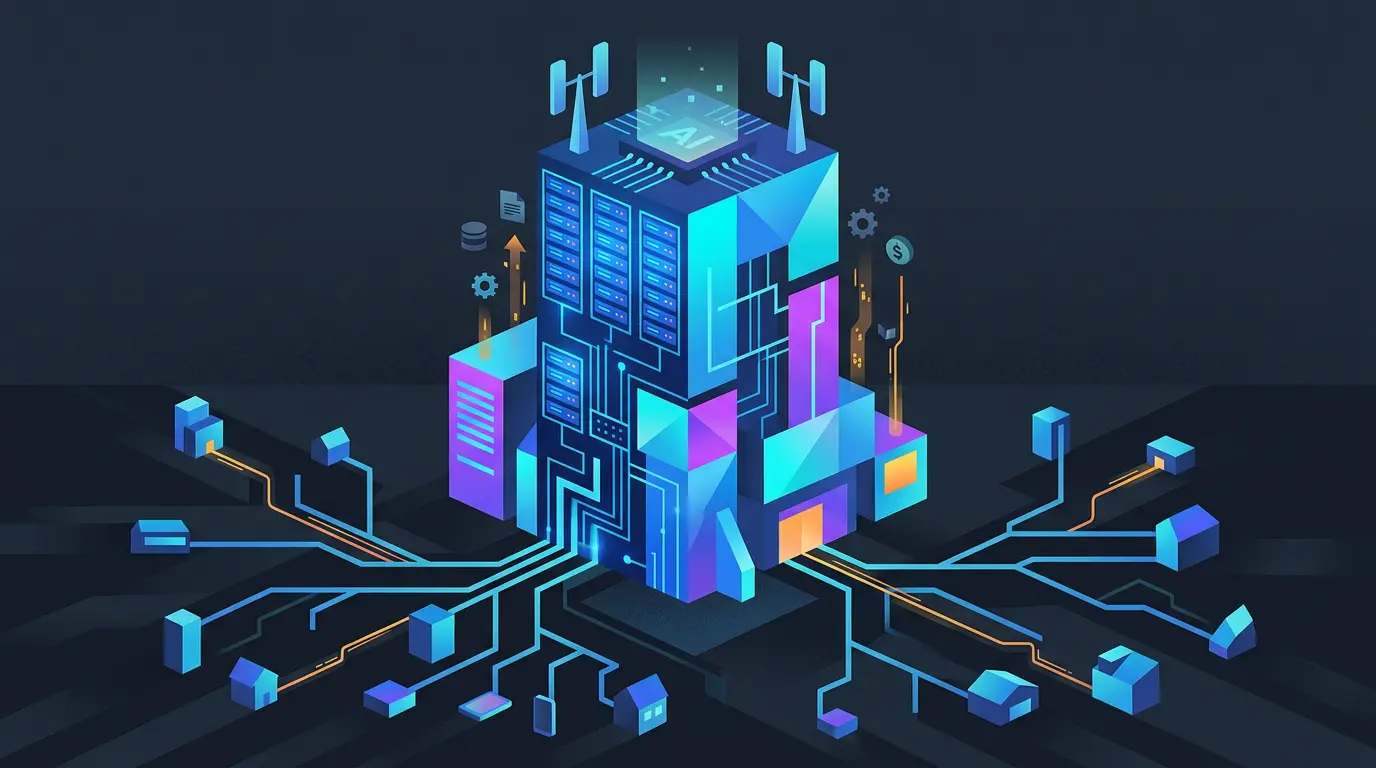
For those of us on the research side, it is easy to forget that the cloud is actually a collection of massive, humming warehouses that require staggering amounts of electricity and water. These are not just server racks. They are the heavy, physical anchors of our digital economy.
The Walmart comparison works because it highlights a recurring pattern of infrastructure anxiety. Back then, the arrival of a Big Box store was seen as a sign of corporate intrusion that threatened the character of local communities. Today, the data center plays that role. It represents a faceless corporate entity moving into a town, consuming vast resources, and fundamentally altering the .
While a Walmart offered low prices in exchange for its footprint, the data center offers something far more abstract. It provides the processing power for AI agents and cloud storage. To a local resident, that trade might feel significantly less tangible than a cheap gallon of milk.
A Climate of Bad Information
One of the most concerning aspects of this backlash is the quality of the debate. Hicks points out that there is an enormous amount of bad information coming from every direction.
On one side, you have developers who might overpromise on the local economic benefits. On the other, you have opposition groups making environmental claims that are not always backed by hard data. As researchers, we rely on telemetry and verified benchmarks to make decisions. But in the public square, the data is messy.
There is a vacuum of verified economic impact reports and environmental statistics. This creates a space where fear and misinformation can thrive. When communities do not have clear facts about how much water a facility uses or how many permanent jobs it actually creates, they default to resistance. This isn't just a PR problem for big tech. It is a systemic risk to the scaling laws we rely on for future model development.
The Risk of Reactive Policy
When public pressure reaches a boiling point, politicians tend to act first and ask questions later. Unfortunately, they rarely wait for a peer reviewed study before drafting legislation. Hicks observes that governments are often acting hastily as a result of all the noise.
We are seeing a wave of reactive policies that could create long term barriers to growth. If we let policy be driven by the loudest voices in the room rather than by a clear understanding of infrastructure needs, we risk stalling the very progress we are trying to accelerate. A hasty ban on a specific cooling technology or a sudden tax on data center power could set back the training of a foundational model by months or even years. We are watching a collision between the fast moving world of AI research and the slow, often emotional world of local governance.
Beyond the NIMBY Response
It is tempting to dismiss all opposition as Not In My Backyard sentiment. That would be a mistake.
From my perspective in the AI community, these concerns are a proxy for a much larger anxiety about how fast the world is changing. People see headlines about AI agents using their browser sessions or models replacing white collar jobs, and the data center becomes a physical target for those fears. It is much easier to protest a building than an algorithm.
If we want to continue pushing the boundaries of what these models can do, we have to address the physical cost of that progress. We cannot treat infrastructure as an afterthought. We need to move away from the cycle of secret deals and sudden public outcries. A more transparent, data-driven approach to planning is the only way to break the cycle.
Are we destined to keep repeating the Walmart era of expansion and backlash? The answer will likely determine where the next major research clusters are built, or if they are built at all. If we cannot find a way to house the machines, the intelligence they produce will remain a theoretical luxury rather than a practical reality.