The police don't care if you’ve never seen the person in the surveillance footage. They don’t care if you were miles away when the crime happened. When they show up at your door with a warrant, they aren't looking for a conversation—they’re looking for the person the computer told them to find.
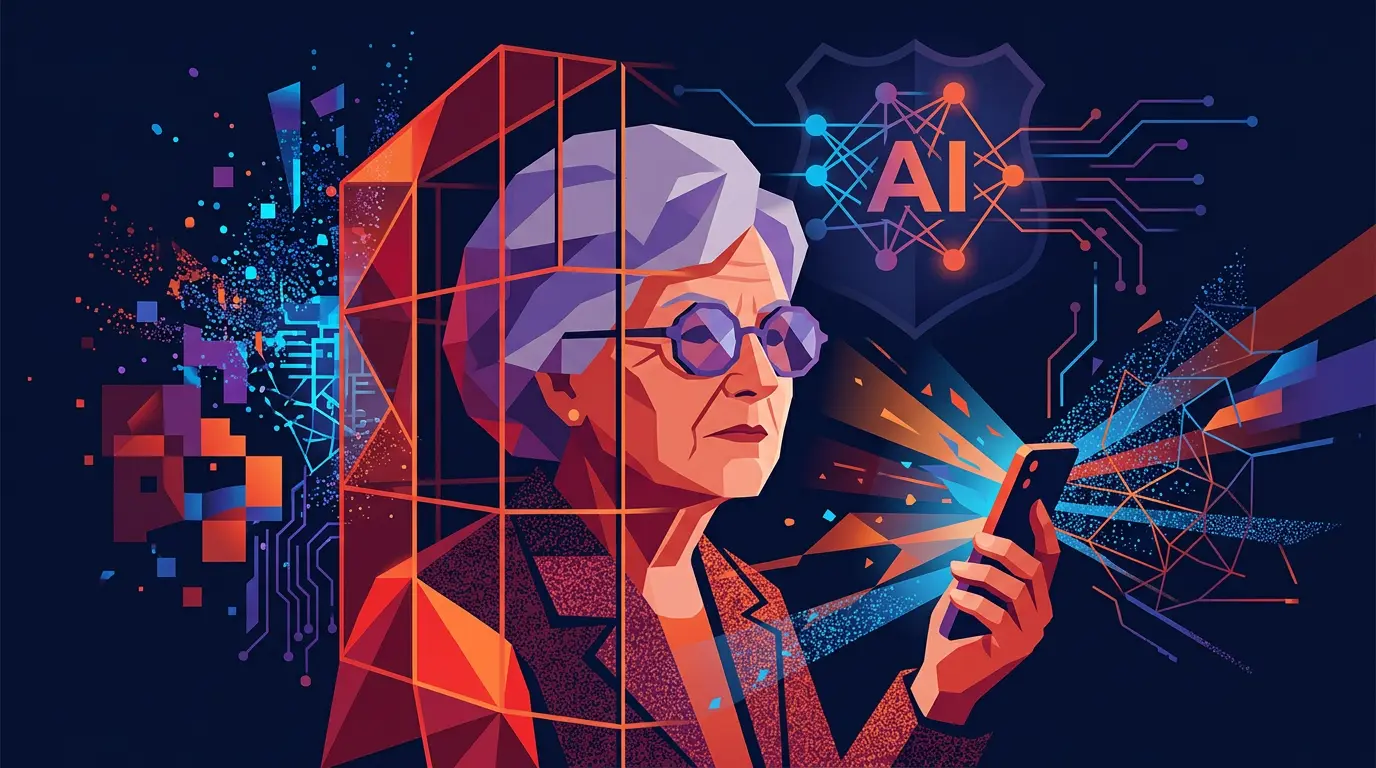
For one grandmother in North Dakota, this wasn't a hypothetical. It was a nightmare that lasted for months. She hadn’t committed fraud. She didn't even recognize the charges. But because a facial recognition algorithm—a "black box" of proprietary code that even the officers likely couldn't explain—flagged her as a match, her innocence became an afterthought.
The North Dakota Incident: When Algorithms Become Accusers
This wasn't a brief mix-up or a case of mistaken identity cleared up over a cup of precinct coffee. This woman spent months behind bars.
Think about that for a second. Weeks of her life were erased, her reputation was dismantled, and her family was left in a tailspin, all because an investigative lead was treated as a divine decree.
The breakdown here is maddeningly simple: the humans stopped doing their jobs. Somewhere between the software spitting out a name and the handcuffs clicking shut, the investigative process just... evaporated. Instead of using the AI match as a tip—a reason to go interview neighbors or check an alibi—the technology was used as a shortcut to probable cause. When we stop questioning the machine, we stop practicing justice.
The "Automation Bias" Trap
In tech circles, we call this "automation bias." It’s that weird psychological glitch where humans trust a screen more than their own eyes. It’s the reason people occasionally drive their SUVs into a lake because the GPS told them the ferry was a bridge.
In law enforcement, this bias is more than a quirk; it’s a threat to civil liberties.
Detectives are under immense pressure to close cases, and a high-tech "match" feels objective and scientific. But facial recognition isn't a fingerprint; it’s a high-stakes game of "Guess Who" played by a computer. Treating a 90% confidence score from an algorithm as 100% certainty in a courtroom is a fundamental misunderstanding of the math. The more "seamless" we make these tools, the more we tempt investigators to skip the actual detective work.
The Black Box Problem: Technical and Legal Accountability
One of the most chilling parts of the North Dakota case is the "vendor opacity." We don't even know whose software was used. Was it a multi-billion dollar defense contractor or a scrappy startup using a database scraped from Instagram?
This secrecy creates a massive, gaping hole in the legal system.
If a human witness points a finger at you, your lawyer can cross-examine them. They can ask about the lighting, the witness's eyesight, or their personal biases. But you can't cross-examine a line of code. You can't ask the software why it prioritized a nose shape over a jawline, or why it struggled with the grainy shadows of a security camera. When the software is a proprietary "black box," the defense is essentially fighting a ghost.
And who takes the fall when the ghost is wrong? Right now, the answer is usually "nobody." The developer points to the user, the user points to the software, and the victim is left to rebuild a shattered life on their own dime.
The Broader Civil Liberties Crisis
The North Dakota case isn't an outlier; it’s a warning shot. Privacy advocates have been shouting into the void for years about how these tools fail the most vulnerable among us. We know the data: facial recognition is consistently less accurate when identifying people of color, women, and the elderly.
When police departments adopt these tools without "human-in-the-loop" protocols, they aren't just buying a new gadget. They are importing systemic bias and calling it "technical neutrality."
The Probability of Innocence
Our legal system is built on the standard of "beyond a reasonable doubt." But can we ever truly meet that standard using technology that operates on a sliding scale of probability?
If we keep letting AI serve as the primary witness for the prosecution, this grandmother won't be the last person to lose their freedom to a glitch. Until we treat AI as a fallible, often-wrong tool rather than an objective authority, we are outsourcing our moral judgment to code that doesn't care about the truth—it only cares about the match.
The question isn't whether the tech will get better. The question is how many "false positives" we’re willing to lock up in the name of digital efficiency.